Can Central Asia solve its growing water crisis before disaster?


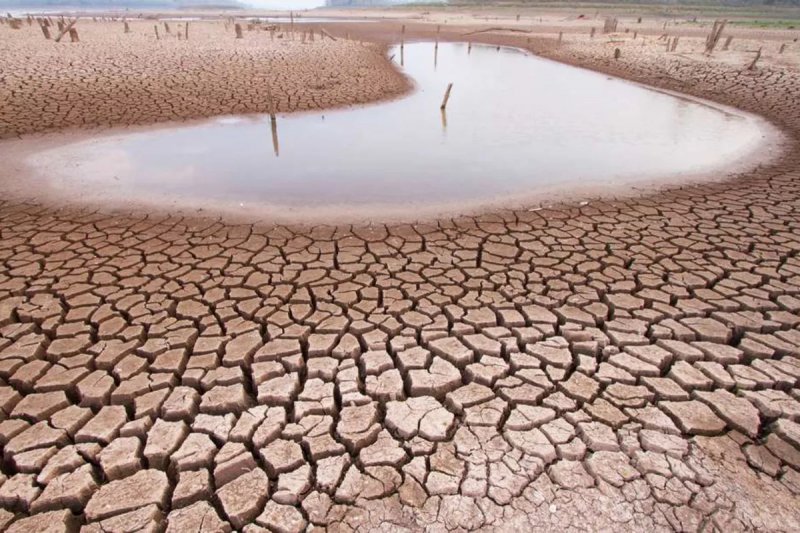
Central Asia is facing one of the world’s most dangerous and politically sensitive water crises as climate change, shrinking glaciers, population growth, outdated infrastructure, and regional rivalries intensify pressure on the region’s limited water resources.
The crisis affects nearly every aspect of life across Central Asia, including agriculture, electricity generation, food security, public health, industrial development, and geopolitical stability.
RECOMMENDED STORIES
Experts increasingly warn that unless regional cooperation improves, disputes over water could become one of the most serious long term threats facing the region.
The heart of the problem revolves around two major river systems, the Amu Darya and Syr Darya, which sustain millions of people across Kazakhstan, Uzbekistan, Turkmenistan, Kyrgyzstan, and Tajikistan.
These rivers originate mainly in the mountainous upstream states of Kyrgyzstan and Tajikistan before flowing toward downstream agricultural economies including Uzbekistan, Kazakhstan, and Turkmenistan.
The differing interests of upstream and downstream countries create constant tensions.
Mountain countries prioritize hydropower generation, while downstream states need water for agriculture, especially cotton production and food cultivation.
Climate change is making the situation even more severe.
Glaciers that feed Central Asia’s rivers are melting rapidly, threatening future water supplies.
At the same time, hotter temperatures and expanding populations are increasing water demand.
The result is a growing regional emergency that many experts believe could shape Central Asia’s political and economic future for decades.
Why is water such a major issue in Central Asia?
Central Asia is one of the world’s most water stressed regions because much of its territory consists of deserts, semi arid plains, and dry continental climates.
Water resources are unevenly distributed geographically.
Kyrgyzstan and Tajikistan possess abundant mountain rivers and glaciers, while countries such as Uzbekistan and Turkmenistan depend heavily on river flows originating outside their borders.
Agriculture consumes enormous amounts of water across the region, especially irrigation systems used for cotton farming.
Many irrigation networks were built during the Soviet era and remain inefficient, causing massive water losses through leakage and evaporation.
At the same time, climate change is reducing long term water availability while increasing drought risks.
Because water supports agriculture, electricity, industry, and daily life simultaneously, shortages quickly become politically and economically sensitive.
What are the Amu Darya and Syr Darya rivers?
The Amu Darya and Syr Darya are Central Asia’s two most important rivers.
The Amu Darya originates mainly in the mountains of Tajikistan and Afghanistan before flowing through Uzbekistan and Turkmenistan.
The Syr Darya begins in Kyrgyzstan and flows through Uzbekistan and Kazakhstan.
Historically, both rivers fed the Aral Sea, once one of the world’s largest inland lakes.
Today, they remain essential for irrigation, drinking water, hydropower, and industry across the region.
The rivers effectively determine agricultural production and energy security for millions of people.
Any disruption to their flow immediately affects multiple countries simultaneously.
Why are upstream and downstream countries in conflict?
The core conflict involves differing national priorities.
Upstream countries such as Kyrgyzstan and Tajikistan control much of the water supply because rivers originate in their mountains.
These countries rely heavily on hydropower and therefore prefer releasing water during winter to generate electricity when energy demand is highest.
Downstream countries including Uzbekistan, Kazakhstan, and Turkmenistan need water mainly during spring and summer for agriculture.
This creates direct competition over seasonal water management.
During the Soviet period, Moscow coordinated resource sharing through a centralized system.
Upstream countries released water for downstream agriculture, while downstream states supplied fuel and energy resources in return.
After the Soviet Union collapsed, this coordination system weakened significantly.
Independent states increasingly prioritized national interests, making water disputes more difficult to manage.
How does climate change worsen the crisis?
Climate change is dramatically intensifying water insecurity across Central Asia.
Glaciers in the Tian Shan and Pamir mountain ranges are melting rapidly due to rising temperatures.
These glaciers function as natural water reservoirs feeding Central Asia’s major rivers.
Initially, glacier melting may temporarily increase river flows.
However, over the long term, shrinking glaciers threaten permanent reductions in water availability.
At the same time, hotter temperatures increase evaporation and agricultural water demand.
Droughts are becoming more frequent and severe across parts of the region.
Extreme weather events additionally strain already vulnerable infrastructure systems.
Scientists warn that climate change could significantly destabilize Central Asia’s water balance during coming decades.
Why is the Aral Sea disaster important?
The destruction of the Aral Sea remains one of the world’s worst environmental disasters and serves as a warning about unsustainable water management.
During the Soviet era, massive irrigation projects diverted water from the Amu Darya and Syr Darya rivers to support cotton farming.
As a result, the Aral Sea shrank catastrophically.
Large parts of the sea effectively disappeared, devastating local ecosystems, fisheries, agriculture, and public health.
Former fishing towns became stranded in desert landscapes.
Dust storms carrying toxic chemicals from the exposed seabed created serious health problems across surrounding regions.
The Aral Sea disaster demonstrated how poor water management decisions can create long term humanitarian and environmental consequences.
Why is agriculture consuming so much water?
Agriculture remains the largest consumer of water in Central Asia.
Cotton production in particular requires enormous irrigation volumes.
During the Soviet era, Central Asia became one of the world’s major cotton producing regions.
Large scale irrigation systems were constructed to support agricultural expansion in dry areas.
Many of these systems remain inefficient today.
Water losses through outdated canals, evaporation, and poor maintenance are extremely high.
Some experts estimate that substantial portions of irrigation water never actually reach crops.
Governments increasingly recognize the need for modernization, but upgrading infrastructure requires massive investment.
Reducing water intensive agricultural practices also presents economic and political challenges because millions of livelihoods depend on farming.
How important is hydropower in the region?
Hydropower is critically important for Kyrgyzstan and Tajikistan.
Both countries possess mountainous terrain and major river systems suitable for hydroelectric generation.
Because they have relatively limited fossil fuel resources, hydropower forms a major part of national energy systems.
Large dams such as the Nurek Dam are strategically vital.
Tajikistan also continues developing the massive Rogun Dam project, which could become one of the world’s tallest dams.
However, downstream countries sometimes worry that large upstream dams could reduce water availability for agriculture.
As a result, hydropower projects occasionally create diplomatic tensions across the region.
Could water disputes lead to conflict?
Many analysts worry that water tensions could eventually contribute to regional instability if cooperation fails.
So far, disputes have generally remained political and diplomatic rather than military.
However, tensions periodically escalate during drought years or periods of severe water shortages.
Border incidents occasionally occur near contested water infrastructure.
Experts warn that population growth, climate stress, and worsening shortages could intensify risks over time.
Water insecurity also intersects with broader issues including food prices, energy shortages, migration, and unemployment.
Although large scale war over water remains unlikely in the near term, the crisis still poses serious security concerns.
How are governments trying to manage the problem?
Central Asian governments participate in several regional water cooperation mechanisms.
Organizations and agreements exist for managing river flows and coordinating water releases.
However, implementation often remains difficult because national priorities differ.
Countries are also investing in modernization projects involving irrigation systems, reservoirs, hydropower plants, and water conservation technologies.
International organizations including the World Bank, United Nations, and Asian Development Bank support regional water management initiatives.
Some governments additionally seek renewable energy diversification to reduce pressure on hydropower systems.
Still, many experts argue cooperation remains insufficient compared to the scale of the challenge.
Why is Afghanistan becoming increasingly important?
Afghanistan’s role in Central Asian water politics is growing because it shares the Amu Darya basin.
The country is developing new irrigation projects and water infrastructure that could influence downstream river flows.
As Afghanistan expands water usage for agriculture and development, neighboring countries may face additional pressure on already strained resources.
Political instability in Afghanistan further complicates regional coordination.
Future water diplomacy involving Afghanistan may therefore become increasingly important for Central Asian stability.
Can technology help solve the crisis?
Technology could significantly improve water efficiency across the region.
Modern irrigation systems such as drip irrigation reduce water waste compared to traditional flooding methods.
Digital monitoring systems can also improve water management and forecasting.
Upgrading canals, reservoirs, and pipelines could prevent enormous losses.
Renewable energy investments may additionally reduce dependence on hydropower during certain seasons.
However, implementing large scale modernization requires major financial resources and long term political commitment.
Some poorer countries in the region struggle to finance expensive infrastructure improvements independently.
Why is Uzbekistan playing a larger role in cooperation?
Uzbekistan increasingly promotes regional cooperation on water and environmental issues.
Under recent reforms, Tashkent adopted a more collaborative approach toward neighboring countries compared to earlier periods of tension.
Uzbekistan recognizes that regional stability and economic development depend heavily on sustainable water management.
The country also faces major agricultural vulnerability due to water shortages.
As a result, Uzbekistan increasingly supports dialogue, infrastructure modernization, and environmental cooperation projects involving neighboring states.
How does the crisis affect ordinary people?
Water shortages directly affect daily life across Central Asia.
Farmers face declining agricultural productivity during droughts.
Rural communities may experience reduced drinking water access and worsening sanitation conditions.
Electricity shortages can also occur when hydropower generation declines.
Food prices may rise if crop yields fall.
Environmental degradation and desertification additionally threaten livelihoods and public health.
In some areas, water stress contributes to migration pressures as people move searching for economic opportunities and more stable living conditions.
Can Central Asia avoid a future water disaster?
Many experts believe the crisis remains manageable if governments cooperate effectively and invest in modernization quickly enough.
Regional coordination is essential because rivers cross multiple borders and no country can solve the problem alone.
Improving irrigation efficiency, modernizing infrastructure, diversifying energy systems, and adapting to climate change could significantly reduce risks.
International support and financing will also likely remain important.
However, delaying reforms could make the situation far more dangerous.
Climate change continues accelerating, populations are growing, and water demand keeps rising.
The future stability of Central Asia may therefore depend heavily on whether the region can transform water from a source of rivalry into a foundation for long term cooperation and sustainable development.
By Faig Mahmudov


Similar news