What is behind the death of five Italian tourists in the Maldives?


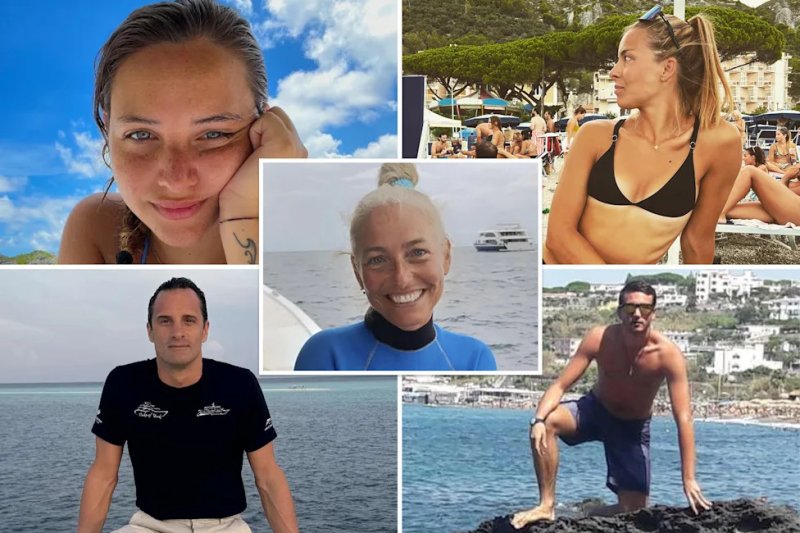
Five Italian tourists died in a tragic scuba diving accident in the Maldives while reportedly exploring underwater caves near Vaavu Atoll, one of the country’s best known diving regions.
According to Maldivian authorities, the group entered the water during a diving excursion but failed to resurface afterward.
RECOMMENDED STORIES
Rescue teams later discovered one body inside a cave around 60 meters underwater, while the remaining four victims were also believed to be trapped in the same underwater cave system.
Officials described the recovery operation as extremely dangerous because of the depth, strong currents, confined cave passages, and poor sea conditions.
The tragedy is being considered one of the deadliest single diving accidents in the history of the Maldives.
Who were the victims?
The victims were Italian nationals visiting the Maldives.
According to the University of Genoa, the group included marine biology professor Monica Montefalcone, her daughter Giorgia Sommacal, and two young researchers connected to the university.
The identities of all five victims were not immediately released in full during the early stages of the investigation.
The university later expressed its “deepest condolences” following confirmation of the deaths.
The involvement of scientists and researchers made the tragedy particularly emotional within Italy’s academic and scientific communities.
Where did the accident happen?
The accident occurred near Vaavu Atoll, located roughly 100 kilometers south of the Maldivian capital Malé.
Vaavu Atoll is internationally famous for scuba diving because of its coral reefs, underwater caves, marine biodiversity, and strong ocean currents.
The region attracts divers from around the world seeking advanced underwater experiences.
However, some dive sites in the area are considered technically difficult and potentially dangerous even for experienced divers.
What caused the divers to die?
Authorities have not yet issued a final official conclusion, but several factors are believed to have contributed to the tragedy.
Investigators suspect the deaths may have resulted from a combination of deep cave diving risks, strong currents, rough weather, and possible underwater disorientation.
At depths of around 50 to 60 meters, divers face major dangers including rapid air consumption, oxygen toxicity, nitrogen narcosis, decompression complications, and visibility problems.
Underwater cave systems significantly increase these dangers because divers cannot immediately ascend directly to the surface during emergencies.
Strong ocean currents may also have made navigation and escape more difficult.
Police confirmed rough weather conditions in the area on the day of the incident.
Why is cave diving considered so dangerous?
Cave diving is widely regarded as one of the most hazardous forms of scuba diving.
Unlike open water diving, underwater caves create enclosed environments with limited visibility and restricted escape routes.
Divers can easily become lost, trapped, or disoriented inside cave systems.
Mud or sand disturbances can suddenly reduce visibility to near zero.
Equipment failures become more dangerous because reaching the surface may require navigating through narrow underwater tunnels first.
At extreme depths, even minor mistakes can quickly become fatal.
Technical cave diving therefore requires specialized training, equipment, and experience far beyond standard recreational scuba certification.
Even highly experienced divers face significant risks during deep cave exploration.
How deep were the divers underwater?
Authorities believe the group was exploring caves at depths of approximately 50 meters, while at least one body was found inside a cave around 60 meters underwater.
Such depths are considered highly dangerous and generally fall within the category of technical diving rather than ordinary recreational scuba diving.
At these depths, pressure increases dramatically and divers require careful gas management and decompression planning.
Breathing air at such depths can also create physiological risks including nitrogen narcosis, which affects judgment and coordination underwater.
The deeper a diver goes, the shorter the safe underwater time becomes.
Recovery operations at those depths are also much more complicated and dangerous.
Did weather conditions play a role?
Yes, weather conditions may have contributed significantly to the tragedy.
Police stated that sea conditions were rough in the area at the time of the dive.
Authorities had reportedly issued a yellow warning for fishermen and passenger vessels due to dangerous marine conditions.
Strong currents can become especially hazardous inside underwater cave systems because they affect visibility, movement, and navigation.
Rough weather also complicates rescue and recovery operations.
Although investigators have not officially confirmed weather as the direct cause, it is expected to be an important factor in the ongoing investigation.
Were the divers experienced?
Reports suggest at least some members of the group had scientific and marine backgrounds, including marine biology expertise.
However, it remains unclear what level of technical cave diving certification or experience all five divers possessed.
Technical deep cave diving requires highly specialized skills and equipment.
Even experienced divers can encounter fatal problems in challenging underwater environments.
Authorities are expected to review the group’s diving qualifications, equipment, planning procedures, and safety measures as part of the investigation.
How was the emergency discovered?
The divers reportedly entered the water from a diving vessel on Thursday morning.
Crew members later became alarmed when the group failed to return to the surface within the expected timeframe.
Search and rescue operations were then launched.
Military teams, specialized divers, aircraft, and speedboats participated in efforts to locate the missing group.
Because of the complexity of underwater cave systems, locating the victims proved extremely difficult.
Maldivian authorities later confirmed that at least one body had been found inside the cave network.
Why are deep dives so risky?
Deep dives expose divers to several severe physiological and environmental risks.
One major danger is nitrogen narcosis, which can impair judgment, coordination, and decision making underwater.
Another is oxygen toxicity, which may occur under high pressure and can cause seizures or unconsciousness.
Divers also consume breathing gas much faster at greater depths.
Decompression sickness, commonly called “the bends,” becomes another major concern if divers ascend improperly.
Visibility often decreases with depth, and strong currents become more difficult to manage.
Inside caves, these dangers become even greater because emergency ascents are restricted.
Technical divers therefore require extensive planning, backup systems, and specialized training.
What is oxygen toxicity?
Oxygen toxicity occurs when divers breathe oxygen under high pressure at significant depths.
Underwater pressure increases dramatically during deep dives, which affects how gases behave inside the body.
In severe cases, oxygen toxicity can trigger confusion, tunnel vision, muscle twitching, seizures, or sudden unconsciousness underwater.
If this happens during cave diving, survival chances can become extremely low.
Some media reports suggested investigators were examining whether oxygen toxicity may have contributed to the accident, although officials have not confirmed this.
How difficult are underwater recovery operations?
Recovery operations at depths of 50 to 60 meters inside cave systems are extremely dangerous.
Divers conducting recovery missions face many of the same risks as the victims themselves.
Specialized technical divers using advanced equipment are usually required.
Such missions often involve decompression stops, mixed gas systems, underwater navigation lines, and multiple support teams.
Poor visibility and confined spaces can slow operations significantly.
Authorities in the Maldives described the mission as “very high risk” due to the difficult underwater environment.
Safety concerns may also limit how quickly bodies can be recovered.
How common are diving accidents in the Maldives?
The Maldives is considered one of the world’s top diving destinations and hosts thousands of diving tourists annually.
Serious accidents remain relatively rare compared to the scale of tourism activity.
However, fatalities do occur from time to time, especially during technical dives or in areas with strong currents.
The Maldives contains many advanced dive sites involving deep channels, caves, and open ocean currents.
Recent years have seen several diving and snorkeling fatalities involving foreign tourists.
Still, incidents involving multiple deaths simultaneously are highly unusual.
Authorities believe this may be the worst single diving accident in Maldivian history.
Why is the Maldives famous for diving tourism?
Maldives is internationally renowned for its coral reefs, crystal clear waters, marine biodiversity, and tropical island resorts.
The country’s waters contain sharks, manta rays, whale sharks, turtles, coral gardens, and dramatic underwater landscapes.
Many divers consider the Maldives among the best diving destinations in the world.
Tourism is the backbone of the Maldivian economy, with diving and snorkeling forming major attractions.
The country’s atolls provide both beginner friendly dive sites and highly advanced technical diving locations.
However, the same ocean conditions that attract experienced divers can also create significant risks.
Could this tragedy affect tourism in the Maldives?
The Maldives tourism industry is unlikely to face major long term damage because diving accidents remain relatively uncommon overall.
However, the tragedy may lead to increased attention on diving safety standards, technical diving regulations, and weather related precautions.
Dive operators may also face greater scrutiny regarding risk assessments for advanced excursions such as cave diving.
Authorities could potentially review licensing requirements or operational protocols for technical diving tours.
The Maldives nevertheless remains one of the world’s most popular marine tourism destinations.
What happens next?
Maldivian authorities are expected to continue recovery operations and conduct a detailed investigation into the accident.
Officials will likely examine weather conditions, dive planning, equipment usage, certification levels, and operational decisions.
Italian diplomatic officials are also expected to coordinate with Maldivian authorities regarding victim identification and repatriation procedures.
The tragedy has already generated significant attention in Italy and internationally.
For many observers, the incident serves as a reminder that while scuba diving can offer extraordinary experiences, deep technical cave exploration remains one of the most dangerous forms of underwater adventure tourism in the world.
By Faig Mahmudov


Similar news