The hidden battery breakthrough helping protect astronauts in space
- 1060336
- World
-
Share
https://news.az/news/the-hidden-battery-breakthrough-helping-protect-astronauts-in-space
Copied
A battery safety technology developed through a collaboration between NASA, the U.S. Department of Energy’s National Laboratory of the Rockies (NLR) and KULR Technology Group has been awarded NASA’s 2025 Invention of the Year after helping improve safety testing for lithium-ion batteries used in space missions.
The innovation was designed to intentionally trigger controlled battery failures, allowing researchers to better understand how dangerous internal short circuits develop and spread inside lithium-ion cells used in spacecraft and other advanced systems, News.Az reports, citing Cleantechnica.
The technology played an important role in testing battery systems used during the Artemis II mission, when four NASA astronauts completed a 10-day journey around the moon. The batteries powered communication, navigation, propulsion and thermal systems throughout the mission.
RECOMMENDED STORIES
The invention, known as the internal short-circuit device (ISC-D), allows scientists to implant a special trigger inside a battery cell. When activated under controlled conditions, the device creates an internal short circuit that helps researchers study thermal runaway — a chain reaction of heat and gas release that can destroy an entire battery pack.
Researchers said understanding how batteries fail internally is critical for space missions, where even a tiny manufacturing defect could create catastrophic consequences. NASA officials noted that the ISC-D has become the preferred testing method for battery campaigns involving crewed missions.
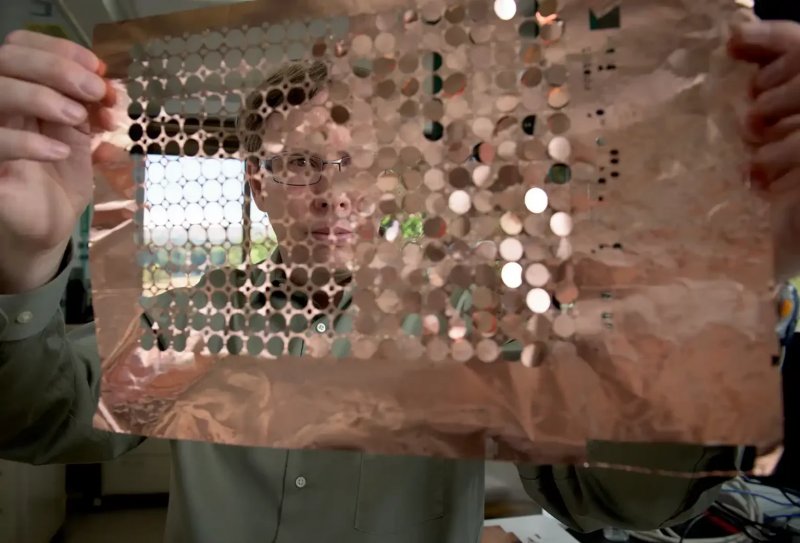
The device consists of layered metal discs separated by a wax-based insulating material. Once the battery reaches a specific temperature, the wax melts and the metal layers connect, triggering a controlled failure inside the cell.
Scientists involved in the project said it took years of testing to develop the correct wax composition that would remain stable during installation but still allow reliable activation during experiments.
According to NASA and KULR Technology Group, nearly all battery systems designed for crewed spacecraft applications have now been tested using ISC-D technology to ensure thermal runaway does not spread from one cell to another.
The technology has also gained wider commercial use beyond the space industry. More than 80 companies, including SpaceX, Tesla, Toyota and Volkswagen, are reportedly using the system to test batteries for vehicles, aircraft and satellites.
KULR has since expanded the technology by producing battery cells with the ISC-D already embedded inside, allowing complete battery systems to undergo advanced safety testing before deployment.
Researchers said the award highlights the growing importance of battery safety as lithium-ion systems become increasingly common in electric vehicles, aviation, consumer electronics and future space exploration missions.
By Leyla Şirinova