Trump and Iran set rival agendas for Islamabad nuclear talks


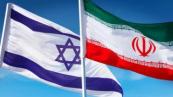
Israel pounded Lebanon with its heaviest strikes yet yesterday, killing hundreds of people and drawing a threat of retaliation from Iran, which said the attacks violated a ceasefire deal agreed with the US a day earlier.
Iran and the US, meanwhile, laid out sharply contrasting agendas for talks that aim to forge a more durable peace in the region, News.Az reports, citing Independent.
Those talks, due to take place in Pakistan on Saturday, will be led by US vice-president JD Vance and Iran’s parliament speaker Mohammad-Bagher Ghalibaf and foreign minister Abbas Aragchi.
RECOMMENDED STORIES
Both Iranian officials questioned whether the ceasefire could hold, saying the agreement had been undermined by Israel’s continued attacks on Lebanon, where Israel has been pursuing a parallel war with the Iran-aligned militia Hezbollah.
“The US must choose – ceasefire or continued war via Israel. It cannot have both, ”Mr Aragchi wrote on social media.
Israel and the US both said the two-week ceasefire did not cover Lebanon, and Israeli prime minister Benjamin Netanyahu said the strikes would continue.
US president Donald Trump announced the ceasefire late on Tuesday, two hours before a deadline he had set for Iran to open the blockaded Strait of Hormuz or face the destruction of its “whole civilisation.”
The US will, working with Iran, dig up and remove all of the deeply buried ... Nuclear Dust
Although both the US and Iran declared victory in a five-week-old war that has killed thousands, their core disputes remained unresolved. Each side is sticking to competing demands for a deal that could shape the Middle East for generations.
Iran’s nuclear ambitions also remain a sticking point. Mr Trump said Iran had agreed to stop enriching uranium, which can be turned into nuclear warheads, and the White House said Iran has indicated it would turn over its existing stocks.
“The US will, working with Iran, dig up and remove all of the deeply buried ... Nuclear ‘Dust,” Mr Trump said on social media.
Mr Ghalibaf, however, said it was allowed to continue enriching uranium under the terms of the ceasefire.
Despite the uncertainty, world stock indexes surged while oil prices plunged 14pc to settle near $95 per barrel, after falling as low as $90.40.
Benchmark Brent crude remains roughly $25 higher than before the joint US-Israel attacks began.
Tehran’s newly demonstrated ability to cut off Gulf energy supplies through its grip on the strait, despite decades of massive US military investment in the region, shows how the conflict has already altered power dynamics in the Gulf.
Mr Netanyahu said Israel had achieved many of its objectives in the war with Iran, but stressed that Israel had its “finger on the trigger” and was prepared to return to fighting at “any moment”.
Iran’s Tasnim news agency cited an unnamed source warning that Iran will withdraw from the ceasefire if attacks on Lebanon continue.
Iran also struck oil facilities in nearby Gulf countries, including a pipeline in Saudi Arabia that has been used to bypass the blockaded Strait of Hormuz, according to an oil industry source.
The enemy has suffered an undeniable, historic and crushing defeat
Kuwait, Bahrain and the UAE also reported missile and drone strikes.
The Strait of Hormuz remained shut to vessels sailing without a permit and shippers said they needed more clarity before resuming transit.
MarineTraffic data showed two Greek-owned and two Chinese-owned bulk carriers have passed through the strait since early yesterday.
In a flurry of online posts, Mr Trump announced new tariffs of 50pc on all goods from any country that supplies arms to Iran.
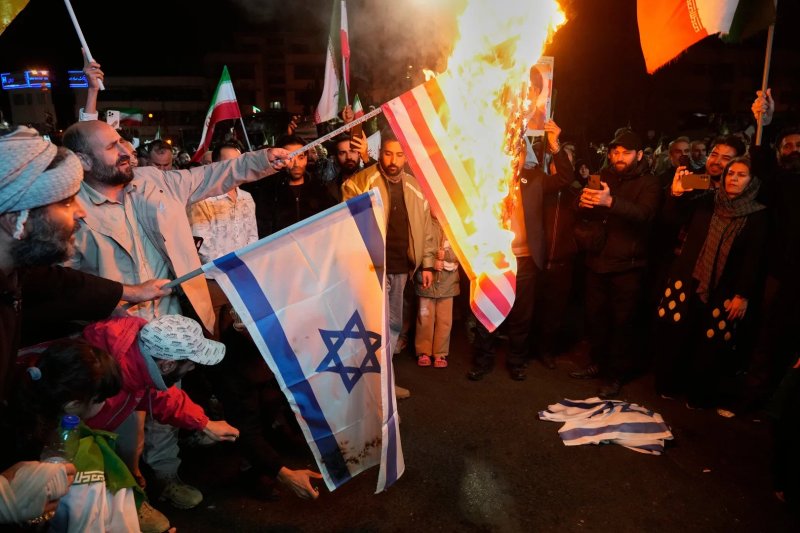
Crowds took to the streets of Iran overnight to celebrate, waving Iranian flags and burning those of the US and Israel.
Iran retains both its stockpile of near-weapons-grade highly enriched uranium and its ability to hit its neighbours with missiles and drones.
The clerical leadership, which faced mass protests months ago, has withstood the superpower onslaught with no sign of internal collapse.
“The enemy, in its unjust, illegal and criminal war against the Iranian nation, has suffered an undeniable, historic and crushing defeat,” Iran’s Supreme National Security Council said.
Meanwhile, Mr Trump believes Nato was “tested and they failed” during the Iran war, White House press secretary Karoline Leavitt said yesterday, just hours before Mr Trump was due to meet with Nato secretary general Mark Rutte. Ms Leavitt said Mr Trump was looking forward to having a “very frank and candid conversation” with the Nato chief.
By Leyla Şirinova


Similar news