Türkiye and Israel: How real is the threat of military escalation? Experts assess the risks


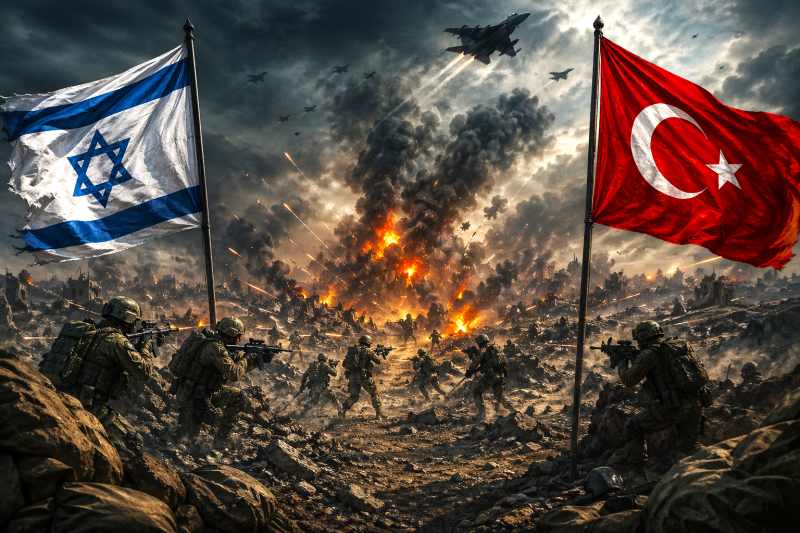
Against the backdrop of a sharp escalation in rhetoric between Türkiye and Israel, the prospect of a military confrontation between the two regional powers is no longer merely theoretical. Syria, the Kurdish issue, competition for regional influence, and the involvement of external powers are shaping a complex risk landscape in which diplomacy must stay ahead of military logic. Israeli and Turkish experts assess how realistic a Türkiye-Israel escalation scenario is and where the line lies between intense rivalry and a potentially dangerous conflict.
Mark Gorin, Editor-in-Chief of Aviv ("Spring") TV Channel, Israel
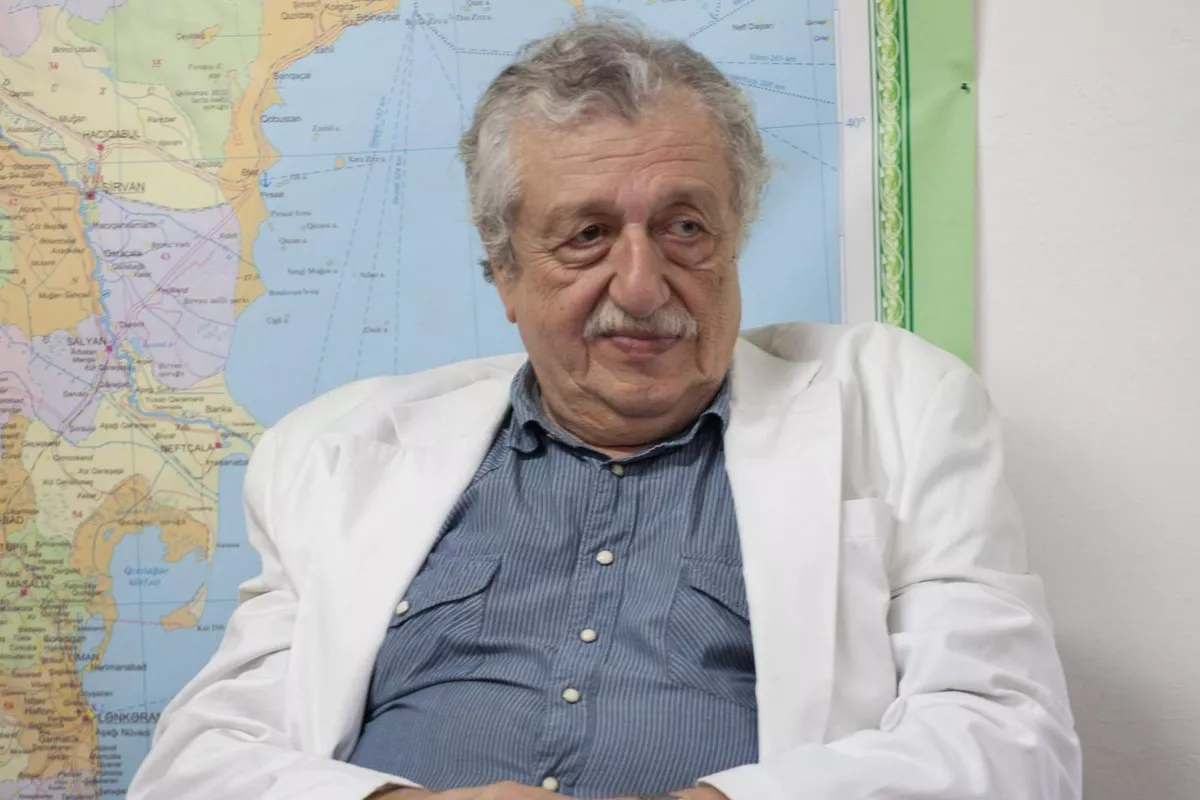
According to the expert, there is no serious risk of a direct or even limited military confrontation between Türkiye and Israel, despite the sharp escalation in political rhetoric and the growing rivalry between the two countries. “First and foremost, this is because the foundations of friendship, historical ties, and mutual goodwill between the people of Türkiye and the Jewish people extend back centuries,” he said.
“There are many connections between us. Despite the current rhetoric, substantial economic relations between Türkiye and Israel, as far as I know, remain intact. All of this acts as a deterrent to military escalation,” the expert noted, adding that the problem is that the Middle East too often measures strength through military power, and political signals frequently resonate more loudly than common sense.
He expressed hope that relations between the two countries would not become hostage to negative narratives. “The world is already burdened by too many tragedies, wars, bombs, pain, and human suffering. I do not believe that anyone genuinely wishes to add another layer of hostility to this already difficult reality,” he said, suggesting that the rhetoric is being deliberately intensified to serve certain political interests. “Unfortunately, that does happen. However, I do not believe that Israel will initiate such an escalation.”
The expert stressed that both Israel and Türkiye largely operate within the framework of policies pursued by the United States under President Donald Trump. Therefore, he said, the parties will undoubtedly find ways to avoid unnecessary steps, particularly those that could lead to a military scenario. “As I understand the situation, there remains an underlying sense of mutual sympathy between the two societies and states,” Gorin said.
“I clearly remember the remarkable initiative proposed by Azerbaijani President Ilham Aliyev, about which I wrote an article at the time. The initiative was well received in our media, published in both Türkiye and Azerbaijan, and generated a positive response,” he said. He added that President Trump had also made efforts to reconcile states that until recently appeared to be irreconcilable adversaries. “This demonstrates that when political will exists, a path to peace can always be found,” he added.
He suggested that Trump has simply not yet had the opportunity to focus on this particular issue, adding that Israel has elections this year, while in Türkiye important political developments are also expected. “It is therefore entirely possible that, over time, new figures will emerge, approaches will be renewed, and relations will return to the positive and constructive state that I have always advocated in Israeli public discourse,” he said.
“I say this as someone who feels close to Azerbaijan, close to Türkiye, and as a friend of Israel,” the expert added.
As for Syria, Gorin said the interests of Türkiye and Israel may indeed intersect there, but that much depends on people, political will, and the ability to prevent regional disagreements from developing into direct confrontation. “Syria may be a space for rivalry, but it does not necessarily have to become an arena for conflict between Ankara and Tel Aviv,” he said.
Hüsamettin İnaç, Turkish political scientist, professor at Dumlupınar University
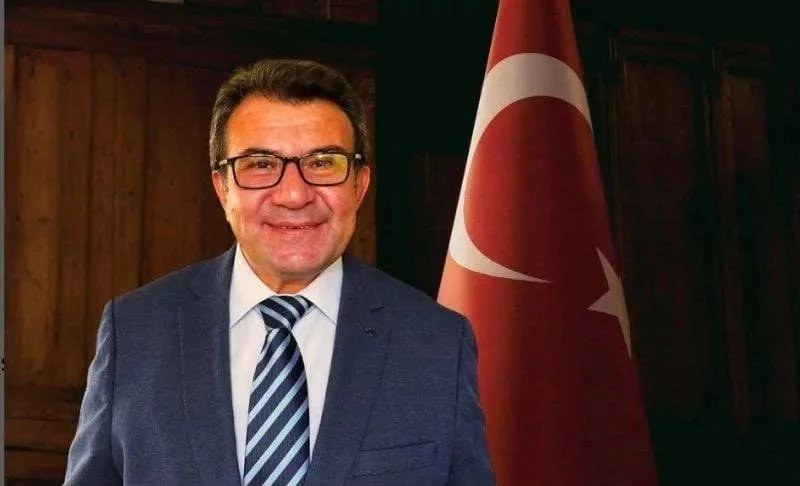
In the expert’s view, the risk of a direct military confrontation between Türkiye and Israel remains limited, although political rhetoric between the two sides has intensified noticeably. “The main sources of tension are linked to Türkiye's position on Gaza, its active diplomacy, its strong criticism of Israeli policies, and Ankara's efforts to place the Palestinian issue at the centre of the international agenda,” he said.
At the same time, he added, Israel is unlikely to engage in a direct confrontation with Ankara, as Türkiye possesses considerable military, demographic, political, and historical weight, remains a member of NATO, and plays an important role in the regional security architecture. “As a result, the most likely areas of confrontation will be diplomatic pressure, information campaigns, and competition for influence in third countries,” he noted.
İnaç suggested that the principal arena for Türkiye-Israel rivalry is likely to be Syria, since the interests of Ankara and Tel Aviv intersect there on issues such as security, control over armed groups, the future of the Syrian state, and the broader regional balance of power. He noted that Israel seeks to preserve its freedom of manoeuvre in Syria, while Türkiye is expanding its influence, particularly through efforts to combat PKK/YPG/PYD-linked structures and stabilise the country's northern regions.
He stressed that the Kurdish issue also remains one of the most sensitive pressure points for Türkiye. “Support for certain armed groups associated with the PKK/YPG may be perceived by Ankara as a direct threat to national security. In such circumstances, Türkiye would respond firmly and, if necessary, could launch new operations in northern Syria,” he said.
“However, despite these serious disagreements, a direct war between Türkiye and Israel remains unlikely. The political, military, and international risks would simply be too great,” he said, adding that the United States and NATO member states also have little interest in seeing such a scenario unfold. “Consequently, the confrontation is likely to remain within the realm of intense political rivalry, competition for influence in Syria, and pressure exerted through regional mechanisms,” he said.
In conclusion, he said that in the longer term, much will depend on whether the two sides can return to a more rational diplomatic approach. “Türkiye is focused on securing its borders and neutralising terrorist threats, while Israel seeks to preserve its strategic freedom of action in the Middle East. Turning these competing interests into a direct military conflict would be a dangerous and unnecessary step for both sides,” he said.
Aygün Attar, Turkish political scientist, chairwoman of TADİV

The expert believes that Türkiye and Israel states possess significant military capabilities and maintain strategic ties with the United States, fully understanding the costs of direct confrontation. “For this reason, a conventional interstate war between Ankara and Tel Aviv appears unlikely,” she said, describing the Middle East as dangerous precisely because major conflicts there often begin not with formal declarations, but with incidents that gradually spiral out of control.
“The principal risk zone is not a Türkiye-Israel border, which does not exist, but third-party arenas, above all Syria. It is there that Türkiye's security interests, Israel's military calculations, the fate of various armed groups, the question of Syria's territorial integrity, and the struggle to shape a new regional order intersect,” Attar said. “Any strike that Ankara perceives as a threat to Turkish military personnel, allied forces, or strategic assets could sharply increase tensions,” she stressed.
She emphasised that Syria may become the main arena of Türkiye-Israel rivalry, although it is more likely to take the form of indirect competition, intelligence activity, pressure exerted through local actors, and diplomatic manoeuvring. “Israel seeks to preserve its freedom of action in Syria, while Türkiye aims to eliminate what it sees as terrorist threats along its southern border and prevent the emergence of a hostile security belt. These competing strategic objectives inevitably bring the two sides into conflict,” the expert said.
She described the Kurdish issue as particularly sensitive, adding that any external support for groups that Ankara associates with the PKK/YPG/PYD will be viewed by Türkiye not as an abstract element of regional geopolitics, but as direct interference in its national security. “If such groups are used as instruments of pressure, Türkiye will respond firmly — politically, through intelligence channels, and, if necessary, militarily,” she said.
She also said that neither the United States, NATO, nor regional actors have any interest in an open confrontation between Türkiye and Israel, as such a conflict would affect the entire security architecture of the Eastern Mediterranean, Syria, Iraq, the Caucasus, and regional energy corridors. “Therefore, the most likely scenario is not a major war but rather a state of managed tension characterised by harsh rhetoric, competition for influence in Syria, pressure through allied groups, and efforts at diplomatic containment,” she added.
“Strategically, Türkiye operates according to the logic of protecting its statehood, borders, and regional influence. Israel, meanwhile, acts from the perspective of preserving military superiority and operational freedom. The danger arises when these two strategic imperatives collide without effective mediation or political restraint. The key question today is therefore not whether a war will begin tomorrow, but whether the two sides can keep their rivalry below the threshold of direct confrontation. This is precisely where diplomacy must move faster than missiles,” she said in conclusion.
Yuri Lagunin, Israeli political scientist

According to the expert, a direct war between Türkiye and Israel is unlikely, but it would be naïve to assume that the risk of a limited incident does not exist. “In today's Middle East, a single mistake, a single provocation, or a strike that lands in the wrong place can force diplomacy to chase events like a firefighter arriving after a house has already burned down,” he said.
He added that Türkiye and Israel have too many historical, economic, and strategic ties to deliberately move towards a major war. However, he noted that politics is rarely governed by logic alone, as emotions, elections, ideology, domestic pressures, and competition for regional leadership all play a role. “As a result, the principal risk lies not in a pre-planned war but in uncontrolled escalation,” he said.
The expert stressed that Israel closely monitors Türkiye's expanding influence, from Syria and the Eastern Mediterranean to the Caucasus and the Red Sea, as it understands perfectly well that Ankara ceased long ago to be merely a regional observer. “It has emerged as an independent centre of power. When dealing with such powers, Israel generally prefers not to engage in direct wars but rather to test their limits through intelligence operations, strategic signalling, targeted strikes, diplomatic pressure, and engagement through third parties,” Lagunin said.
“This is where the real complexity lies: Israel may not seek a war with Türkiye, yet it may be interested in periodically testing the limits of Ankara's resolve,” he said.
He pointed out that a potential trigger could be a strike on a site where Turkish military personnel or advisers are present, an incident in Syrian airspace, attacks by proxy groups against Turkish forces, or attempts to use the PKK/YPG as a means of exerting pressure on Ankara. “These are not merely theoretical possibilities but realistic risk scenarios,” he said.
“Syria could indeed become the principal arena of Türkiye-Israel rivalry. Türkiye has its own priorities there, including border security, counterterrorism operations, and influence over the future of the Syrian state. Israel has different priorities: preventing the emergence of hostile military infrastructure in Syria and preserving its freedom of action. The challenge is that these two strategic objectives increasingly overlap in the same geographical space,” the expert noted.
He said the absence of a common border between Türkiye and Israel reduces the likelihood of a direct war but increases the possibility of confrontation through third territories. “These are often the most dangerous conflicts today: no formal declaration of war is made, yet all sides are already conducting military operations, supporting allies, and accusing one another of aggression,” Lagunin noted.
He described the Kurdish issue as the most sensitive fault line for Ankara, adding that Israel could theoretically seek to use certain Kurdish groups as leverage against Türkiye. “However, this would be an extremely risky strategy. For Türkiye, the PKK/YPG is not an abstract Kurdish issue but a matter of national security. If Ankara perceives direct support for such groups as being directed against its interests, the response is likely to be severe.”
At the same time, he added that Israel should recognise that using the Kurdish issue against Türkiye means “opening a toolbox that may later prove impossible to close”. “What appears today to be a pressure lever could tomorrow turn into a regional wildfire,” he said.
The expert stressed that Israeli strategy is often guided by the principle that it is better to strike first than later explain to the public why a threat was underestimated, noting that this logic is considerably less applicable in the case of Türkiye. “Türkiye is not a fragmented armed group, a weak state, or a target for cost-free pressure. It is a NATO member with a large military, a powerful intelligence apparatus, strong political will, and a leadership accustomed to responding firmly,” Lagunin said.
“Therefore, for Israel, the Türkiye track is a chessboard on which no move can be made merely for dramatic effect. One wrong manoeuvre, and the entire game could slip out of control,” he said in conclusion.


Similar news