Mexico ramps up security ahead of 2026 World Cup


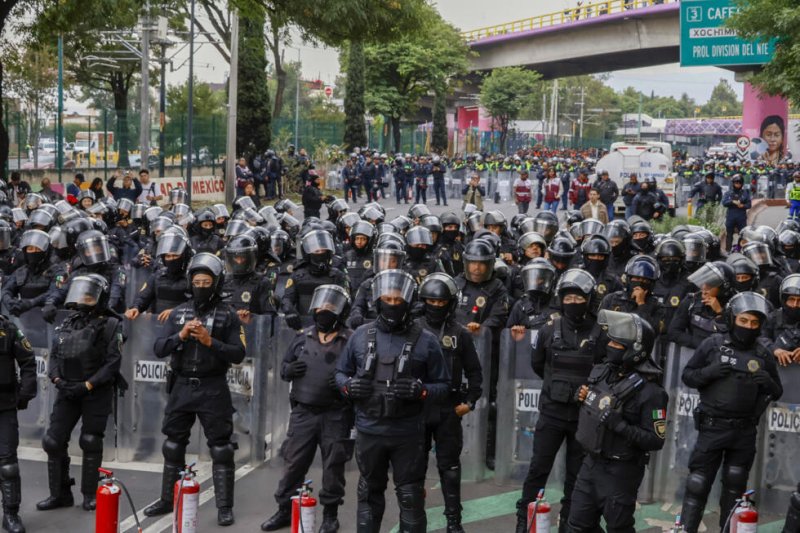
Mexico has intensified security measures ahead of the 2026 FIFA World Cup, with thousands of armed police patrolling alongside tourists in Mexico City as authorities say the situation remains under control in the days leading up to the tournament, News.Az reports, citing AFP.
The opening match is scheduled to take place in the city on Thursday, featuring Mexico against South Africa.
The global football tournament comes three months after the killing of a powerful drug lord triggered shootouts and highway blockades in western Mexico, violence that left more than 60 people dead.
RECOMMENDED STORIES
Mexico is now preparing to welcome more than five million visitors as it co-hosts the world’s premier football competition alongside Canada and the United States.
The expected influx of tourists is not unusual for Mexico, which receives millions of visitors each year.
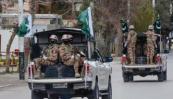
Under “Plan Kukulkan,” authorities have deployed nearly 100,000 personnel from the military, police forces, and private security companies to help ensure safety throughout the World Cup.
“The city has a lot of experience organizing these types of events and doing crowd management. There's trust,” Mexico City police chief Pablo Vazquez told AFP.
The 2026 tournament marks the third time that Mexico has hosted the FIFA World Cup.
Overshadowing the days before the tournament are thousands of protesting teachers, who have blockaded highways and led the government to cordon off the historic Zocalo square with metal barricades.
The football fan zone will be held in the Zocalo, where spectators will watch live-streamed games on a massive screen -- with President Claudia Sheinbaum planning to watch Thursday's inaugural match.
Protests have intensified the already glacial traffic in Mexico City, where authorities fear the teachers will follow through on their threat to shut down roads before the opening game.
"We are going to guarantee...that the World Cup inauguration is well-executed, in peace and tranquility," Sheinbaum said on Monday.
But the violence following the death of the druglord Nemesio "El Mencho" Oseguera on February 22 revealed the limitations of the country's security policies.
Gunmen for the Jalisco New Generation Cartel (CJNG) burned stores and blocked highways in 20 of Mexico's 32 states after elite soldiers killed him roughly 130 kilometers (80 miles) from Guadalajara, one of the World Cup host cities.
Sheinbaum gave "all guarantees" for the World Cup, saying there would be "zero risk" for visitors.
Police have been deployed in Mexico City's high-end Roma and Condesa neighborhoods in the final days before the June 11 opening game.
But far more were dispatched to the historic center, where anti-riot squads watch over foreign visitors weaving past the sprawling encampment of protesting teachers.
"It's weird to see so many police," Henry Rickets, a Canadian tourist passing through the area, told AFP. "In Canada there isn't any extra deployment of police, so it is a little worrying."
"I think that (tourists) might end up scared," said Miriam Sanchez, a Mexican citizen who is used to seeing large police deployments.
Violence in Mexico varies by region, with the worst rates located in states like Sinaloa, Guanajuato, Michoacan -- as well as Jalisco, where its capital of Guadalajara will host four World Cup matches.
The Akron stadium is located just a few kilometers from where authorities and search collectives discovered clandestine graves tied to criminal gangs.
FIFA inisists it has confidence in the safety measures Mexico has implemented ahead of the tournament.
By Nijat Babayev


Similar news