Israel vs. Türkiye: Should we expect a new confrontation?


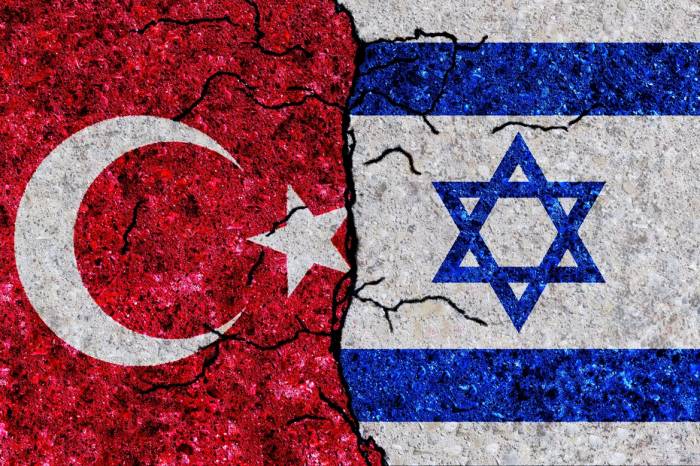
Photo: INSS
The Nagel Committee’s latest report urges Israel to prepare for a possible direct confrontation with Türkiye, emphasizing the need to strengthen its defense capabilities. This report highlights growing regional tensions and suggests allocating additional resources to enhance Israel’s air and missile defense systems. As relations between the two nations face challenges, the committee stresses the importance of careful strategic planning and foresight in Israel’s security policy.

Israeli political scientist and President of the Eastern Partnership Institute, Abraham Shmulevich , told News.az that the possibility of an Israel–Türkiye military conflict has been discussed for quite some time.
“And now, for the first time, it’s being considered at the highest levels in Israel,” he said, noting that this indicates the gravity of the situation.
Shmulevich added that he has warned about this potential scenario in the past. While he believes the likelihood of conflict has grown, he emphasizes that overall responsibility does not rest solely with Israel.
Shmulevich recalled that Türkiye was among the first countries to recognize the State of Israel after its founding. For decades, the two countries maintained close ties in various spheres, including economics, politics, and military cooperation. Despite occasional tensions, their relationship remained largely positive over the years.
According to Shmulevich, 2010 stands out as a significant moment in the history of Israel–Türkiye relations: “In 2010, when Hamas controlled the Gaza Strip and Israel maintained a blockade to prevent the supply of weapons, Türkiye launched the so-called ‘Freedom Flotilla.’ This humanitarian convoy, carrying Turkish activists, attempted to break Israel’s naval blockade. Israeli special forces, seeking to stop the ships, clashed with those on board, leading to the deaths of 10 Turkish citizens.”
This incident, sometimes referred to as the “Flotilla” affair, contributed to a notable downturn in bilateral relations.
The Nagel Committee’s recommendations indicate that Israeli defense officials now consider a direct confrontation with Türkiye to be a real scenario that requires attention. The report suggests that as regional tensions continue to rise, Israel should be prepared for a range of developments.
Among these recommendations are steps to reinforce defense infrastructure and maintain readiness for various security challenges.
Some observers note that Türkiye’s involvement in neighboring areas—including Syria—could, under certain circumstances, lead to heightened tensions near Israel’s northern borders. While no direct confrontation is desired by any party, the broader regional landscape can become more complicated if multiple actors operate within overlapping spheres of influence.
Shmulevich also points out that evolving alliances and partnerships in the region may affect security calculations. For instance, Israel’s cooperation with Greece and other neighboring countries could play a role if any disputes in the Eastern Mediterranean escalate.
Although a military confrontation is not considered desirable by either side, increased strain between Israel and Türkiye raises concerns about potential economic and political repercussions. Analysts suggest that any significant escalation could impact not only bilateral ties but also broader Middle Eastern stability, given the interconnectedness of regional alliances, trade, and security interests.
Israel’s strategic doctrine, as reflected by the Nagel Committee’s report, therefore underscores the importance of preparing for various contingencies. These include diplomatic efforts aimed at conflict prevention, as well as readiness measures in the event of escalating tensions.
While the prospect of an Israeli–Turkish conflict has been under discussion for some time, it appears to have gained new urgency within Israel’s security circles. The historical partnership between the two nations was once robust, and both sides have benefited from cooperation in multiple fields. However, as regional pressures intensify, the focus has shifted toward defense preparedness and the evaluation of potential flashpoints.
Experts like Abraham Shmulevich believe that continued dialogue and careful strategic planning may help mitigate risks. In the meantime, Israel is advised to remain vigilant, allocate resources appropriately, and maintain diplomatic channels in an effort to address regional uncertainties and preserve stability.


Similar news