From territorial battles to drone warfare: How the Ukraine war entered a decisive new phase - EXPERT OPINIONS


.png)
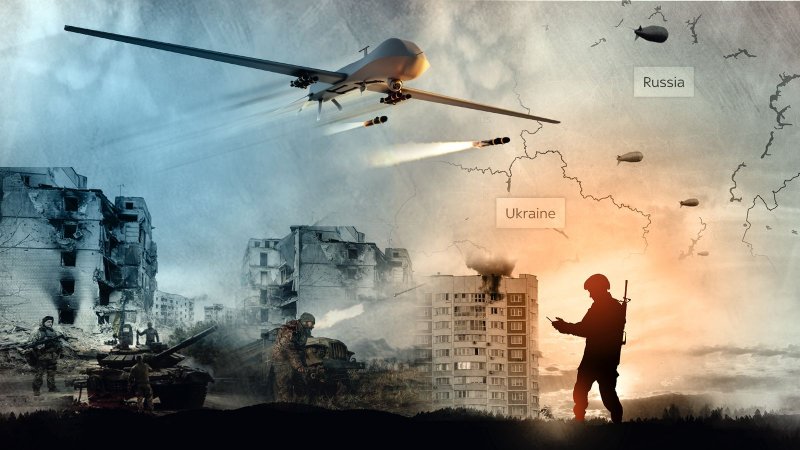
More than four years have passed since Russia launched its full-scale invasion of Ukraine on 24 February 2022. In the early days of the war, many political and military analysts around the world expected Russia's overwhelming military superiority to secure a swift victory. Numerous forecasts suggested that Ukraine would struggle to sustain effective resistance for more than a few weeks.
Yet the war has evolved in a manner few anticipated. What was initially expected to be a short and decisive military campaign has become one of the most significant geopolitical confrontations of the 21st century. It has reshaped European security, transformed military doctrine, accelerated the development of drone warfare, and forced governments around the world to reconsider long-held assumptions about military power, resilience, and international alliances.
The figures alone illustrate how dramatically the conflict has evolved. In the early stages of the invasion, Russian forces controlled roughly 27 per cent of Ukrainian territory. Following a series of Ukrainian counteroffensives, that figure declined significantly. Today, various assessments place the share of Ukrainian territory under Russian control at approximately 19.3 per cent.

Source: aljazeera
At first glance, the battlefield appears largely static. Changes along the front line over the past three years have often been measured in tens rather than hundreds of kilometres. This has led many observers to characterise the conflict as a strategic stalemate.
However, according to several prominent experts in both Ukraine and Russia, such a conclusion oversimplifies a far more complex reality.
Valeriy Dymov: "The stability of the front line is not a Russian victory"
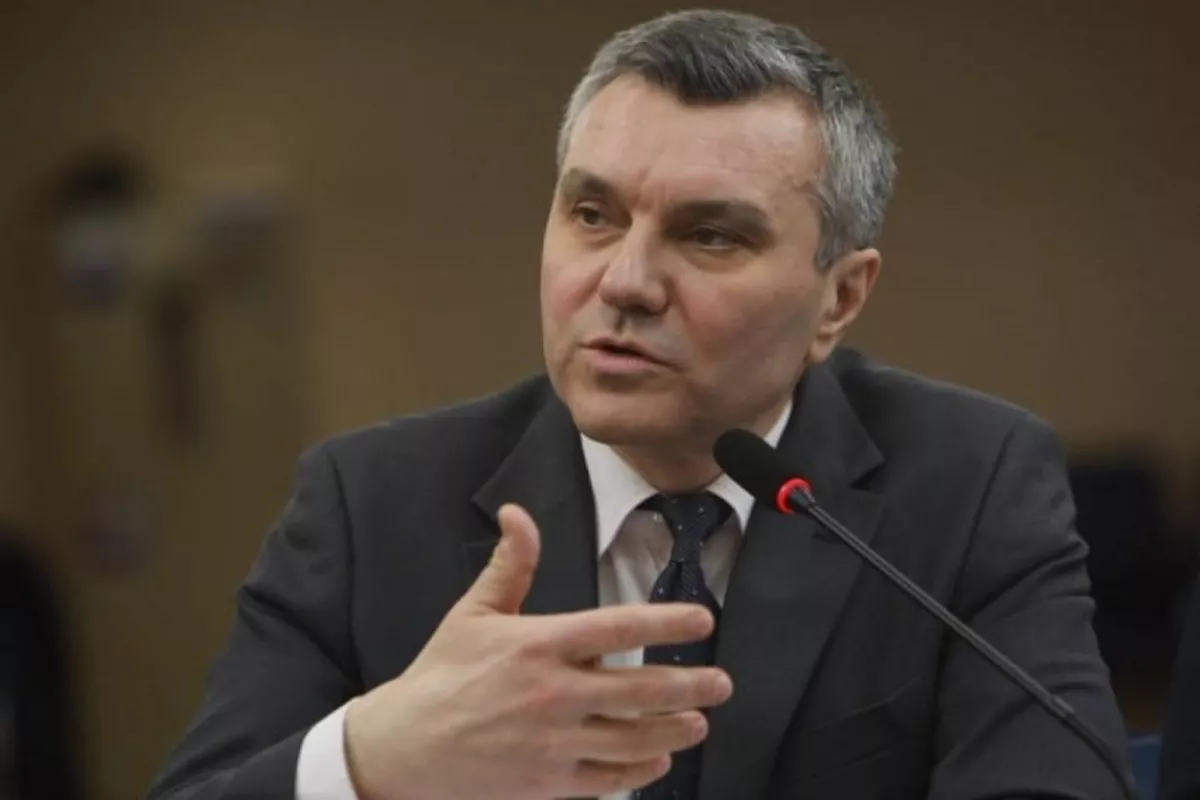
Photo: Valeriy Dymov, Ukrainian political analyst
Valeriy Dymov is one of Ukraine's best-known political analysts, specialising in national security, political development and international affairs. For years, he has closely monitored Ukraine's relationship with Russia and the broader geopolitical dynamics shaping Eastern Europe.
According to Dymov, the relative stability of the front line should not be interpreted as evidence of Russian success. Rather, he argues, it reflects Moscow's failure to achieve its original strategic objectives.
"For a long time, there was a narrative suggesting that if Putin was not stopped, he would continue advancing indefinitely. Today, that argument has lost much of its credibility. The situation on the battlefield demonstrates that many assumptions about Russia's military capabilities do not fully correspond to reality. Many believed that Ukraine would eventually be forced to accept Russia's terms. Yet developments over the past year have shown that the situation is far more complex and that the Kremlin has failed to achieve the results it expected," he said.
According to Dymov, Russia's objectives in 2022 extended far beyond territorial gains. Moscow sought to undermine Ukrainian statehood, weaken the country's political institutions and prevent Ukraine from pursuing an independent geopolitical course.
Four years later, none of those objectives has been fully achieved, he said.

Source: nypost
"The original Russian plan was far more ambitious than simply capturing territory. The objective was to eliminate Ukraine's ability to make independent strategic choices. Four years later, we see a completely different picture," he said, adding that Ukraine has preserved its state institutions, maintained its military capabilities and strengthened its position as an independent actor both on the battlefield and in international politics.
Dymov believes the military campaigns of 2025 and 2026 have been particularly significant because they challenged long-standing assumptions about Russia's offensive capabilities.
"During the spring and summer campaigns of 2025 and 2026, Russia failed to achieve the expected results and was unable to secure any significant breakthrough on the front line. If the original objective of the war was to defeat Ukraine quickly, that scenario is no longer visible," Dymov said. "Every new advance now comes at a much higher cost than before."
He argues that one of the most important developments of the past two years has been Ukraine's growing role in shaping diplomatic and political processes rather than merely reacting to them.
"Several years ago, Ukraine was often portrayed as an object of international politics. Decisions were discussed primarily among major powers. Today, Kyiv is increasingly acting as an independent participant in diplomatic, military and information-related processes," the expert said. "This represents a very significant change compared with the early years of the war."
Why the apparent stability of the battlefield may be misleading
Although maps suggest only limited changes along the front line, modern warfare can no longer be assessed solely in terms of territorial control.
In 2022, entire regions changed hands within weeks. Today, military operations are increasingly centred on logistics, industrial capacity, energy infrastructure, missile production, drone development and economic sustainability.
As a result, experts argue that the war has not become frozen. Rather, it has entered a new phase in which strategic outcomes are determined by a far broader range of factors than territorial gains on the battlefield alone.
Oleksandr Kovalenko: "This is not a strategic deadlock. It is the result of a deliberate defensive strategy."
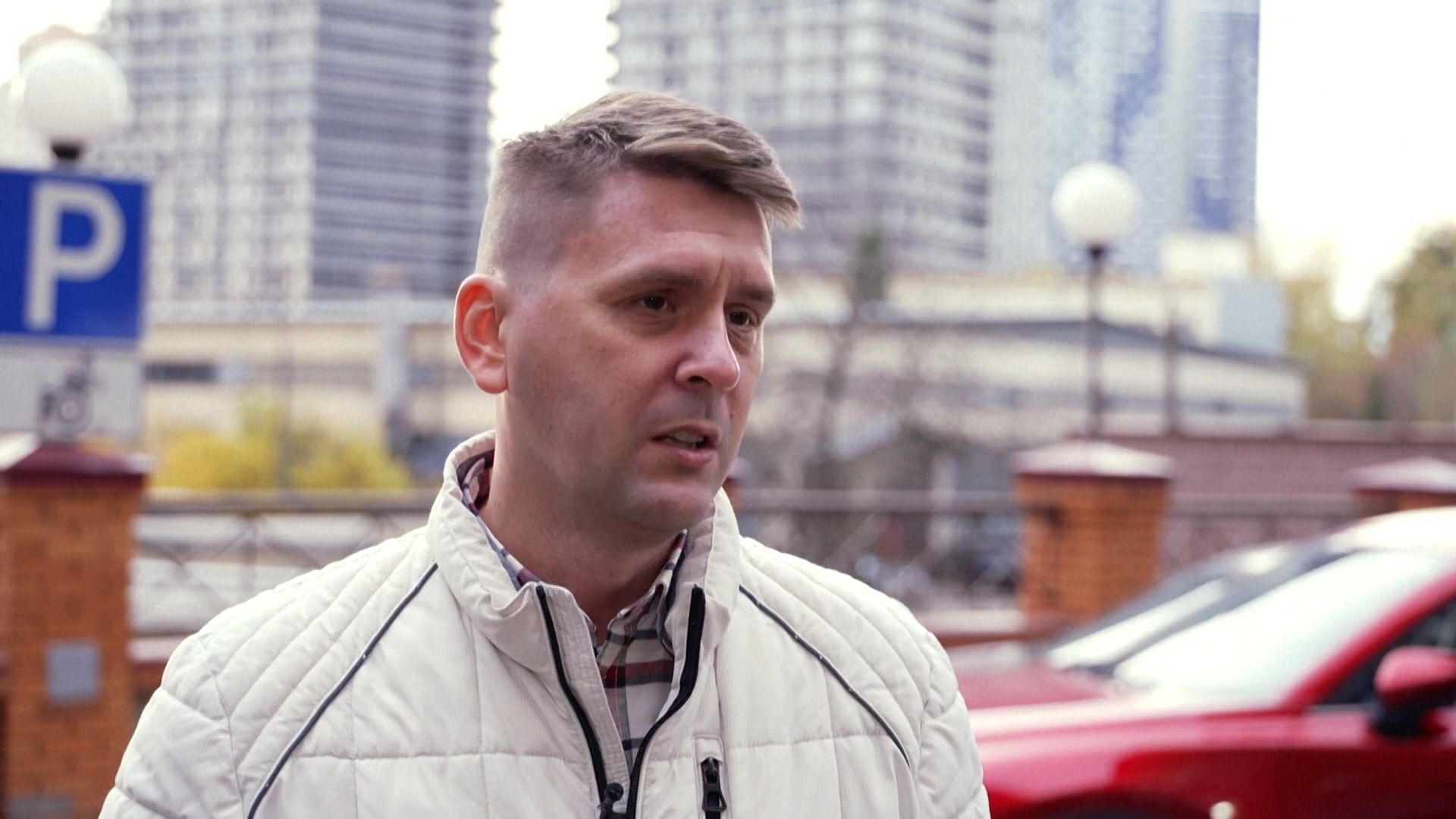
Photo: Ukrainian analyst Oleksandr Kovalenko
When discussing military developments, few Ukrainian analysts have been as outspoken as Oleksandr Kovalenko, a well-known military and security expert who has spent years studying Russian military capabilities and operational planning.
Kovalenko rejects the notion that the war has reached a strategic deadlock.
According to him, what many observers describe as stagnation is in fact the result of a deliberate Ukrainian strategy adopted in late 2023.
"We are not talking about a strategic deadlock. We are talking about Ukraine's decision in November 2023 to adopt a strategic defensive posture. The purpose of that decision was to slow Russian advances as much as possible and wear down Russian forces through sustained losses," he said.
Kovalenko noted that the summer counteroffensive failed to deliver the expected results, while military aid packages were blocked in the United States, creating a severe ammunition shortage. "Under those circumstances, transitioning to a strategic defensive posture was the most rational choice," he said.
Kovalenko argues that many observers misinterpreted developments on the battlefield over the following two years.
"Many people described the situation as a stalemate. In reality, what we were witnessing was a planned strategic defence. We were systematically exhausting the enemy. We were degrading its manpower, equipment, logistics and offensive capabilities. The results were not immediately visible, but today they are becoming increasingly apparent," he said.
According to the expert, Ukraine has gradually begun shifting towards more active operations during 2026.
"Since the beginning of 2026, we have started introducing more active counteroffensive measures. This has become possible because Russia's technological and operational capabilities have weakened significantly. We are no longer speaking solely about defence. We are talking about a gradual transition towards more active military operations," Kovalenko said.
Russia's offensive potential under pressure
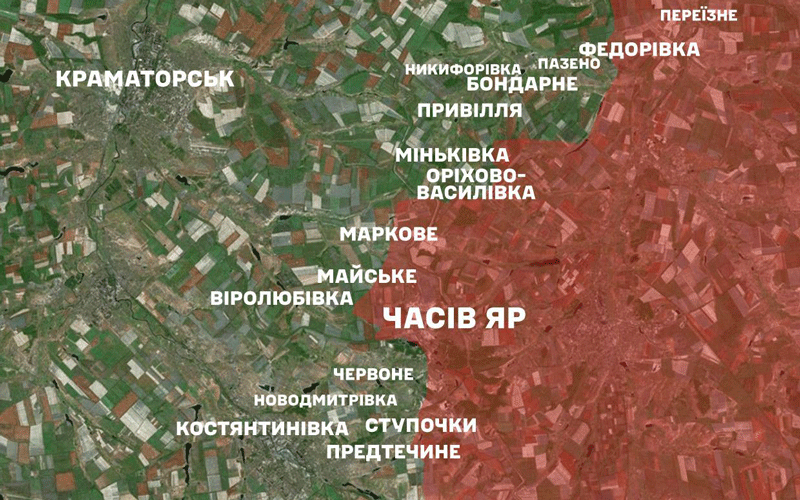
Source: www.osw.waw.pl
Kovalenko supports his assessment with specific statistics.
"In May 2026 alone, Russian forces captured approximately 20 square kilometres of Ukrainian territory while losing nearly 34,000 personnel. From a military perspective, those figures are extremely significant. Last year, there were months when Russia captured between 400 and 500 square kilometres. Today, the gains are dramatically smaller," he said.
According to Kovalenko, Russian losses since the beginning of 2026 have exceeded 157,000 personnel.
"Available information suggests that approximately 63 to 64 per cent of those losses were fatalities. That is an extraordinarily serious indicator. In conventional military theory, the number of wounded personnel typically exceeds the number of fatalities several times over," he said, adding that in some sectors the opposite trend is now being observed. "This demonstrates serious operational problems and directly affects Russia's offensive capabilities."
For Kovalenko, these figures help explain why Russia's spring offensive campaign in 2026 failed to produce any meaningful breakthroughs.
Drone warfare and the battle for infrastructure

Source: reuters
Both Dymov and Kovalenko identify drone warfare as one of the defining features of the current phase of the conflict.
Dymov emphasises the psychological and political consequences of Ukraine's expanding long-range strike capabilities.
"Previously, Russia was almost exclusively the side conducting long-range attacks. Today, Ukraine has significantly expanded its ability to respond. This is not only a military issue. It also has political, informational and psychological implications," he said. "Russia itself is beginning to feel the consequences of the war much more directly."
Kovalenko highlights the strategic objectives behind Ukrainian strikes.
"When we speak about infrastructure targets, we are primarily referring to oil refineries, fuel depots, defence-industrial facilities and logistics hubs. The objective is to reduce Russia's ability to wage war," the expert noted. "Oil exports remain one of the main sources of revenue for the Russian budget, and a substantial portion of that revenue is directed towards military spending. Therefore, attacks on these facilities directly affect Russia's military potential."
The growing importance of drones has fundamentally altered the nature of the conflict. Long-range strikes now reach hundreds or even thousands of kilometres beyond the front line, increasingly blurring the distinction between the battlefield and the rear.
Tatyana Poloskova: "This war is above all a failure of diplomacy"
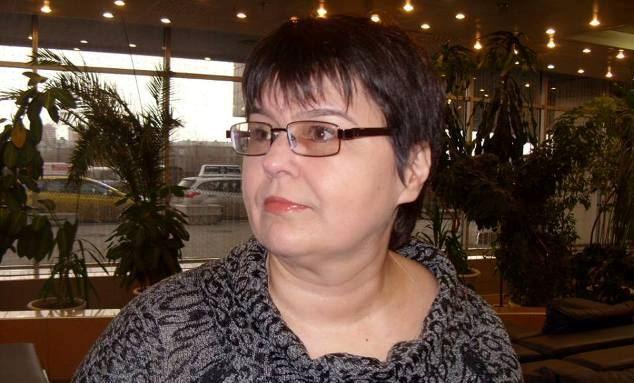
Photo: Russian political analyst Tatyana Poloskova
While Ukrainian experts focus primarily on military developments, Russian political analyst Tatyana Poloskova approaches the conflict from a diplomatic perspective.
A former official involved in relations with post-Soviet states, Poloskova argues that the roots of the war lie in missed diplomatic opportunities.
"Every war is first and foremost a failure of diplomacy. I say this not only as an analyst but also as someone who spent many years working with countries across the post-Soviet space," she stressed, adding that during the 2000s there was active dialogue between Russia and Ukraine.
"I personally visited Ukrainian cities, met with various social groups and observed those interactions closely. I am convinced that there were real opportunities to resolve disputes through diplomacy," the expert added.
According to Poloskova, diplomatic institutions gradually lost their effectiveness over time.
"Unfortunately, modern diplomacy is not what it once was. Soviet diplomacy operated on the principle that ten years of negotiations are preferable to a single day of war. That approach prevented many conflicts from escalating," she noted.
She believes that the social and economic effects of the war are becoming increasingly visible inside Russia itself.
"Strikes on energy infrastructure, developments around Crimea and rising prices inside Russia are creating concern among ordinary people. Naturally, many citizens want to see the conflict come to an end as soon as possible," the expert said.
Poloskova argues that the coming months could become particularly significant.
"In my view, the coming months may represent a turning point. The outcome will depend not only on events at the front but also on negotiations, international developments and processes taking place inside Russia itself."
What will determine the outcome of the war?

Source: KyivPost
Four years into the conflict, it is becoming increasingly clear that territorial control alone cannot explain the trajectory of the war.
Valeriy Dymov emphasises political resilience and international support.
Oleksandr Kovalenko highlights military exhaustion and the gradual weakening of Russia's offensive capacity.
Tatyana Poloskova points to diplomacy and domestic political dynamics as critical factors.
Although they approach the conflict from different perspectives, all three experts agree on one fundamental point: the Ukraine war of 2026 is very different from the Ukraine war of 2022.
Today, drones, industrial production, energy infrastructure, financial assistance, technological innovation and diplomatic influence play roles that are just as important as battlefield manoeuvres.
The key question is no longer which side can gain a few additional kilometres of territory. The more important question is which side can sustain its economic, military, political and social resilience over the long term.
Four years after the invasion began, the conflict has evolved into a contest of endurance. Its final outcome will likely be determined not only by armies on the battlefield, but by the ability of states and societies to adapt, innovate and withstand the pressures of a prolonged war.


Similar news