UK local elections: Labour hit hard, Reform makes gains


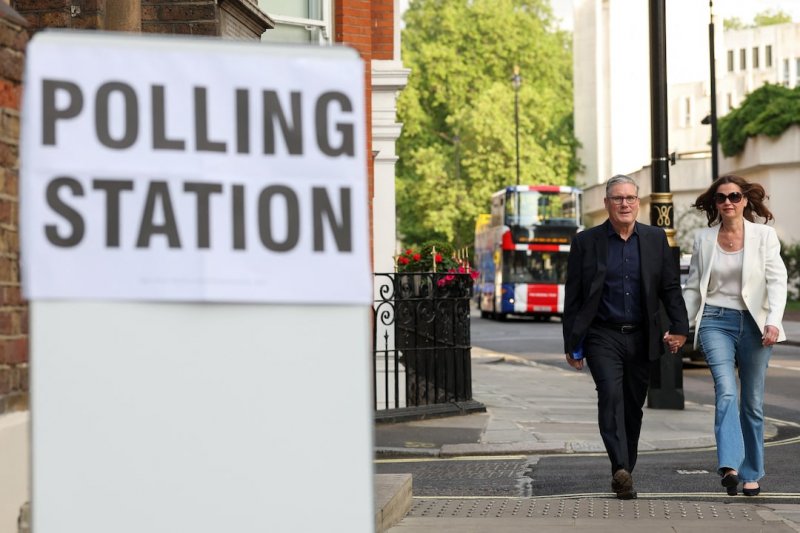
British Prime Minister Keir Starmer suffered heavy early losses in elections on Friday, highlighting growing voter dissatisfaction with his government and raising renewed questions about his political future just two years after a landslide general election victory.
Labour experienced significant losses in areas reporting results overnight, including long-standing strongholds in former industrial regions of central and northern England, as well as parts of London, News.Az reports, citing Reuters.
The main beneficiary of Labour’s losses was the anti-immigration populist Reform UK party led by Brexit campaigner Nigel Farage, which gained more than 200 council seats in England.
The party is also positioned to potentially become the main opposition force in Scotland and Wales to the pro-independence Scottish National Party and Plaid Cymru.
RECOMMENDED STORIES
“The picture has been pretty much as bad as anyone expected for Labour, or worse,” said John Curtice, Britain’s most respected pollster.
The elections covered 136 local councils in England, along with devolved parliaments in Scotland and Wales, and are widely seen as the most significant measure of public opinion ahead of the next general election scheduled for 2029.
Lawmakers within the governing Labour Party warned that if the party performs poorly in Scotland, loses power in Wales, and fails to retain a significant portion of the roughly 2,500 council seats it is defending in England, Starmer could face renewed pressure to resign or outline a timeline for stepping down.
Early results indicated a continued fragmentation of Britain’s traditional two-party system, shifting toward a multi-party political landscape. Analysts described it as one of the most significant transformations in British politics in a century.
Both Labour and the Conservative Party were losing ground not only to Reform UK but also to the left-wing Green Party, while nationalist parties were expected to perform strongly in Scotland and Wales.
Nigel Farage said the results so far were “way exceeding” expectations and represented a “historic change in British politics.”
Labour suffered particularly heavy defeats in key councils. The party lost control of Tameside in Greater Manchester for the first time in nearly 50 years after Reform won all 14 seats Labour was defending there.
In Wigan, a former mining community Labour had controlled for more than half a century, the party lost all 20 seats it was defending to Reform UK. In Salford, Labour held only three of the 16 seats it was defending.
Rebecca Long-Bailey, a Labour MP for Salford, described the results as “soul-destroying.”
While governing parties often struggle in mid-term elections, analysts suggested Labour could face its worst local election performance since 1995, when former Prime Minister John Major’s government lost more than 2,000 council seats amid widespread political difficulties.
So far, Reform UK has gained 253 council seats in England, with results still being counted in more than 4,200 seats. Labour has lost 185 seats, while the Conservative Party is down 93 seats.
Most remaining results, including those from Scotland and Wales, are expected to be announced later on Friday afternoon and evening.
By Nijat Babayev


Similar news