US efforts for political reform in Lebanon clash with challenging realities


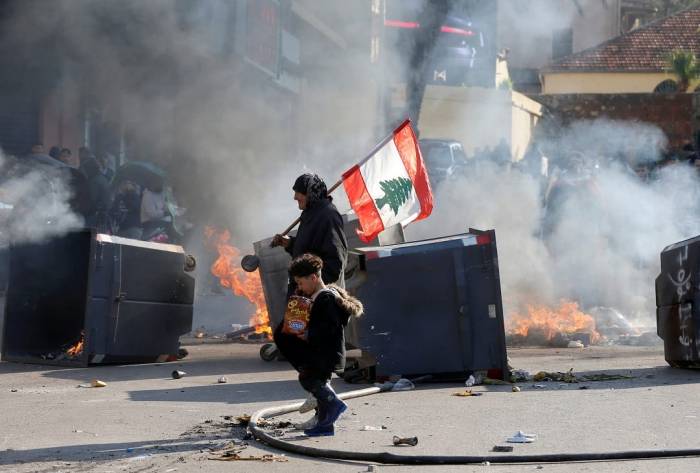
In the years before Israel invaded Lebanon, the country’s political system was deadlocked as Hezbollah and its allies vied with opponents over who should be president. Now, with the group weakened and its leadership decapitated, the United States wants to break that stalemate, but its overtures have only put Lebanon’s fragile stability on display, News.Az reports citing The Washington Times.
This week, Lebanon’s parliament speaker, Nabih Berri, told White House envoy Amos Hochstein at a meeting in Beirut that Lebanon refuses to elect a president under the pressure of war, reaffirming his stance that a cease-fire must come first, according to former and current Lebanese officials with knowledge of the talks. Like others in this story, the officials spoke on the condition of anonymity to discuss sensitive diplomatic conversations. Berri declined to comment.After the Israeli assassination of Hezbollah chief Hasan Nasrallah on Sept. 27, Washington saw an opportunity for political reform in Lebanon with the election of a president after a two-year vacancy, according to a senior Biden administration official. That prospect, always a long shot, grew more remote after Israeli troops invaded southern Lebanon on Oct. 1, and has further receded as Israel’s war aims expand.
The futile U.S. push for Lebanon’s parliament to finally act and elect an president has highlighted the limits of its influence in the region, as well as the factiousness and fragility of Lebanon’s political system. Even as Hezbollah reels from a series of devastating blows, its political opponents have struggled to unite under one platform, or to find a way forward that doesn’t worsen civil strife.
Lebanon’s sect-based system of power-sharing, developed after the country’s ruinous 1975-1990 civil war, has regularly resulted in political deadlock. The parliament’s inability to decide on a president has created a widening void that no one bloc is strong enough to fill on its own, and that Hezbollah has used to further entrench itself. Hezbollah and its allies have insisted on a candidate close to Iran and Syria, while others have advocated for a Western-leaning candidate.
“We need some time,” Samy Gemayel, the leader of the Kataeb Party and a prominent anti-Hezbollah voice, told The Washington Post this week. He wants a major conference, in a neutral place, where the majority of parliament can lay out a plan for Hezbollah to give up its weapons and the Lebanese army to take control of the south.
“We are waiting for the right moment to bring everyone in,” Gemayel said. “It is too early for many people in the middle, and if it’s bad timing, it can backfire.”
Making such a move amid constant airstrikes and a mass displacement crisis would require a difficult, perhaps impossible balancing act, analysts said. Though the opposition has called on Hezbollah to disarm for decades, pushing ahead with that goal while its fighters are battling Israeli forces in the south would be seen by many in Lebanon, especially the group’s Shiite Muslim base, as a national betrayal.
While Secretary of State Antony Blinken has spoken publicly about the future of Lebanese politics being solely in the hands of the Lebanese, the administration’s quiet, behind-the-scenes maneuvering has created concern among opposition parties that they could be perceived as instruments of a U.S.-engineered plan backed by Israel.
The U.S. favorite for the role of president is Gen. Joseph Aoun, commander of the Lebanese armed forces, according to a diplomat with knowledge of the matter. Hochstein met with Aoun during his visit and the two discussed the “general situation in the country and ways to support the Lebanese Army,” according to a statement from the army.
“If you push for a president now and the political class is divided, this will create an echo of 1982 when the Israelis brought to power Bashir Gemayel,” said Michael Young, a Lebanese political analyst at the Carnegie Middle East Center. Bashir, a militia commander and Samy Gemayel’s uncle, was assassinated less than a month after being elected.
“The Americans sometimes don’t really take into consideration the realities in a particular country — they just want their objectives to be achieved,” Young said.
During Berri’s meeting with Hochstein on Monday, their first since the Israeli ground invasion, the speaker emphasized that a president could be elected only when the fighting ends, according to Lebanese officials. A U.S. official described it as a “very detailed and productive meeting.”
A former senior Lebanese official with knowledge of the talks said Berri, who is allied with Hezbollah, rejected a U.S. proposal that the group’s fighters withdraw to north of the Awali River, some 30 miles from the Israeli border.
Earlier this month, Samir Geagea, a Christian warlord during the civil war who has since worked to position himself as the leader of the loose anti-Hezbollah movement, made an attempt at organizing a national opposition conference.
As parliament members and other influential figures gathered in the highly secured headquarters of the Lebanese Forces — Geagea’s right-wing Christian party — in the mountain village of Maarab, they described the moment as both a golden opportunity, and a last chance, to save Lebanon from destruction.
But aside from the LF members, no other party, religious or bloc leaders showed up. Samy Gemayel was not present, nor were any of the other key players needed for a political breakthrough, such as Druze leader Walid Jumblatt.
Geagea, flanked by posters listing years-old U.N. resolutions calling for militias to give up their arms and for Hezbollah to withdraw from the Israeli border, read out a lofty wish list, starting with the full implementation of Resolutions 1559, 1680 and 1701 and culminating in an end to the war.
Asked by The Post why he was confident that Hezbollah would agree to any of these conditions, Geagea admitted: “I am not.” When pushed on why the group would be willing to disarm after decades spent building up its arsenal, he responded: “Because this is logical. After all that has happened? This is the most logical thing.”
The question of how to persuade Hezbollah to disband its military wing and become a purely political movement without plunging Lebanon into another civil war has bedeviled the opposition for years. In 2008, when the government tried to shut down Hezbollah’s communication network, the group briefly seized part of Beirut.
In an interview at his residence in the mountain village of Bikfaya on Tuesday, Gemayel, the Kataeb Party leader, was having his first “work-from-home day,” as his aides described it. Over the previous few days, Gemayel said, he had received information from foreign intelligence sources that Hezbollah might start targeting opposition figures. Now, he was tightening his security.
“Hezbollah needs to show strength. If they cannot do it with Israel, they will need to do it internally,” he said. “People are starting to think about the moment after Hezbollah,” he explained, and “at some point they will send a reminder to everyone: ‘I’m not done yet, and I can harm each and every one of you.’”
Hezbollah did not respond to a request for comment. Other key opposition figures told The Post they had not received any information about possible threats from the group.
As Lebanon’s fragile sectarian balance comes under pressure, “we do not want to eliminate or to isolate anybody,” the LF’s Geagea said, adding that the push for a new president had nothing to do with U.S. pressure.
“But Hezbollah should be a political party like any other Lebanese party,” he said.


Similar news