Why did Sweden seize the cargo ship CAFFA?


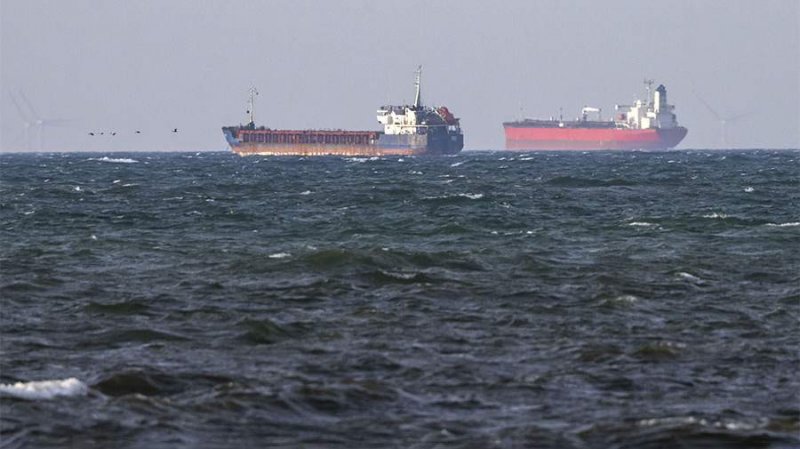
A Swedish court has approved a request from Ukrainian prosecutors to seize the cargo vessel CAFFA, a ship that Ukraine alleges was involved in the illegal export of goods from Russian-occupied Ukrainian territories.
The decision marks a significant legal milestone because it is reportedly the first time a foreign court has approved the seizure of a vessel at the request of Ukrainian authorities for activities connected to trade from occupied Ukrainian regions, News.az reports.
The operation was carried out after cooperation between Ukrainian and Swedish law enforcement agencies. Swedish authorities intercepted and boarded the vessel while it was in European waters, leading to its seizure.
The case has attracted international attention because it combines issues of international law, sanctions enforcement, maritime security, occupied territories and the broader geopolitical conflict between Ukraine and Russia.
What is the CAFFA vessel?
CAFFA is a dry cargo ship that Ukrainian authorities claim was repeatedly involved in transporting goods from territories occupied by Russia in Ukraine.
According to investigators, the vessel allegedly participated in activities that violated Ukrainian law governing entry into and exit from occupied territories.
Authorities believe the ship was used as part of a broader network designed to move goods originating from occupied regions while concealing the true nature and origin of those shipments.
The vessel became the focus of an international investigation after Ukrainian authorities gathered evidence regarding its alleged activities.
Why did Ukraine want the ship seized?
Ukraine argues that the vessel played a direct role in facilitating economic activities linked to occupied Ukrainian territories.
According to Ukrainian prosecutors, CAFFA systematically violated legal procedures established by Ukraine for accessing occupied regions.
The country considers trade conducted through ports located in occupied territories without Ukrainian authorization to be illegal.
As a result, Ukrainian authorities sought legal action against the vessel and requested international cooperation to prevent further operations.
The seizure is intended to demonstrate that ships allegedly involved in such activities can face consequences even outside the immediate conflict zone.
Why is this case considered historic?
The case is being described as a judicial first because it is reportedly the first instance in which a foreign court has approved the seizure of a vessel at the request of Ukrainian prosecutors over alleged violations connected to occupied territories.
Since Russia's occupation of parts of Ukraine, Kyiv has sought various legal, diplomatic and economic mechanisms to challenge activities it considers illegal.
Many investigations have focused on companies, individuals and transportation networks.
However, obtaining the seizure of a vessel through a foreign court represents a significant escalation in enforcement efforts.
The decision may establish an important precedent for future investigations involving maritime trade linked to occupied regions.
What are occupied territories?
Occupied territories are areas that are under the control of a foreign military force but remain internationally recognized as belonging to another sovereign state.
Ukraine considers Crimea and several other territories currently controlled by Russian forces to be occupied Ukrainian territory.
Most Western countries and international organizations continue to recognize these regions as part of Ukraine despite Russian control.
As a result, many legal disputes arise regarding trade, transportation, customs procedures and resource extraction in those areas.
The CAFFA case is directly connected to these broader disputes.
What laws did the vessel allegedly violate?
According to Ukrainian investigators, the vessel violated procedures governing access to occupied territories.
Ukraine has established legal requirements regarding:
-
Entry into occupied territories.
-
Departure from occupied territories.
-
Commercial operations in occupied regions.
-
Customs documentation.
-
Cargo declarations.
-
Port access procedures.
Authorities allege that CAFFA ignored these requirements and participated in unauthorized commercial activity.
The investigation remains focused on determining the extent and duration of the vessel's alleged involvement.
How did investigators track the vessel?
Modern maritime investigations rely on a combination of technologies and intelligence sources.
Authorities can use:
-
Satellite imagery.
-
Automatic Identification System (AIS) signals.
-
Port records.
-
Customs documentation.
-
Shipping manifests.
-
Insurance records.
-
Vessel ownership databases.
-
Crew information.
-
International shipping registries.
Investigators often compare vessel movements with declared routes and cargo records.
Discrepancies may indicate attempts to conceal activities.
In the CAFFA case, authorities claim they identified patterns suggesting repeated voyages connected to occupied territories.
Why is the vessel accused of using false identities?
According to Ukrainian investigators, the operators of the vessel attempted to conceal its activities.
Authorities allege that forged documentation and deceptive registration practices were used to hide voyages to ports located in occupied territories.
One of the most striking allegations is that the ship was listed in international shipping databases under the fictitious name "Guinea False."
Investigators argue that this was part of a broader effort to obscure the vessel's operational history and make tracking more difficult.
Such practices, if proven, could represent serious violations of international maritime regulations.
Why would a ship change its flag?
Ships operate under what is known as a "flag state."
The country whose flag a vessel flies exercises regulatory authority over that ship.
According to Swedish officials, the vessel reportedly changed from a Russian flag to a Guinean flag during the previous year.
Authorities believe the change may have been intended to conceal connections that could attract scrutiny.
Flag changes themselves are not necessarily illegal.
However, investigators often pay close attention to sudden changes involving vessels suspected of sanctions evasion, smuggling or other unlawful activities.
In some cases, changing a flag can make it more difficult for authorities to identify a vessel's ownership or operational history.
What is a flag state?
A flag state is the country in which a vessel is registered.
Every merchant ship must be registered under a national flag.
The flag state is responsible for:
-
Safety inspections.
-
Regulatory oversight.
-
Certification.
-
Crew standards.
-
Maritime compliance.
Flag states play an essential role in global shipping because they help establish accountability for vessel operations.
Questions regarding flag registration have become increasingly important in investigations involving sanctions and maritime enforcement.
What happened during Operation Svart kaffe?
In March, Swedish authorities launched a large scale operation known as "Svart kaffe," or "Black Coffee."
The operation involved:
-
Swedish special forces.
-
The coast guard.
-
Police support units.
-
Maritime enforcement authorities.
The objective was to intercept and seize the vessel CAFFA.
Authorities boarded the ship while it was operating in the Baltic Sea.
The operation attracted significant public attention because of its scale and because maritime interdictions of commercial vessels are relatively rare outside piracy or anti-smuggling missions.
The successful boarding demonstrated a high level of coordination among Swedish agencies.
Who carried out the operation?
The operation involved Sweden's Coast Guard, known as Kustbevakningen.
The agency is responsible for maritime law enforcement, environmental protection and border-related operations at sea.
Police units also supported the mission.
Such cooperation is common when authorities believe a vessel may be linked to criminal investigations or when boarding operations require additional security measures.
The involvement of multiple agencies reflected the sensitivity and complexity of the case.
Where was the vessel intercepted?
The vessel was intercepted in the Baltic Sea while reportedly traveling from Casablanca, Morocco, to St. Petersburg, Russia.
Its location within European waters created an opportunity for Swedish authorities to act on legal requests connected to the investigation.
The timing proved significant because vessels suspected of sanctions violations or illegal trade may become difficult to apprehend once they move into different jurisdictions.
The interception prevented the ship from completing its voyage.
Why was the ship traveling between Casablanca and St. Petersburg?
Public reports indicate that the vessel was en route from Casablanca to St. Petersburg when it was stopped.
Investigators are examining the nature of the cargo, shipping arrangements and commercial relationships connected to the voyage.
Authorities are particularly interested in determining whether any part of the vessel's operations was linked to activities in occupied Ukrainian territories.
Such investigations often involve extensive analysis of cargo records and shipping documentation.
What role did Sweden play?
Sweden's role was crucial because the vessel was located within a jurisdiction where Swedish authorities could act.
While Ukraine initiated the legal process and provided investigative information, Swedish authorities executed the seizure.
The case highlights how international cooperation can allow states to enforce legal claims beyond their own borders.
Without Swedish assistance, Ukrainian authorities might not have been able to take direct action against the vessel.
Why is international cooperation important in maritime cases?
Shipping is inherently international.
A vessel may:
-
Be owned in one country.
-
Registered in another.
-
Managed in a third.
-
Crewed by nationals of multiple countries.
-
Carry cargo originating elsewhere.
Because of this complexity, effective enforcement often requires cooperation among governments.
International collaboration helps authorities:
-
Share intelligence.
-
Verify documentation.
-
Track ownership structures.
-
Execute legal orders.
-
Prevent evasion.
The CAFFA case demonstrates how such cooperation can be used in politically sensitive investigations.
Could this case affect other ships?
Potentially yes.
Legal experts say the case could create a precedent for future actions involving vessels suspected of trading with occupied territories.
If courts in other countries adopt similar approaches, ship operators may face greater legal risks when conducting business connected to disputed regions.
The case could encourage additional investigations and increase scrutiny across international shipping networks.
How does shipping help sustain occupied territories?
Maritime transportation is essential for moving:
-
Grain.
-
Metals.
-
Construction materials.
-
Fuel.
-
Industrial products.
-
Consumer goods.
Authorities often focus on shipping because it serves as a critical link between occupied territories and global markets.
By targeting transportation networks, governments seek to restrict economic activities they consider illegal.
The seizure of vessels is one method of disrupting those networks.
What challenges do authorities face when tracking ships?
Investigators encounter numerous obstacles.
These include:
-
Complex ownership structures.
-
Frequent flag changes.
-
Shell companies.
-
False documentation.
-
Cargo transfers at sea.
-
Manipulation of tracking systems.
-
Multiple jurisdictions.
As maritime enforcement becomes more sophisticated, operators seeking to evade scrutiny often develop increasingly complex methods of concealment.
This creates an ongoing challenge for regulators and law enforcement agencies.
Could criminal charges follow?
The seizure of a vessel does not automatically result in criminal convictions.
Authorities must still establish evidence linking individuals or organizations to alleged violations.
Possible legal consequences could include:
-
Criminal prosecutions.
-
Financial penalties.
-
Asset forfeiture.
-
Trade restrictions.
-
Sanctions.
The outcome will depend on evidence presented in court and decisions by relevant authorities.
What does this case mean for maritime law?
The CAFFA case illustrates the growing intersection of maritime law and geopolitical conflict.
Traditionally, shipping disputes focused on commercial issues such as contracts, cargo claims and insurance.
Today, maritime law increasingly intersects with:
-
Sanctions enforcement.
-
National security.
-
Territorial disputes.
-
Economic warfare.
-
International criminal investigations.
As global conflicts evolve, shipping routes and commercial vessels are becoming more central to legal and diplomatic disputes.
What are the broader implications?
The seizure sends a message that activities linked to occupied territories may face increasing scrutiny beyond the immediate conflict zone.
It also demonstrates that international legal cooperation can produce tangible enforcement outcomes.
For governments, the case highlights the importance of intelligence sharing and cross-border investigations.
For shipping companies, it serves as a reminder that compliance risks are growing and that vessel operations may face examination by multiple jurisdictions.
For Ukraine, the seizure represents a significant symbolic and legal victory in its effort to challenge activities connected to occupied territories.
The bottom line
The seizure of the cargo vessel CAFFA by Swedish authorities represents a landmark development in Ukraine's efforts to combat what it describes as illegal trade from occupied territories. Ukrainian investigators allege that the vessel repeatedly violated procedures governing access to occupied regions and used deceptive methods, including false registrations and altered identities, to conceal its activities. Through close cooperation between Ukrainian and Swedish authorities, the vessel was intercepted and seized in European waters. Beyond the fate of a single ship, the case could have far reaching implications for maritime law, sanctions enforcement and future efforts to hold vessels accountable for activities linked to disputed and occupied territories.
By Faig Mahmudov


Similar news