Why is Guinea-Bissau's opposition leader still under house arrest?


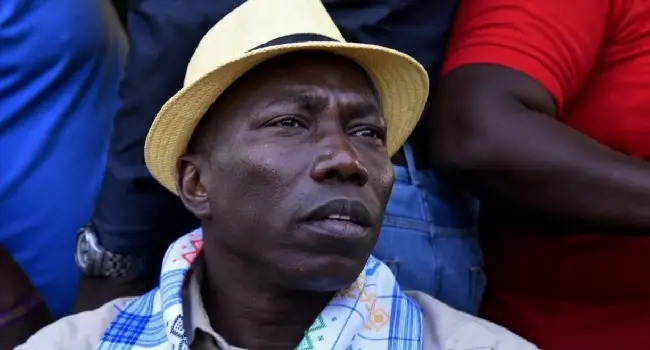
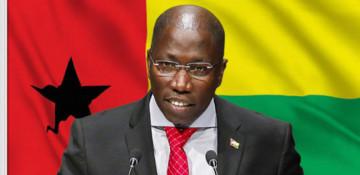
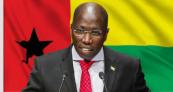
A military court in Guinea-Bissau has ordered opposition leader Domingos Simões Pereira to remain under house arrest after he was questioned again over allegations that he was involved in attempts to overthrow the country's military government.
Pereira appeared before judges amid heavy security and, according to his lawyers, answered all questions put to him. The court nevertheless decided that he should remain under house arrest while investigations continue, News.az reports.
RECOMMENDED STORIES
The decision has drawn attention because Pereira is one of the country's most influential opposition figures and a key player in Guinea-Bissau's political landscape.
Who is Domingos Simões Pereira?
Domingos Simões Pereira is the leader of the African Party for the Independence of Guinea and Cape Verde (PAIGC), one of Guinea-Bissau's most powerful political parties. He previously served as prime minister and has long been regarded as one of the country's leading politicians.
Because of his prominence and political influence, any legal action against him carries significant political implications.
What is the PAIGC?
The African Party for the Independence of Guinea and Cape Verde, commonly known as PAIGC, led the struggle that resulted in Guinea-Bissau's independence from Portugal in 1974.
The party dominated politics for many years after independence and remains one of the country's largest political organizations. Pereira's leadership of the party makes him one of the most important opposition figures in Guinea-Bissau today.
Why is Pereira under investigation?
Authorities accuse Pereira of involvement in efforts to overthrow the government. According to reports, investigators are examining his alleged connection to at least two attempted coups, one in 2023 and another in October 2025.
Pereira denies the accusations and insists he had no involvement in any plot against the government.
What does Pereira's legal team say?
His lawyer, João Paulo Indeque, says Pereira is innocent and fully cooperated with the court.
According to the defense, Pereira neither participated in nor had any knowledge of attempts to subvert the constitutional order. His legal team argues that the accusations are unfounded and politically motivated.
What is house arrest?
House arrest is a form of detention that allows an individual to remain at home rather than in prison. However, the person faces restrictions on movement and activities and may be monitored by authorities.
House arrest is often used while investigations or court proceedings are ongoing.
When was Pereira first detained?
Pereira was detained after the military overthrew President Umaro Sissoco Embalo on November 26 last year.
He remained in detention until January, when authorities released him but placed him under house arrest. The latest ruling means those restrictions will continue.
Who currently governs Guinea-Bissau?
The country is currently ruled by a military administration led by General Horta N'Tam, who took power following the overthrow of President Embalo.
The military government says it is working to maintain stability and national security, while critics have raised concerns about democratic governance and political freedoms.
Why is this case important?
The case is significant because it involves one of the country's most prominent opposition leaders. It also comes at a time when Guinea-Bissau is once again facing questions about political stability, democratic governance and the role of the military in politics.
The outcome could influence future elections, opposition activity and the country's broader political direction.
Has Guinea-Bissau experienced coups before?
Yes. Guinea-Bissau has a long history of political instability. Since gaining independence in 1974, the country has experienced four successful coups and several attempted overthrows.
Military intervention has repeatedly disrupted democratic governance and contributed to recurring political crises.
Why has political instability been a recurring problem?
Several factors have contributed to instability in Guinea-Bissau, including weak state institutions, economic challenges, intense political rivalries and the military's powerful role in national affairs.
These factors have often made it difficult for governments to complete full terms in office and have increased the likelihood of political confrontation.
What impact do coups and political crises have on citizens?
Political instability can affect economic growth, foreign investment, public services and national security. Frequent changes in government can also undermine confidence in institutions and make long term planning more difficult.
For ordinary citizens, political uncertainty often translates into economic and social challenges.
What evidence has been made public against Pereira?
Authorities have not publicly disclosed detailed evidence supporting the allegations. As a result, many observers are waiting for further legal proceedings to better understand the basis of the accusations.
The absence of detailed public information has fueled debate among supporters and critics alike.
Could Pereira face a trial?
Yes. If investigators conclude there is sufficient evidence, prosecutors could bring formal charges that lead to a trial.
Such proceedings would examine the allegations, the evidence presented by authorities and the arguments made by Pereira's defense team.
What happens next?
Several scenarios are possible. Authorities may continue investigating the allegations, bring formal charges, proceed to trial or eventually release Pereira if they determine restrictions are no longer necessary.
Political developments could also influence how the situation unfolds.
Why is the international community paying attention?
The detention of a major opposition leader in a country with a long history of coups has attracted international attention. Observers are closely monitoring the case to assess whether legal proceedings are conducted fairly and whether political rights and democratic principles are being respected.
What does this case mean for Guinea-Bissau's future?
The case has become a test of Guinea-Bissau's institutions and political system. Supporters of the military government argue that authorities must investigate threats to national security, while critics warn against the use of legal processes to target political opponents.
The way the case is handled could shape perceptions of democracy, rule of law and political freedom in Guinea-Bissau for years to come.
The bottom line
Domingos Simões Pereira remains under house arrest as Guinea-Bissau's military authorities continue investigating allegations that he was involved in coup attempts. Pereira denies any wrongdoing, and his lawyers insist he is innocent. The case unfolds against a backdrop of decades of political instability and military intervention, making it one of the most closely watched political developments in the West African nation today.
By Faig Mahmudov


Similar news