What does the Thailand ivory trafficking case reveal about the global illegal wildlife trade?


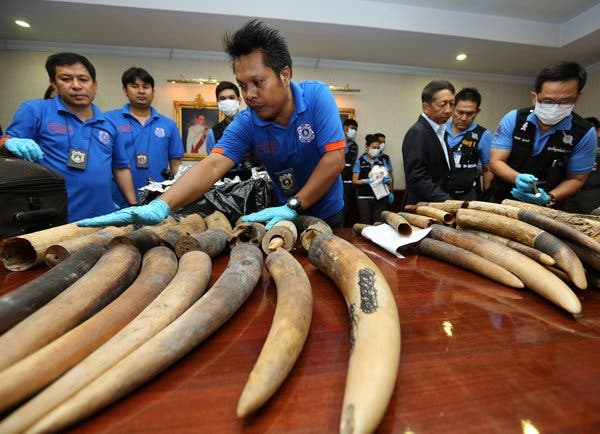
The arrest of nine individuals in Thailand over an alleged large scale ivory trafficking operation has once again drawn global attention to one of the world’s most persistent and profitable illegal trades.
The case is not simply about smuggling animal products across borders. It reflects the deep connections between organized crime, environmental destruction, corruption, international black markets, and the continued vulnerability of endangered elephant populations.
RECOMMENDED STORIES
Authorities in Thailand described the operation as a major crackdown against a sophisticated trafficking network believed to have handled illegal ivory products across multiple channels. The arrests reportedly followed coordinated raids and a lengthy investigation involving wildlife protection authorities, customs agencies, and anti trafficking units. Investigators believe the suspects were linked to a broader criminal structure connected to illegal wildlife supply chains operating internationally.
The significance of the case goes far beyond Thailand itself. Wildlife crime experts say ivory trafficking remains one of the most lucrative environmental crimes in the world despite years of international bans, enforcement campaigns, and conservation efforts. The latest arrests serve as a reminder that illegal demand for ivory still exists and that criminal organizations continue to exploit gaps in international enforcement systems.
The case has also reignited discussions about elephant conservation, transnational organized crime, the role of Asian markets in the ivory trade, and whether the world is doing enough to dismantle networks responsible for poaching and smuggling wildlife products.
Why is ivory trafficking still a major global problem?
Ivory trafficking has remained a serious international issue for decades because it combines extremely high profits with persistent consumer demand. Ivory is obtained primarily from elephant tusks and is often carved into decorative objects, jewelry, sculptures, luxury items, and cultural artifacts.
Although many countries have banned or heavily restricted ivory sales, illegal markets continue to operate. Criminal groups have adapted over time by developing more sophisticated smuggling routes, concealment methods, and money laundering systems.
The problem is particularly severe because ivory trafficking directly fuels elephant poaching. In many cases elephants are killed solely for their tusks, leaving carcasses abandoned in forests or savannahs. Conservation organizations have repeatedly warned that poaching has devastated elephant populations in several parts of Africa over the past decades.
Illegal wildlife trafficking is now considered one of the world’s largest underground economies. International agencies estimate that environmental crimes generate billions of dollars annually. Ivory remains one of the most recognizable and symbolically important components of that illegal trade.
Experts say the persistence of ivory trafficking reflects several overlapping factors. Consumer demand still exists in some markets. Organized criminal networks continue to profit from smuggling operations. Corruption sometimes weakens border enforcement. Legal loopholes in certain countries can create opportunities for illegal ivory to be disguised as legal stock. At the same time, limited resources in some conservation regions make anti poaching operations difficult.
Why is Thailand considered important in the ivory trade?
Thailand has historically occupied a complicated position within the global ivory trade. For years, the country was viewed by international observers as both a transit point and a consumer market for ivory products.
Several factors contributed to Thailand’s role. The country is a major transportation and tourism hub with extensive shipping, aviation, and trade infrastructure. Criminal groups have often used these networks to move illegal goods across borders.
Thailand also faced criticism in earlier years over domestic ivory regulations that conservation groups believed allowed illegal ivory to enter local markets. International pressure eventually pushed authorities to tighten restrictions, strengthen enforcement, and improve oversight mechanisms.
Over the past decade Thailand has introduced stricter registration systems and tougher laws targeting illegal ivory possession and trade. Authorities have conducted raids, seized smuggled ivory shipments, and increased cooperation with international organizations.
The recent arrests therefore carry symbolic importance. They indicate that despite stronger laws and enforcement efforts, trafficking networks continue attempting to use Thailand’s logistical advantages for illegal operations.
Officials now appear increasingly focused on dismantling the financial and organizational structures behind wildlife trafficking rather than simply seizing individual shipments.
How do ivory trafficking networks usually operate?
Modern ivory trafficking networks often function similarly to other forms of transnational organized crime. They involve multiple layers of participants operating across different countries and regions.
The process usually begins with poachers who kill elephants and remove tusks. Poaching frequently occurs in remote areas where law enforcement presence is limited. Criminal groups may recruit local hunters or armed gangs to conduct operations.
Once tusks are collected they are passed to middlemen who transport them to larger trafficking organizations. From there the ivory may be smuggled across borders using concealed cargo shipments, hidden vehicle compartments, falsified customs documents, or covert transportation networks.
Some traffickers attempt to disguise ivory within shipments of legal goods. Others move products through multiple countries to obscure their origins and complicate investigations.
In certain cases the ivory is processed into carvings or luxury items before reaching buyers. Criminal groups may also use online marketplaces, encrypted communications, or underground dealer networks to facilitate sales.
Investigators increasingly believe wildlife trafficking overlaps with other criminal activities including money laundering, narcotics smuggling, corruption, and financial fraud.
The Thailand case reportedly involved coordinated roles among suspects, suggesting investigators were dealing with a structured network rather than isolated illegal sellers.
Why are elephants targeted for ivory?
Elephants are targeted because their tusks are highly valuable on illegal markets. Ivory has historically been associated with wealth, luxury, status, artistry, and cultural symbolism in some societies.
African elephants are particularly vulnerable because they typically possess larger tusks than Asian elephants. However, Asian elephants also face serious threats from illegal trade and habitat loss.
Poachers often target mature elephants because they have the largest tusks. This can severely damage herd structures since older elephants play crucial roles in elephant societies. Female matriarchs guide herd movements, locate water sources, and transfer survival knowledge across generations.
When elephants are killed for ivory the impact extends beyond individual animals. Entire ecosystems can be affected. Elephants help shape landscapes by dispersing seeds, clearing vegetation, and creating ecological pathways used by other species.
Conservationists warn that sustained poaching can destabilize ecosystems and weaken biodiversity across large regions.
How serious is the elephant poaching crisis today?
The scale of elephant poaching varies by region, but conservation groups continue to describe it as a major threat.
Some elephant populations have shown signs of stabilization due to stronger protections, anti poaching patrols, and conservation investments. However, other populations remain under intense pressure.
African forest elephants have suffered especially severe declines in parts of Central Africa. Savanna elephants have also experienced population losses in several regions due to poaching and habitat encroachment.
In addition to ivory trafficking, elephants face numerous challenges including human wildlife conflict, deforestation, agricultural expansion, infrastructure development, and climate pressures.
Experts emphasize that poaching cannot be viewed in isolation. Elephant survival depends on broader environmental protection and sustainable land management policies.
The Thailand trafficking case has therefore renewed concern among conservationists who fear that continued demand for ivory could undermine years of progress in elephant protection.
Why are authorities increasingly treating wildlife trafficking as organized crime?
For many years wildlife crime was often treated primarily as a conservation issue. That perception has changed dramatically.
Governments and international agencies increasingly view wildlife trafficking as a serious security and organized crime problem because of its links to broader criminal systems.
Large trafficking operations require financing, logistics, communication networks, money laundering channels, corrupt intermediaries, and cross border coordination. These characteristics resemble those of narcotics trafficking and other major criminal enterprises.
Some investigations have uncovered links between wildlife trafficking and armed groups operating in unstable regions. Illegal wildlife products can generate revenue for criminal organizations or militant actors.
Financial investigators also warn that wildlife trafficking profits are frequently integrated into broader illicit economies. Criminal organizations may diversify activities across drugs, weapons, cybercrime, and wildlife products.
The Thailand case illustrates this evolving perspective. Authorities appear to have approached the investigation not merely as an environmental violation but as part of a broader criminal network.
How do authorities identify illegal ivory?
Modern wildlife investigations rely heavily on scientific and forensic tools.
DNA testing has become one of the most powerful methods for tracing ivory origins. Scientists can often determine where elephants were killed by comparing seized ivory samples with genetic databases.
This allows investigators to identify poaching hotspots and track trafficking routes.
Authorities also use radiocarbon dating to determine the approximate age of ivory. Microscopic analysis helps experts distinguish genuine ivory from synthetic materials or other animal products.
Investigators analyze shipping records, financial transactions, communications data, and surveillance evidence to map trafficking networks.
Advanced cargo scanning technologies are increasingly used at ports and airports to detect concealed ivory shipments.
Artificial intelligence and big data analysis are also becoming more important in identifying suspicious trade patterns.
The Thailand investigation likely involved multiple investigative techniques, especially given the number of arrests and reported scale of the operation.
Why does demand for ivory still exist?
Despite international awareness campaigns and legal restrictions, demand for ivory has not disappeared completely.
Several factors continue to sustain illegal markets.
In some cultures ivory has historically been associated with prestige, craftsmanship, and luxury. Antique ivory items may still carry social or symbolic value.
Collectors sometimes view ivory as a rare or valuable investment asset. Some buyers seek carved ivory products because of perceived artistic or historical importance.
Illegal markets also survive because criminal networks actively cultivate underground demand.
Conservation groups argue that consumer education remains essential. Campaigns aimed at reducing demand have attempted to emphasize the connection between ivory purchases and elephant deaths.
Younger generations in several countries appear less interested in ivory products than previous generations, which conservationists view as a positive development.
However, experts caution that even reduced demand can still sustain profitable black markets when supply chains are controlled by organized criminal groups.
What role does international law play?
The global ivory trade is heavily regulated through the Convention on International Trade in Endangered Species of Wild Fauna and Flora, commonly known as CITES.
CITES is an international agreement designed to prevent trade from threatening endangered species. Most international commercial trade in elephant ivory is banned or tightly restricted under the treaty framework.
Many countries have also introduced domestic bans on ivory imports and sales.
However, enforcement varies significantly between countries. Conservation groups argue that inconsistent implementation can create loopholes exploited by traffickers.
Some legal exemptions still exist for antique ivory or historical items in certain jurisdictions. Critics argue that such exceptions may allow illegal ivory to be laundered into legal markets.
The Thailand arrests may strengthen arguments for even stricter international enforcement and broader cooperation against wildlife trafficking.
How are smugglers adapting to enforcement pressure?
Wildlife traffickers continuously adapt their methods to avoid detection.
Authorities say smugglers increasingly use sophisticated concealment techniques. Ivory may be hidden inside machinery, timber shipments, agricultural products, or false cargo compartments.
Traffickers sometimes route shipments through multiple countries to complicate investigations and disguise origins.
Digital technologies have also changed the illegal trade landscape. Encrypted messaging apps, social media platforms, and online marketplaces can facilitate illegal wildlife sales.
Financial laundering systems have become more sophisticated as well. Criminal groups may use shell companies, informal transfer systems, cryptocurrency transactions, or layered banking networks.
As enforcement improves, trafficking operations often become smaller, more decentralized, and more difficult to detect.
The Thailand case demonstrates that despite stronger enforcement, organized networks remain capable of operating internationally.
What impact do major arrests actually have?
Conservation experts say large arrests can be important but should not be viewed as complete solutions.
Major operations can disrupt trafficking chains, seize illegal products, expose criminal networks, and deter some participants. High profile investigations also raise political and public awareness.
However, experts warn that dismantling one network does not automatically eliminate demand or stop other traffickers from filling gaps in the market.
Sustainable progress usually requires long term enforcement, international coordination, financial investigations, intelligence sharing, and demand reduction efforts.
Authorities increasingly focus on targeting network leaders and financial organizers rather than only arresting low level smugglers or poachers.
If investigators in Thailand succeed in tracing broader connections behind the nine arrests, the operation could have a more significant long term impact.
Could more arrests follow in the Thailand case?
It is highly possible.
Large wildlife trafficking investigations often continue for months or years after initial arrests. Authorities may still be analyzing seized evidence, communications, shipping records, and financial transactions.
Investigators could seek to identify suppliers, buyers, transport coordinators, or international partners connected to the operation.
Cross border cooperation may also expand if evidence links the suspects to networks operating in other countries.
Wildlife crime experts note that organized trafficking systems rarely involve only a small number of individuals. Networks can include recruiters, financiers, brokers, transport facilitators, corrupt officials, processors, wholesalers, and retailers.
The Thailand investigation may therefore represent only the beginning of a larger enforcement effort.
How are conservation organizations reacting?
Most conservation groups welcomed the arrests while emphasizing that much more remains necessary.
Organizations focused on elephant protection argue that enforcement operations are essential but must be paired with stronger prevention strategies.
Many groups are calling for:
stronger border controls,
greater international intelligence sharing,
harsher penalties for traffickers,
expanded anti poaching patrols,
increased funding for wildlife agencies,
better protection for elephant habitats,
and stronger anti corruption measures.
Conservation advocates also stress the importance of supporting local communities living near elephant populations. Poverty and limited economic opportunities can sometimes make poaching financially attractive in vulnerable regions.
Long term conservation success often depends on creating sustainable alternatives that benefit local populations while protecting wildlife.
What technologies are helping fight wildlife trafficking?
Technology is becoming increasingly important in anti trafficking operations.
Governments and conservation agencies now use drones to monitor protected areas and detect poaching activity. Satellite systems help track land use changes and identify suspicious movements.
DNA databases allow authorities to trace seized ivory to specific geographic regions.
Artificial intelligence systems are being tested for cargo screening and pattern recognition in shipping data.
Financial intelligence tools help investigators identify suspicious transactions linked to trafficking operations.
Some conservation projects use acoustic sensors capable of detecting gunshots or vehicle activity in remote wildlife areas.
Digital monitoring systems are also being developed to track legal wildlife permits and reduce opportunities for fraud.
The growing use of technology reflects how wildlife trafficking investigations are becoming more sophisticated and intelligence driven.
What broader lessons emerge from the Thailand arrests?
The Thailand ivory trafficking case highlights several broader realities about modern wildlife crime.
First, illegal ivory trafficking remains active despite years of global crackdowns. Demand has not disappeared completely and criminal organizations continue adapting to enforcement pressures.
Second, wildlife trafficking is deeply international. Poaching, smuggling, financing, processing, and sales often occur across multiple countries and jurisdictions.
Third, environmental crime increasingly overlaps with broader organized criminal activity. Governments no longer view wildlife trafficking solely as a conservation problem.
Fourth, enforcement progress is possible when authorities coordinate effectively across agencies and borders.
Finally, the case underscores the continuing vulnerability of elephants and other endangered species in a world where illegal wildlife products still generate enormous profits.
For conservationists, the arrests represent both progress and warning. Progress because authorities appear increasingly capable of targeting organized trafficking networks. Warning because the existence of such networks demonstrates that the illegal ivory trade remains resilient and adaptable.
Whether the Thailand operation becomes a major turning point will depend on what follows next. If investigators successfully dismantle broader trafficking structures, trace financial networks, and strengthen international cooperation, the case could become an important milestone in the fight against illegal wildlife trade.
But if underlying demand, corruption, and transnational criminal incentives remain unaddressed, experts warn that new trafficking networks may simply emerge to replace those disrupted.
The struggle against ivory trafficking therefore remains part of a much larger global challenge involving conservation, governance, organized crime, economics, and international cooperation.
By Faig Mahmudov


Similar news