Why did Bolivia's defence minister resign? Understanding the political crisis behind Marcelo Salinas' departure


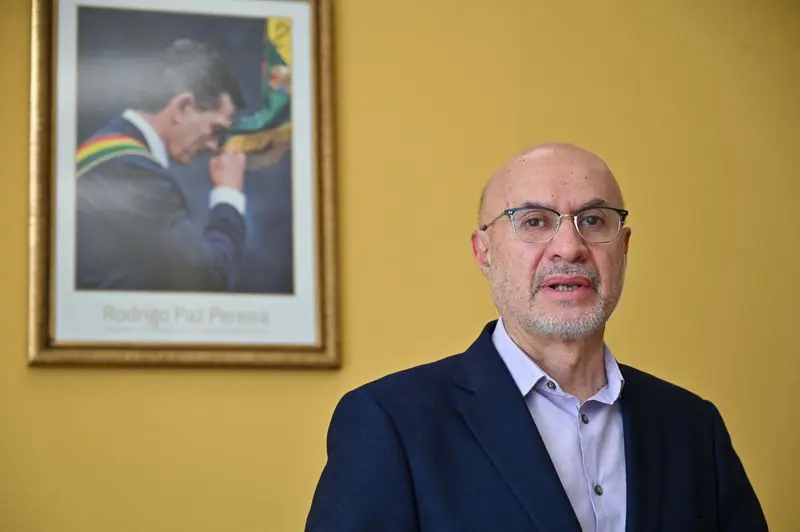
The resignation of Bolivia's Defence Minister Marcelo Salinas comes at a critical moment for the South American nation, which is grappling with weeks of anti government protests, economic tensions and a growing political confrontation between the administration of President Rodrigo Paz and opposition groups linked to former President Evo Morales.
While the government has not publicly detailed the exact reasons for Salinas' departure, the timing suggests it is closely connected to the country's worsening unrest and debates over how authorities should respond, News.az reports.
Who is Marcelo Salinas?
Marcelo Salinas served as Bolivia's defence minister during one of the most politically sensitive periods in recent years.
As defence minister, he was responsible for overseeing the armed forces and advising the government on security matters. His role became increasingly important as protests expanded across the country and the possibility of military involvement in restoring order entered public discussion.
His resignation comes as Bolivia faces one of the biggest challenges of President Rodrigo Paz's young administration.
Why did Marcelo Salinas resign?
Although officials have not provided a detailed explanation, several factors appear to have contributed to his departure.
The most immediate factor is the escalating political and security crisis.
Bolivia has witnessed weeks of demonstrations, strikes and road blockades that have disrupted transportation networks, affected supply chains and intensified pressure on the government.
As unrest grew, President Paz considered emergency measures that could potentially involve the military in maintaining public order.
Such situations often place defence ministers under intense political pressure because they must balance public security concerns with the risks associated with deploying troops against civilian protesters.
Salinas' resignation may reflect disagreements over strategy, government efforts to reshuffle leadership during the crisis or broader political calculations aimed at stabilizing the administration.
What sparked the protests?
The unrest began with labor strikes in May before expanding into a nationwide protest movement.
Demonstrators have blocked key highways and transportation routes, creating shortages and disrupting economic activity.
Several groups have joined the protests, including:
-
Labor unions.
-
Indigenous organizations.
-
Supporters of former President Evo Morales.
-
Social movements opposing government economic policies.
The protests have evolved from workplace grievances into a broader political challenge to the government.
Why are protesters angry?
The main grievances center on economic conditions.
Protesters argue that government policies have increased financial pressure on ordinary Bolivians.
Their concerns include:
-
Rising living costs.
-
Inflation pressures.
-
Austerity measures.
-
Employment concerns.
-
Declining purchasing power.
Many demonstrators are demanding that the government reverse spending cuts and adopt measures to ease the economic burden on households.
The opposition also accuses President Paz of failing to address the country's social and economic challenges quickly enough.
Who is Rodrigo Paz?
Rodrigo Paz became president in November 2025, ending nearly two decades of left wing political dominance associated with Evo Morales and his political movement.
His election marked a significant shift in Bolivia's political direction.
Supporters viewed his victory as an opportunity to reform the economy and attract investment.
Critics argue that his policies have disproportionately affected working class and lower income communities.
The current protests represent one of the biggest tests of his presidency.
What role does Evo Morales play in the crisis?
Evo Morales remains one of Bolivia's most influential political figures despite leaving office years ago.
Groups loyal to Morales have played a prominent role in organizing and supporting protests.
Many Morales supporters oppose the policy direction of the Paz administration and want a return to the social and economic model that characterized Bolivia during much of Morales' presidency.
The ongoing unrest has therefore become more than an economic dispute. It has evolved into a broader political struggle over Bolivia's future direction.
Why are road blockades so important?
The highway blockades have become one of the most powerful tools used by protesters.
By disrupting transportation routes, demonstrators have been able to pressure the government economically and politically.
Some of the most significant blockades have affected routes connecting:
-
La Paz
-
El Alto
Together, these urban areas are home to roughly two million people.
Disruptions have affected food distribution, fuel deliveries and commercial activity, increasing pressure on authorities to find a solution.
Was the military going to be deployed?
The possibility of military involvement became a major issue in the days leading up to Salinas' resignation.
President Paz reportedly considered emergency measures that could allow security forces and potentially the military to help restore order.
Such decisions are highly sensitive in Bolivia, where the military has historically played a significant role in political crises.
Critics warned that deploying troops could increase tensions and potentially lead to confrontations with protesters.
Supporters argued that restoring transportation links and public order was necessary to prevent further economic damage.
The debate likely placed additional pressure on the defence ministry.
Who will replace Salinas?
Government sources indicate that Ernesto Justiniano is expected to become the new defence minister.
His appointment would come at a crucial moment as authorities attempt to manage the protests while avoiding further escalation.
One of his immediate challenges will be coordinating security policy during a period of heightened political tensions.
What does the resignation mean for Bolivia?
The resignation signals the seriousness of the crisis facing the government.
Cabinet changes during periods of unrest often indicate that leaders are seeking new strategies or attempting to demonstrate responsiveness to public concerns.
The move may also be intended to strengthen government cohesion as officials prepare for potentially difficult decisions regarding security and public order.
However, replacing a minister alone is unlikely to resolve the underlying causes of the unrest.
Could the crisis worsen?
Several risks remain.
If negotiations between the government and protest leaders fail, Bolivia could face:
-
More road blockades.
-
Deeper economic disruptions.
-
Additional shortages.
-
Expanded protests.
-
Increased political polarization.
The situation could become particularly volatile if security forces are deployed in large numbers or if clashes occur between protesters and authorities.
What happens next?
The government's immediate priority is restoring transportation routes and preventing further economic disruption.
At the same time, officials must address growing public dissatisfaction over living costs and economic policy.
Whether the appointment of a new defence minister helps stabilize the situation will depend largely on developments beyond the military sphere, including political dialogue, economic reforms and the government's ability to rebuild public confidence.
The bottom line
Marcelo Salinas' resignation appears to be closely linked to Bolivia's escalating political and social crisis. Weeks of protests, economic grievances, road blockades and debates over potential military involvement have created immense pressure on the government. While a new defence minister may provide fresh leadership, the deeper challenges facing President Rodrigo Paz stem from economic dissatisfaction and a broader political struggle involving opposition groups and supporters of former president Evo Morales. Until those issues are addressed, Bolivia's unrest is likely to remain a major challenge for the country's leadership.
By Faig Mahmudov


Similar news