What happened in the Russia-Ukraine war over the last 24 hours


Fighting between Russian and Ukrainian forces continued across several frontline sectors over the past 24 hours, while diplomatic activity intensified amid renewed international efforts to explore possible pathways toward ending the war, News.az reports.
The day was marked by heavy clashes in eastern Ukraine, competing claims over territorial control, reported battlefield losses, and political statements that highlighted both the urgency and complexity of potential peace negotiations.
On the military front, the most intense engagements were reported in eastern Ukraine, particularly in the Donetsk region. Russian military officials claimed that their forces had made progress near key settlements, presenting these advances as part of a broader push to consolidate positions in the Donbas. Ukrainian military authorities, however, rejected these claims, stating that their units continue to hold defensive lines and that fighting remains ongoing with no confirmed loss of major towns. As has frequently been the case throughout the war, both sides issued conflicting accounts, underlining the difficulty of independently verifying developments in contested areas.
Ukrainian officials reported another day of heavy Russian losses. According to Ukrainian military statements, approximately 1,400 Russian soldiers were killed or wounded over the past 24 hours, alongside the destruction of military equipment, including armored vehicles, artillery systems, drones, and at least one aircraft. These figures could not be independently confirmed, but they reflect the scale of daily attrition being reported as fighting continues at a high intensity. Russian sources, for their part, maintained that Ukrainian forces suffered significant losses during attempted counterattacks and defensive operations, though they did not provide detailed figures.
The Donbas region remains the epicenter of ground combat. Ukrainian commanders said Russian forces are continuing attempts to advance using small-unit assaults supported by artillery and drones, while Ukrainian troops are relying on layered defenses, precision strikes, and counter-battery fire to slow and disrupt these movements. Military analysts note that while frontline positions may shift incrementally, neither side has achieved a decisive breakthrough in recent days, resulting in a grinding war of attrition.
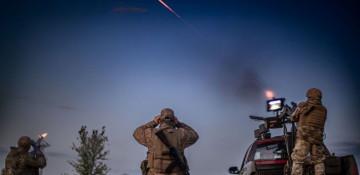
In addition to ground fighting, drone activity remained intense. Ukrainian officials reported continued Russian drone attacks targeting infrastructure and military positions, particularly during nighttime hours. Air defense systems were activated in multiple regions, and some drones were intercepted before reaching their targets. At the same time, Russian authorities reported drone incidents within Russian territory, including disruptions near industrial and logistical sites. These cross-border strikes highlight the increasingly expanded geographic scope of the conflict.
Beyond the battlefield, diplomacy took center stage over the past day. Ukrainian authorities confirmed that a revised peace proposal had been presented to the United States. The updated plan reportedly includes around 20 points and reflects adjustments to earlier Ukrainian positions, taking into account evolving realities on the ground and the positions of key international partners. While details have not been fully disclosed publicly, the proposal is said to address issues such as security guarantees, territorial integrity, and the future status of critical infrastructure.
President Volodymyr Zelenskyy commented on discussions with U.S. officials, revealing that Washington has floated the idea of a special economic or administrative arrangement in parts of eastern Ukraine as part of a broader peace framework. According to Zelenskyy, the concept would involve demilitarization measures and international oversight, aimed at preventing renewed fighting while creating conditions for economic recovery. However, he stressed that any agreement involving territorial questions would require broad public support inside Ukraine, potentially through a referendum or other democratic process.
Zelenskyy’s remarks sparked debate within Ukraine, where public opinion remains strongly opposed to territorial concessions. Ukrainian officials emphasized that sovereignty and internationally recognized borders remain core principles guiding Kyiv’s negotiating position. Analysts say that while Ukraine is under pressure to demonstrate flexibility to its partners, domestic political realities significantly limit how far its leadership can go in accepting compromises.
International reactions to these diplomatic discussions were mixed. Some Western officials signaled cautious support for continued talks, emphasizing the need to reduce violence and prevent further loss of life. Others expressed concern that premature concessions could embolden aggression and undermine international law. European leaders reiterated their support for Ukraine’s territorial integrity while acknowledging that any sustainable peace would require difficult negotiations.
In the United States, political rhetoric surrounding the war also intensified. Statements from senior political figures reflected growing impatience with the lack of progress toward a settlement, alongside calls for clearer strategies and measurable outcomes from diplomatic efforts. These internal debates in Washington are being closely watched in Kyiv and Moscow alike, as U.S. policy remains a critical factor shaping the course of the war.
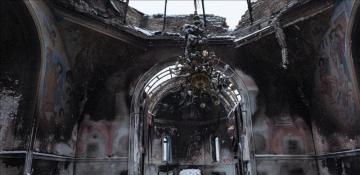
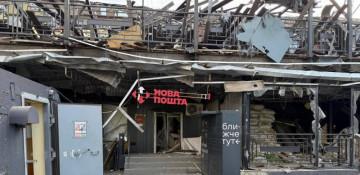
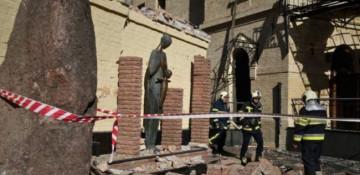
The humanitarian situation remains dire. Ukrainian regional authorities reported continued damage to civilian infrastructure, including power grids and residential buildings, as a result of shelling and air attacks. In some areas, temporary power outages and disruptions to water supply were reported. Emergency services worked throughout the day to repair damage and assist affected civilians. Humanitarian organizations warn that ongoing attacks on infrastructure could worsen living conditions during the winter period.
In Russia, authorities also acknowledged the impact of the conflict on civilian areas, particularly in regions close to the border and in locations targeted by drones. While damage was described as limited, these incidents have contributed to rising security concerns among the Russian population and prompted additional air defense measures.
Strategically, military experts assess that the past 24 hours did not fundamentally alter the overall balance of the war. Instead, they reflect a continuation of existing trends: high-intensity localized fighting, incremental territorial changes, and sustained pressure on both armies’ manpower and resources. At the same time, the renewed focus on diplomacy suggests that international actors are seeking to capitalize on any opportunity to move the conflict toward negotiations, even as fighting continues.
As the war approaches its fourth year, the combination of battlefield developments and diplomatic maneuvering underscores the complexity of achieving a resolution. The past day demonstrated that while military operations remain relentless, political channels are increasingly active, reflecting a shared recognition among global powers that the conflict’s costs are mounting.
For now, the situation remains fluid. Ukrainian and Russian forces continue to clash along a sprawling фронt line, civilians on both sides face ongoing risks, and international diplomacy proceeds against the backdrop of uncertainty. The coming days are likely to reveal whether recent diplomatic signals translate into concrete steps toward de-escalation or whether the war will continue along its current trajectory of sustained confrontation.


Similar news