What happens if military activity disrupts a nuclear site's power supply in Ukraine?


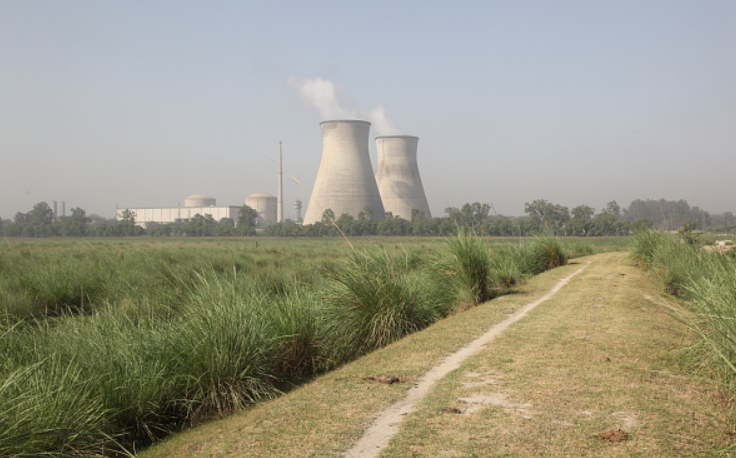
Russia's war against Ukraine has repeatedly raised concerns about the safety of nuclear facilities operating near active conflict zones.
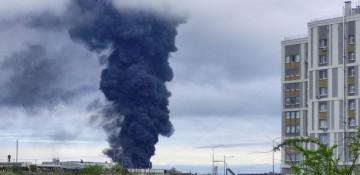
The latest incident has once again focused international attention on nuclear security after Ukraine called on the International Atomic Energy Agency (IAEA) to respond following a reported Russian strike near a nuclear-related facility, News.az reports.
RECOMMENDED STORIES
The development has renewed fears about the risks military operations pose to critical energy infrastructure and the potential consequences of an accident involving nuclear installations.
What happened?
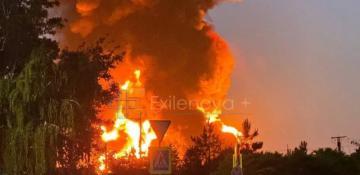
Ukrainian authorities reported that a Russian strike targeted an area associated with nuclear infrastructure, prompting Kyiv to urge the IAEA to take action and assess the situation.
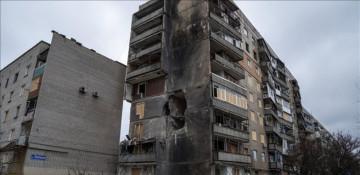
According to Ukrainian officials, the attack damaged infrastructure connected to the facility and raised concerns about the safety of operations in the area. Ukraine argues that attacks near nuclear sites create unacceptable risks and could potentially lead to a larger disaster.
Why is Ukraine calling on the IAEA?
Ukraine wants the IAEA to investigate the incident, document any damage, and increase international pressure to prevent military actions around nuclear facilities.
Kyiv has repeatedly argued that nuclear infrastructure should remain completely outside military operations because even limited damage can create serious safety concerns.
Ukraine also wants the agency to provide independent assessments that can help verify facts and reassure the international community about the condition of affected facilities.
What is the IAEA?
The IAEA is the United Nations nuclear watchdog responsible for promoting the peaceful use of nuclear energy and monitoring nuclear safety around the world.
The agency regularly conducts inspections, assesses safety standards, and provides technical expertise during nuclear emergencies.
Since the start of the Russia Ukraine war, the IAEA has played a major role in monitoring nuclear facilities affected by the conflict.
Why are nuclear facilities particularly sensitive during wartime?
Nuclear facilities require continuous power supplies, secure infrastructure, and highly trained personnel to operate safely.
Military attacks can threaten:
• Power transmission systems
• Cooling mechanisms
• Control equipment
• Communication networks
• Transportation routes
• Emergency response capabilities
Even when a reactor itself is not directly hit, damage to supporting infrastructure can create significant safety risks.
Was there a radiation leak?
According to available information, there has been no indication of a radiation leak resulting from the reported strike.
Officials have stated that radiation levels remain within normal limits.
However, experts emphasize that every incident involving military activity near nuclear facilities increases the potential risk of future accidents.
What facility was affected?
The reported incident involved infrastructure linked to Ukraine's nuclear energy system.
Such facilities may include substations, power connections, support buildings, or other components essential to maintaining safe operations.
Damage to supporting infrastructure can disrupt the broader energy system even if reactors remain unharmed.
Why does energy infrastructure matter for nuclear safety?
Nuclear facilities depend heavily on stable electricity supplies.
Even when reactors are shut down, cooling systems require power to function properly.
Loss of external electricity can force facilities to rely on backup generators.
Although backup systems are designed to operate during emergencies, experts generally view prolonged dependence on emergency power as undesirable because it increases operational risks.
Have nuclear facilities been targeted before during the war?
Concerns about nuclear safety have existed since the early stages of the conflict.
Several nuclear sites have experienced nearby shelling, drone activity, or damage to surrounding infrastructure.
The situation has repeatedly prompted warnings from international organizations about the dangers of military operations around nuclear facilities.
Why is the Zaporizhzhia Nuclear Power Plant often mentioned in these discussions?
The Zaporizhzhia Nuclear Power Plant is Europe's largest nuclear power station and has been at the center of international concern throughout the conflict.
The facility has experienced repeated disruptions to external power supplies and has been the subject of numerous IAEA inspections and warnings.
Its location near active military operations has made it a symbol of broader concerns about nuclear safety during wartime.
What powers does the IAEA actually have?
The IAEA can:
• Conduct inspections
• Monitor safety conditions
• Publish reports
• Advise governments
• Provide technical assistance
• Alert the international community to potential risks
However, the agency does not possess military or enforcement powers.
Its effectiveness largely depends on cooperation from governments and support from the broader international community.
What risks arise when military activity occurs near nuclear facilities?
Several potential dangers exist:
• Damage to electrical systems
• Disruption of cooling operations
• Fires affecting infrastructure
• Reduced access for workers
• Communication failures
• Delayed emergency responses
• Increased stress on operating personnel
While safety systems are designed to withstand various emergencies, conflict conditions introduce unpredictable risks.
Could an incident lead to another Chernobyl?
Experts generally emphasize that modern nuclear facilities differ significantly from the reactor involved in the 1986 Chernobyl disaster.
However, they also stress that military activity around nuclear infrastructure should never be treated lightly.
The goal of international monitoring efforts is to prevent any scenario that could escalate into a major nuclear emergency.
Why does Ukraine view these strikes as especially dangerous?
Ukraine argues that attacks on or near nuclear-related infrastructure threaten not only the country itself but also neighboring states and the wider region.
A serious nuclear incident could have cross-border consequences affecting public health, agriculture, water resources, and economic activity.
For this reason, Kyiv frequently seeks international involvement whenever nuclear safety concerns arise.
How has the international community responded to nuclear safety concerns in Ukraine?
Many governments and international organizations have consistently called for:
• Protection of nuclear facilities
• Respect for nuclear safety principles
• Unrestricted access for inspectors
• Avoidance of military activity near reactors
• Continued monitoring by international experts
There is broad international consensus that nuclear facilities should never become targets in armed conflict.
Could the incident affect Ukraine's energy sector?
Potentially yes.
Ukraine's energy infrastructure has faced significant pressure throughout the war.
Damage to facilities connected to electricity generation or transmission can create challenges for power distribution, industrial activity, and civilian energy supplies.
Even when nuclear reactors remain operational, supporting infrastructure remains essential for maintaining a stable electricity network.
What happens next?
Several developments are likely:
• Further assessments by Ukrainian authorities
• Monitoring by international organizations
• Possible IAEA inspections or reviews
• Continued evaluation of infrastructure damage
• Ongoing diplomatic discussions regarding nuclear safety
The situation will continue to be closely watched because of the potentially serious consequences associated with any threat to nuclear infrastructure.
Why is this incident significant?
The latest appeal from Ukraine underscores one of the most sensitive aspects of the Russia Ukraine war: the risk posed to nuclear facilities operating in or near conflict zones.
Although no radiation release has been reported, the incident serves as another reminder that nuclear safety depends not only on engineering and technology but also on stability and security.
As long as military operations continue near critical infrastructure, concerns about nuclear risks are likely to remain a major issue for Ukraine, the IAEA, and the international community.
By Faig Mahmudov


Similar news