What is behind the latest massacre in northeast Congo and why is violence escalating again?


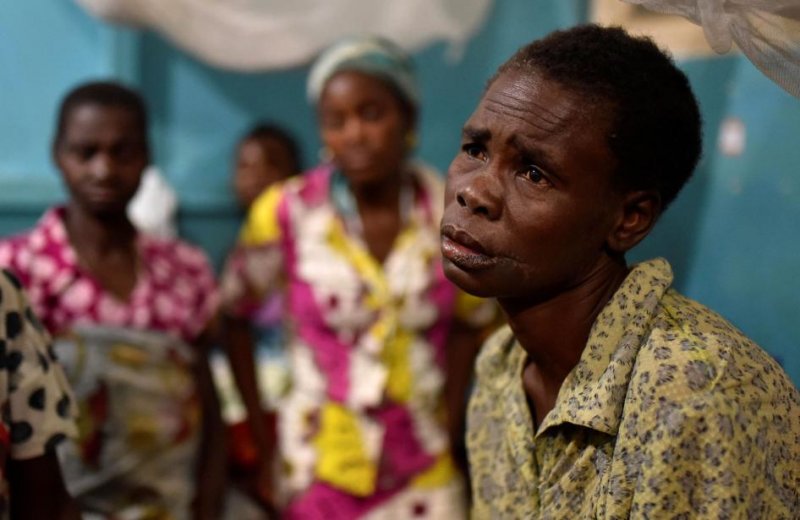
At least 69 people have reportedly been killed in a brutal militia attack in northeastern Democratic Republic of Congo, in one of the latest episodes of violence to hit the country’s unstable eastern region.
According to local and security sources, the killings took place in Ituri province, an area that has witnessed years of ethnic conflict, militia activity, and deadly competition over territory and resources.
RECOMMENDED STORIES
The attack was reportedly carried out by fighters linked to the Codeco militia, an armed group that claims to defend members of the Lendu ethnic community. Officials and witnesses said the violence targeted several villages and left dozens of civilians dead, while insecurity in the area delayed the recovery of bodies for days.
The massacre has once again highlighted the chronic instability affecting eastern Congo, where dozens of militias, rebel movements, and armed groups continue operating despite military campaigns, international peacekeeping missions, and repeated diplomatic initiatives.
The latest killings also underscore the broader humanitarian disaster unfolding in the eastern regions of the Democratic Republic of Congo, where civilians remain trapped between armed factions competing for power, land, ethnic influence, and control over valuable natural resources.
What exactly happened in Ituri province?
Security officials and local sources said armed men linked to the Codeco militia launched coordinated attacks in several villages in Ituri province near the end of April. The violence reportedly resulted in at least 69 deaths, although some local officials suggested the number could be even higher.
Reports indicate that the bodies could not immediately be recovered because armed fighters remained active in the area after the attack. Humanitarian sources described scenes of devastation with bodies reportedly scattered around villages affected by the assault.
The attack appears to have been linked to ongoing clashes between rival ethnic and militia groups operating in Ituri province, one of Congo’s most violence affected regions.
The killings came shortly after another armed group known as the Convention for the Popular Revolution, or CRP, reportedly attacked positions held by the Congolese army near the locality of Pimbo.
The situation has contributed to fears of escalating retaliatory violence between rival militias and communities.
Who are the Codeco militia?
The Codeco militia, formally known as the Cooperative for the Development of Congo, is one of the main armed groups active in Ituri province.
The group claims to defend the interests of the Lendu ethnic community, particularly against rival groups associated with the Hema community. The roots of the conflict between the Hema and Lendu communities stretch back decades and have repeatedly erupted into violence.
Although Codeco initially presented itself as a community based self defense movement, it has since evolved into a fragmented and heavily armed militia network accused of massacres, attacks on civilians, and widespread human rights abuses.
The group has been blamed for repeated attacks on villages, displacement of civilians, and assaults against Congolese security forces and humanitarian operations.
International organizations and human rights groups have accused Codeco fighters of carrying out killings, looting, and attacks targeting civilians in several parts of Ituri province.
Why is eastern Congo so unstable?
Eastern Congo has experienced armed conflict for more than three decades and remains one of the most volatile regions in Africa.
Several factors contribute to the instability:
- Ethnic tensions
- Competition over land
- Weak state authority
- Presence of foreign armed groups
- Illegal mining economies
- Smuggling networks
- Regional political rivalries
- Poverty and underdevelopment
The eastern provinces are rich in minerals including gold, cobalt, coltan, and tin. Armed groups often seek control over mining areas and smuggling routes because they provide major sources of income.
Militias frequently finance operations through illegal taxation, extortion, smuggling, and control of mining territories.
The weakness of state institutions and limited government control in remote areas have allowed armed groups to flourish.
The result is a complex conflict environment involving local militias, foreign rebel groups, criminal organizations, and political actors.
Why is Ituri province particularly dangerous?
Ituri province has long been a hotspot for ethnic violence and militia activity.
The conflict between the Hema and Lendu communities intensified during the Congo wars of the late 1990s and early 2000s. Although large scale fighting later declined, tensions never fully disappeared.
In recent years armed groups such as Codeco have revived violence across the province.
The province’s strategic location near Uganda and South Sudan, combined with its rich gold reserves, has made it particularly attractive to armed factions.
Militias in Ituri frequently attack villages, roads, mining sites, and military positions.
Civilians are often caught in the middle. Thousands have been displaced repeatedly as communities flee attacks and retaliatory violence.
The humanitarian situation has deteriorated significantly in many parts of Ituri, where insecurity limits access to aid and basic services.
How many armed groups operate in eastern Congo?
The number changes constantly, but experts estimate that more than 100 armed groups operate across eastern Congo.
Some groups are local militias formed around ethnic or community interests. Others are foreign rebel organizations that crossed into Congo from neighboring countries years ago.
Major groups operating in the region include:
- Codeco
- M23 rebels
- Allied Democratic Forces (ADF)
- Mai Mai militias
- CRP militia factions
These groups often compete for territory, resources, and influence.
Some cooperate temporarily while others fight each other.
The fragmented nature of the conflict makes peace efforts extremely difficult because agreements with one group do not necessarily stop violence from others.
What is the role of ethnic tensions in the conflict?
Ethnic identity remains a major factor in violence across Ituri province.
The Hema and Lendu communities have a long history of disputes over land ownership, political influence, grazing rights, and access to resources.
Colonial era policies are often blamed for worsening divisions by favoring certain groups economically and politically.
Over time local disputes evolved into armed confrontations involving militias claiming to defend specific ethnic communities.
Although ethnic identity remains central, analysts warn that modern armed groups are also driven by criminal profits, political ambitions, and economic incentives.
In many cases militias use ethnic narratives to recruit fighters and justify violence while also pursuing control over lucrative territories.
What role do Congo’s minerals play in the violence?
Natural resources are deeply connected to the conflict in eastern Congo.
The region contains enormous deposits of minerals used in global industries including electronics, batteries, and renewable energy technologies.
Gold mining is especially important in Ituri province.
Armed groups often seek control over mining sites because they generate huge profits through illegal taxation and smuggling.
Criminal networks can sell minerals through regional and international supply chains, providing armed groups with money to buy weapons and sustain operations.
The competition for mining territories has intensified violence in several provinces.
Experts often describe eastern Congo as an example of a “conflict minerals” crisis where natural wealth fuels insecurity rather than development.
Why has the Congolese army struggled to stop militias?
The Congolese military faces enormous challenges.
These include:
limited resources,
poor infrastructure,
corruption,
insufficient training,
logistical difficulties,
and the sheer number of armed groups operating across vast territories.
Some military units have also been accused of abuses against civilians, undermining trust among local populations.
In remote regions militias often know the terrain better than government forces and can move quickly between villages and forests.
Eastern Congo’s rugged geography further complicates military operations.
At times the army has also relied on alliances with local militias to fight rival groups, creating additional complications and shifting loyalties.
Analysts say military operations alone are unlikely to solve the crisis without broader political and economic reforms.
What is MONUSCO and what role does it play?
The United Nations peacekeeping mission in Congo, known as MONUSCO, has operated in the country for decades.
It is one of the UN’s largest and most expensive peacekeeping operations.
MONUSCO’s responsibilities include:
protecting civilians,
supporting Congolese security forces,
monitoring armed groups,
and helping stabilize conflict zones.
The mission has saved civilians during attacks and provided humanitarian support in dangerous regions. In the latest violence, MONUSCO said it rescued nearly 200 people caught under fire during earlier militia clashes in Ituri.
However, the mission has also faced criticism from many Congolese citizens who believe it has failed to stop armed violence despite years of deployment.
Frustration over continuing insecurity has fueled protests against the peacekeeping operation in several cities.
How serious is the humanitarian crisis in eastern Congo?
The humanitarian situation is extremely severe.
Millions of people have been displaced by conflict across eastern Congo.
Entire communities have fled repeated attacks by militias and rebel groups.
Many civilians lack:
food,
medical care,
shelter,
clean water,
and access to education.
Aid agencies often struggle to reach affected areas because roads are dangerous and armed groups control large territories.
Sexual violence has also been widely documented during the conflict, with women and children especially vulnerable.
Humanitarian organizations describe eastern Congo as one of the world’s largest and most neglected displacement crises.
The latest massacre in Ituri is likely to worsen displacement and deepen fears among civilians already traumatized by years of violence.
What is the role of foreign armed groups?
Eastern Congo hosts several foreign armed organizations.
One of the most dangerous is the Allied Democratic Forces, or ADF, which originated in Uganda and later established operations in Congo.
The ADF has been linked to the Islamic State group and has carried out deadly attacks against civilians in eastern Congo.
Regional countries including Uganda have launched joint military operations with Congo against the ADF.
Foreign involvement in eastern Congo has historically been a major source of tension. Neighboring countries have repeatedly been accused of supporting proxy armed groups or pursuing strategic interests in the region.
These regional dynamics further complicate efforts to stabilize eastern Congo.
Why are massacres so common in eastern Congo?
Massacres occur frequently because armed groups often target civilians deliberately.
Militias may attack villages to:
terrorize rival communities,
gain territorial control,
punish suspected collaborators,
loot resources,
or force population displacement.
Weak security presence in remote areas leaves civilians highly vulnerable.
Cycles of revenge attacks between rival groups also contribute to recurring massacres.
The lack of accountability for previous atrocities has further encouraged continued violence.
Human rights organizations have repeatedly warned that impunity remains one of the central drivers of conflict in eastern Congo.
Could the violence spread further?
There are concerns that escalating militia clashes in Ituri could trigger wider instability.
Retaliatory attacks between rival groups may intensify.
The presence of multiple armed factions operating near each other creates constant risks of broader confrontations.
Regional tensions involving neighboring countries and rebel movements in North Kivu also contribute to fears of further escalation.
Security experts warn that eastern Congo’s conflicts are interconnected. Violence in one province can easily affect surrounding regions.
The latest killings therefore raise concerns not only for Ituri province but for broader stability across eastern Congo.
Why has peace remained so difficult to achieve?
Peace efforts have repeatedly struggled because the conflict involves many overlapping factors.
These include:
ethnic rivalries,
economic competition,
regional politics,
weak governance,
resource exploitation,
and the fragmentation of armed groups.
Even when some militias agree to negotiations, others continue fighting.
Some groups split into rival factions, making agreements difficult to enforce.
At the same time poverty and unemployment create conditions where armed recruitment remains possible.
Analysts say lasting peace will likely require:
stronger state institutions,
security sector reforms,
economic development,
anti corruption efforts,
regional diplomacy,
and accountability for atrocities.
Without deeper structural reforms, military operations alone may not prevent future massacres.
What broader lessons emerge from the latest massacre?
The killing of at least 69 people in Ituri province highlights the continuing fragility of eastern Congo despite decades of international attention and intervention.
The massacre demonstrates how armed militias continue exploiting ethnic tensions, weak governance, and resource competition in one of Africa’s most unstable conflict zones.
It also shows that civilians remain the primary victims of Congo’s prolonged violence.
For many observers, the latest killings are another reminder that eastern Congo’s crisis is not simply a local security problem. It is tied to regional instability, international mineral supply chains, humanitarian failures, and long standing governance challenges.
Whether the latest attack leads to stronger military action, renewed diplomacy, or expanded international pressure remains uncertain.
But the violence in Ituri once again illustrates how deeply entrenched the conflict has become and how urgently durable solutions are needed to prevent further massacres in one of the world’s most troubled regions.
By Faig Mahmudov


Similar news