Could the Eastern Mediterranean be heading toward another major geopolitical crisis?


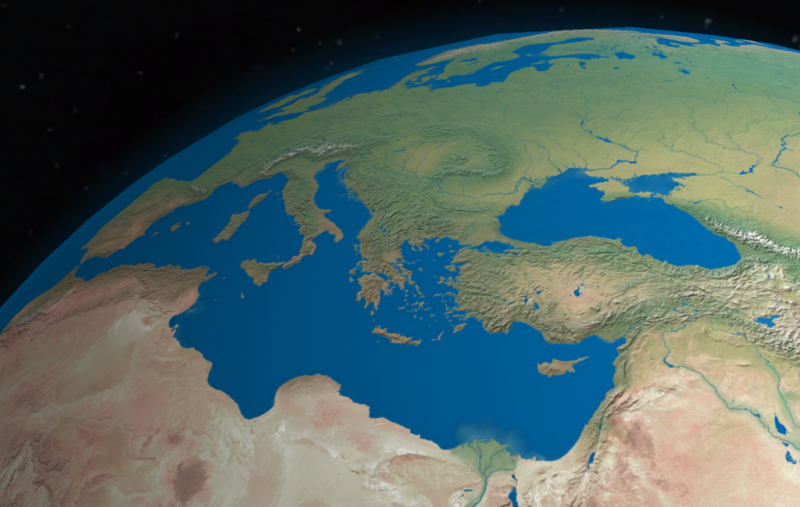
The Eastern Mediterranean is once again witnessing rising geopolitical tensions as disputes over energy resources, maritime boundaries, military positioning, and regional influence intensify among several countries in the region.
Analysts warn that the latest escalation reflects not only unresolved territorial disagreements, but also broader struggles involving energy security, strategic alliances, regional rivalries, and global power competition.
RECOMMENDED STORIES
Over the past decade the Eastern Mediterranean has evolved into one of the world’s most strategically sensitive regions. Major natural gas discoveries, shifting political alignments, military modernization programs, and increasing international involvement have transformed the area into a geopolitical crossroads connecting Europe, the Middle East, North Africa, and Eurasia.
The region includes several key actors with overlapping and often competing interests, including Türkiye, Greece, Cyprus, Israel, Egypt, Lebanon, and Libya, while outside powers such as the United States, Russia, the European Union, and NATO also maintain strategic interests there.
Recent diplomatic tensions, naval deployments, energy disputes, and security concerns have renewed fears that the Eastern Mediterranean could once again move toward a period of heightened confrontation.
Although outright military conflict remains unlikely in the near term according to many analysts, the combination of unresolved disputes and intensifying strategic competition continues to create serious risks of escalation.
Why is the Eastern Mediterranean strategically important?
The Eastern Mediterranean occupies an exceptionally important geographic position.
The region serves as a bridge connecting:
Europe,
the Middle East,
North Africa,
the Black Sea,
and major international maritime trade routes.
It also lies near critical energy transit corridors and major shipping lanes linking Europe with Asia and the Gulf region.
In recent years the region’s importance increased dramatically following discoveries of substantial offshore natural gas reserves.
Countries across the Eastern Mediterranean began competing over:
energy exploration rights,
exclusive economic zones,
pipeline projects,
and maritime jurisdiction claims.
At the same time broader geopolitical developments including the war in Ukraine, Europe’s search for alternative energy supplies, instability in the Middle East, and NATO security concerns further elevated the region’s strategic value.
The Eastern Mediterranean is now viewed not only as an energy hub, but also as a major arena for geopolitical influence.
What role do natural gas discoveries play in the tensions?
Natural gas discoveries are one of the main drivers of regional competition.
Over the past two decades significant offshore gas fields were discovered near:
Israel,
Egypt,
Cyprus,
and other parts of the Eastern Mediterranean basin.
These discoveries raised hopes that the region could become an important alternative energy supplier for Europe.
However, they also intensified disputes over maritime boundaries and resource ownership.
Countries in the region have competing claims regarding:
exclusive economic zones,
continental shelves,
and offshore drilling rights.
Several governments signed bilateral maritime agreements and energy partnerships that other regional actors strongly oppose.
The competition over underwater energy resources has therefore become closely connected to broader political and security rivalries.
For many countries energy exploration is not only an economic issue but also a question of sovereignty, national security, and geopolitical influence.
Why are Türkiye and Greece central to the tensions?
Türkiye and Greece remain at the center of many Eastern Mediterranean disputes.
The two NATO members have longstanding disagreements involving:
maritime boundaries,
airspace,
island sovereignty,
energy exploration rights,
and military activity in the Aegean and Eastern Mediterranean.
Tensions periodically escalate when either side conducts:
naval exercises,
hydrocarbon exploration missions,
or military deployments in disputed waters.
The Cyprus issue further complicates relations.
Türkiye supports the Turkish Republic of Northern Cyprus, while Greece and the internationally recognized Republic of Cyprus maintain different positions regarding maritime jurisdiction and energy rights.
Ankara argues that Turkish Cypriots and Türkiye itself are excluded from certain regional energy initiatives and maritime arrangements.
Athens and Nicosia accuse Türkiye of violating international maritime norms through drilling activities and naval operations.
Although diplomatic channels remain open, the disputes remain unresolved and continue generating periodic crises.
How does Cyprus fit into the regional conflict?
Cyprus occupies a central position in Eastern Mediterranean geopolitics.
The island has remained divided since 1974 between the internationally recognized Republic of Cyprus in the south and the Turkish controlled north.
Offshore gas discoveries near Cyprus intensified geopolitical competition because multiple actors claim rights over maritime zones surrounding the island.
The Republic of Cyprus signed energy exploration agreements with international companies and regional partners including Israel and Egypt.
Türkiye strongly objected to some of these activities, arguing that Turkish Cypriots must also benefit from energy resources around the island.
As a result the Cyprus dispute became intertwined with:
energy politics,
naval deployments,
regional alliances,
and broader Türkiye Greece tensions.
The unresolved status of Cyprus therefore remains one of the region’s most sensitive geopolitical issues.
What role does Israel play in the Eastern Mediterranean?
Israel has become increasingly important in Eastern Mediterranean energy and security dynamics.
The discovery of major gas fields such as Leviathan and Tamar transformed Israel into a significant regional energy producer.
Israel has strengthened energy and security cooperation with:
Greece,
Cyprus,
and Egypt.
Joint military exercises, energy infrastructure discussions, and diplomatic coordination have expanded in recent years.
The country also views the Eastern Mediterranean as strategically important for maritime security and energy exports.
Regional instability, concerns about Iranian influence, and broader Middle Eastern security dynamics further shape Israel’s regional calculations.
Israel’s growing cooperation with Greece and Cyprus has sometimes been viewed cautiously by Türkiye, contributing to broader regional competition.
Why is Egypt becoming increasingly influential?
Egypt has emerged as a major regional energy and geopolitical player.
The discovery of the Zohr gas field significantly boosted Egypt’s role in Eastern Mediterranean energy markets.
Cairo has promoted itself as a regional energy hub by developing liquefied natural gas infrastructure and strengthening energy partnerships with neighboring countries.
Egypt also participated in regional forums involving:
Greece,
Cyprus,
Israel,
and other Eastern Mediterranean actors.
The country’s strategic location near the Suez Canal further increases its geopolitical importance.
Egypt’s growing role reflects broader regional realignments in which energy cooperation increasingly overlaps with security and diplomatic partnerships.
How are outside powers involved in the region?
The Eastern Mediterranean attracts significant international involvement because of its strategic importance.
The United States maintains military, diplomatic, and energy interests in the region while supporting NATO cohesion and regional stability.
Russia has historically sought influence through military presence in Syria and broader regional engagement.
The European Union views the Eastern Mediterranean as strategically important for:
energy diversification,
migration management,
and regional security.
NATO also closely monitors regional tensions because several involved states are alliance members.
China has economic interests linked to maritime trade routes and infrastructure investments.
The involvement of multiple global powers increases the geopolitical complexity of the region.
How did the Ukraine war affect the Eastern Mediterranean?
The war in Ukraine significantly increased the Eastern Mediterranean’s strategic relevance.
Europe’s efforts to reduce dependence on Russian energy renewed interest in alternative gas sources and energy corridors.
Eastern Mediterranean gas projects therefore gained additional geopolitical importance.
At the same time NATO security concerns intensified because the Mediterranean became increasingly important for military logistics and maritime operations.
The Ukraine war also accelerated broader geopolitical competition involving:
energy security,
military positioning,
and regional alliances.
Several Eastern Mediterranean countries sought to strengthen their strategic roles within changing global energy and security landscapes.
Why are naval deployments increasing?
Naval activity has become more prominent because maritime disputes are central to regional tensions.
Countries across the region have expanded naval patrols, conducted military exercises, and modernized maritime capabilities.
Naval forces are used to:
protect drilling operations,
monitor disputed waters,
demonstrate sovereignty claims,
and deter rival actions.
Military exercises involving regional alliances have also increased.
Although many deployments remain symbolic or precautionary, analysts warn that close encounters between naval forces can create risks of accidental escalation.
The militarization of maritime disputes therefore remains a major concern for regional stability.
What is the EastMed pipeline debate?
The proposed EastMed pipeline became one of the region’s most discussed energy projects.
The idea involved transporting Eastern Mediterranean gas to Europe through pipelines connecting Israel, Cyprus, Greece, and potentially other partners.
Supporters viewed the project as strategically important for European energy diversification.
However, critics questioned:
economic feasibility,
technical challenges,
environmental concerns,
and geopolitical complications.
Türkiye opposed aspects of the project because it believed regional energy arrangements were excluding Turkish interests.
Although uncertainty remains about the project’s future, the debate highlighted how energy infrastructure became deeply intertwined with geopolitical rivalries.
Could military conflict occur?
Most analysts believe a large scale military conflict remains unlikely in the immediate future because all major actors understand the enormous economic and political costs involved.
However, risks still exist.
Potential dangers include:
accidental naval confrontations,
miscalculations,
airspace incidents,
or escalatory political rhetoric.
The presence of multiple armed forces operating in contested environments increases the possibility of unintended crises.
Diplomatic channels and NATO mechanisms have helped reduce tensions during previous confrontations.
Nevertheless, unresolved disputes combined with growing military activity continue creating instability risks.
How are alliances shifting in the region?
The Eastern Mediterranean has experienced major diplomatic realignments in recent years.
Countries increasingly form flexible partnerships based on:
energy cooperation,
security concerns,
economic interests,
and geopolitical calculations.
Some regional actors strengthened trilateral partnerships involving:
Greece,
Cyprus,
Israel,
and Egypt.
Türkiye meanwhile pursued its own strategic initiatives and maritime agreements.
Normalization efforts between former regional rivals have also altered diplomatic dynamics.
The result is a constantly evolving geopolitical environment where alliances remain fluid and issue specific.
Why is international law so important in the disputes?
Competing interpretations of international maritime law lie at the center of many disagreements.
Countries dispute:
exclusive economic zones,
continental shelf boundaries,
island maritime rights,
and offshore jurisdiction claims.
Different actors interpret maritime conventions differently depending on national interests and geographic circumstances.
Because maritime law affects access to energy resources and strategic waters, legal disputes often become politically charged.
Negotiations remain difficult because sovereignty issues are closely tied to national identity and security concerns.
How do energy prices affect regional tensions?
Global energy prices influence the economic attractiveness of Eastern Mediterranean gas projects.
When energy prices rise, offshore exploration and infrastructure investments become more appealing.
Energy insecurity in Europe following geopolitical crises has also increased interest in alternative suppliers.
As a result regional governments may become more determined to secure energy claims and partnerships.
However, fluctuating energy markets also create uncertainty regarding the long term profitability of expensive offshore projects.
What role does Libya play?
Libya has become another important factor in Eastern Mediterranean geopolitics.
Türkiye signed a controversial maritime agreement with Libya’s internationally recognized government in 2019.
The agreement established maritime boundaries that Greece and several other countries strongly opposed.
The Libya agreement significantly intensified regional tensions because it affected competing claims regarding maritime jurisdiction.
Libya’s own instability further complicates the situation because rival factions and foreign actors continue competing for influence there.
Could diplomacy reduce tensions?
Diplomatic efforts remain ongoing despite persistent disagreements.
Regional governments continue holding:
bilateral talks,
multilateral meetings,
NATO consultations,
and energy discussions.
Confidence building measures between Türkiye and Greece have occasionally reduced tensions temporarily.
Economic cooperation and energy interdependence could also encourage more pragmatic approaches over time.
However, deep rooted sovereignty disputes remain difficult to resolve fully.
Progress often depends on broader regional political conditions and domestic political calculations within involved countries.
What broader lessons emerge from the Eastern Mediterranean tensions?
The Eastern Mediterranean illustrates how energy resources, geography, and geopolitical competition increasingly intersect in modern international politics.
The region’s tensions are not simply about gas reserves or maritime maps. They involve:
national identity,
strategic influence,
security competition,
economic interests,
historical grievances,
and global power rivalries.
The Eastern Mediterranean also demonstrates how regional conflicts today are deeply interconnected with global energy markets and international security dynamics.
For Europe the region represents a potential energy alternative and security frontier.
For regional states it represents a contest over sovereignty, influence, and long term strategic positioning.
For global powers it serves as an increasingly important geopolitical crossroads linking multiple theaters of competition.
Whether the Eastern Mediterranean moves toward greater cooperation or deeper confrontation will likely depend on the ability of regional actors to balance energy ambitions with diplomatic restraint.
As competition intensifies, the region may continue shaping broader geopolitical developments across Europe, the Middle East, and the wider international system for years to come.
By Faig Mahmudov


Similar news