What is Donald Trump’s “Golden Dome” missile defence system?


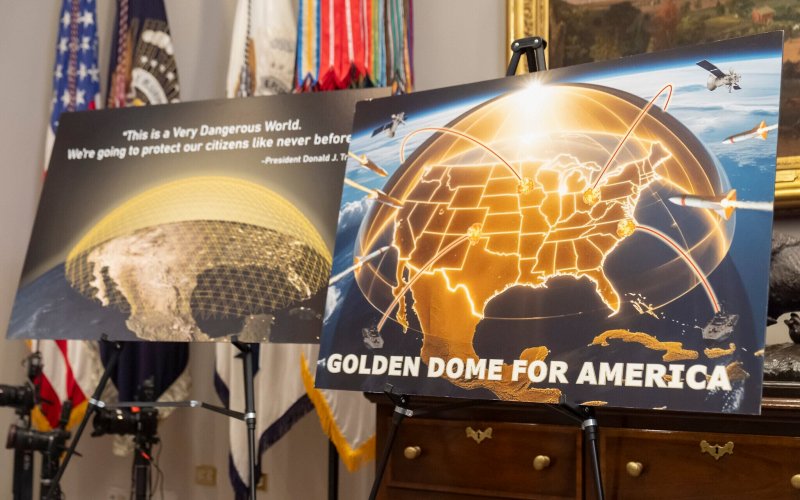
The “Golden Dome” is a proposed next generation missile defence shield announced by U.S. President Donald Trump during his second term in office. The system is designed to protect the United States from a wide range of aerial threats, including ballistic missiles, hypersonic weapons, cruise missiles, and potentially even attacks launched from space.
Trump described the project as a revolutionary defence architecture that would combine land, sea, air, and space based technologies into one integrated protective network. The concept was initially referred to as the “Iron Dome for America,” inspired by Israel’s Iron Dome missile defence system, though the scale and complexity of the American version would be far greater.
RECOMMENDED STORIES
The proposed defence shield would rely heavily on advanced sensors, satellite networks, interceptors, artificial intelligence, and rapid tracking systems capable of identifying and destroying incoming threats before they reach U.S. territory.
Why is the Golden Dome attracting global attention?
The project has become one of the most controversial and closely watched military initiatives in the world because of its enormous projected cost, technological challenges, and strategic implications.
A new estimate from the Congressional Budget Office stated that the total cost of developing, deploying, and operating the system over two decades could reach approximately $1.2 trillion. That figure is dramatically higher than the original $175 billion estimate previously mentioned by Trump.
The massive projected spending has intensified political debate in Washington and raised questions about whether the United States can realistically build such a system.
At the same time, military experts and geopolitical analysts say the Golden Dome could reshape the global balance of power if it becomes operational.
Why does the United States want such a system?
Supporters of the Golden Dome argue that global missile threats have evolved significantly in recent years.
Potential adversaries such as Russia and China now possess increasingly sophisticated weapons systems, including:
-
Hypersonic missiles
-
Long range cruise missiles
-
Advanced ballistic missiles
-
Space based military technologies
-
Nuclear capable delivery systems
U.S. defence officials have warned that older American missile defence systems may no longer be sufficient against modern high speed attacks involving multiple missiles launched simultaneously from different directions.
Trump and his allies argue that the United States must modernize its defensive capabilities before rivals gain an overwhelming technological advantage.
According to the White House, aerial threats remain among the most catastrophic dangers facing the country.
How would the Golden Dome system work?
The proposed system would involve several interconnected layers of defence operating simultaneously across multiple environments.
The architecture could include:
-
Ground based interceptors
-
Sea based missile defence systems
-
Space based sensors
-
Satellite tracking networks
-
Artificial intelligence driven targeting systems
-
Space based interceptors
-
Early warning radar systems
The objective would be to detect enemy missile launches almost immediately, track their trajectory in real time, and destroy them before they can strike targets inside the United States.
Trump claimed the system could eventually intercept missiles launched from anywhere in the world, including from space.
The proposal envisions a highly integrated network linking military satellites, naval assets, land based systems, and advanced command centers capable of coordinating rapid responses within seconds.
Why is the project being compared to Israel’s Iron Dome?
The name “Golden Dome” is partly inspired by Israel’s Iron Dome defence system, which intercepts short range rockets and missiles.
Israel’s Iron Dome has been highly effective against smaller scale attacks and became internationally known after repeated conflicts in the Middle East.
However, experts stress that the U.S. project would be vastly more complicated.
Israel is geographically small, while the United States covers an enormous land mass with thousands of miles of coastline and extensive airspace.
Defending the continental United States against advanced intercontinental threats would require significantly more infrastructure, satellites, sensors, interceptors, and operational coordination.
Many analysts argue that comparing the Golden Dome directly to Israel’s Iron Dome oversimplifies the technological and logistical challenges involved.
Why has the projected cost risen so dramatically?
The Congressional Budget Office estimate suggests the system may cost nearly seven times more than Trump’s earlier projections.
Several factors contribute to the rising estimate:
-
Massive satellite deployment requirements
-
Research and development expenses
-
Advanced interceptor production
-
Space based technologies
-
Long term maintenance costs
-
Artificial intelligence integration
-
Global tracking infrastructure
-
Personnel and operational expenses
The report noted that acquisition costs alone could exceed $1 trillion.
Building a defence shield capable of protecting an entire continent against next generation missile threats would require technologies that either remain experimental or have never been deployed at such scale.
The cost of maintaining and upgrading the system over decades would also be enormous.
Why do critics say the system may not work?
One of the most important findings in the Congressional Budget Office report is that even an extremely expensive missile shield may still be vulnerable to overwhelming attacks.
The report warned that Russia or China could potentially saturate the system through large scale missile launches involving hundreds of simultaneous projectiles, decoys, electronic warfare systems, and hypersonic weapons.
Missile defence systems face a fundamental challenge known as saturation. Even highly advanced interceptors can struggle if adversaries launch more missiles than the defence network can track and destroy at once.
Critics argue that no defence system can guarantee complete protection against major nuclear powers possessing massive arsenals.
Some analysts also warn that adversaries could simply adapt by developing newer technologies designed specifically to bypass the shield.
What are hypersonic missiles and why are they important?
Hypersonic missiles are weapons capable of traveling at speeds exceeding Mach 5, or five times the speed of sound.
These missiles are especially difficult to intercept because they:
-
Travel extremely fast
-
Can maneuver unpredictably
-
Fly at lower altitudes than traditional ballistic missiles
-
Reduce reaction times for defenders
Russia and China have both invested heavily in hypersonic weapons development in recent years.
Military planners fear these systems could potentially evade traditional missile defence architectures.
The Golden Dome proposal appears partly aimed at addressing this emerging challenge by creating faster and more sophisticated tracking and interception capabilities.
How would space based interceptors change warfare?
One of the most controversial aspects of the Golden Dome proposal is the possibility of deploying interceptors in space.
Space based interceptors could theoretically destroy missiles shortly after launch before they reach full speed or release multiple warheads.
Supporters argue this would provide earlier interception opportunities and stronger defensive coverage.
However, critics warn that placing weapons systems in space could accelerate global militarization beyond Earth’s atmosphere.
Many experts fear it could trigger a new arms race involving:
-
Anti satellite weapons
-
Orbital military platforms
-
Space warfare systems
-
Advanced cyber attacks targeting satellites
Some analysts also warn that rival powers may view space based interceptors as offensive rather than purely defensive systems.
How are Russia and China likely to react?
Russia and China have historically opposed large American missile defence projects.
Both countries argue that advanced U.S. defence systems could undermine nuclear deterrence by reducing the effectiveness of their missile arsenals.
If one country develops a shield capable of intercepting incoming strikes, rivals may feel pressured to expand or modernize their own nuclear forces to maintain deterrence credibility.
This dynamic could intensify military competition and accelerate global arms development.
Moscow and Beijing may also respond by investing further in technologies specifically designed to penetrate missile defence systems, including hypersonic weapons, stealth technologies, and electronic warfare systems.
What are critics in the United States saying?
The proposal has triggered strong criticism from Democrats and some defence analysts.
Democratic Senator Jeff Merkley described the project as a massive giveaway to defence contractors financed by American taxpayers.
Critics argue the enormous cost could divert resources away from domestic priorities such as healthcare, education, infrastructure, and economic development.
Others question whether the technological goals are realistic or achievable within reasonable timeframes.
Some experts compare the proposal to earlier missile defence ambitions during the Cold War, particularly President Ronald Reagan’s Strategic Defense Initiative, often nicknamed “Star Wars.”
That initiative also sought advanced space based missile defences but faced major technological and financial obstacles.
Why do supporters defend the project?
Supporters argue that missile defence is becoming increasingly necessary in a rapidly changing security environment.
They say potential adversaries are developing weapons specifically designed to threaten American cities, military bases, infrastructure, and command systems.
Advocates believe the United States cannot afford to fall behind technologically while rivals continue modernizing their arsenals.
Some supporters also argue that even imperfect missile defence systems can strengthen deterrence by reducing the likelihood of successful attacks.
Others see the project as a long term investment in national security similar to earlier strategic defence initiatives that eventually produced technological breakthroughs.
Could the Golden Dome actually be built?
Building the system would likely require decades of development, testing, funding, and deployment.
Several major challenges remain:
-
Technological limitations
-
Budget constraints
-
Political opposition
-
Space deployment difficulties
-
Integration of multiple military systems
-
Cybersecurity vulnerabilities
-
Interceptor reliability
-
Maintenance of global tracking networks
Even if construction begins quickly, experts say achieving full operational capability could take many years.
Some technologies required for the project remain experimental and may need significant breakthroughs before becoming reliable enough for deployment.
What impact could the project have on global defence spending?
If the United States aggressively pursues the Golden Dome, other major powers may increase military spending in response.
Countries could invest more heavily in:
-
Missile development
-
Hypersonic technologies
-
Anti satellite systems
-
Electronic warfare
-
Artificial intelligence driven military systems
-
Nuclear modernization
This could intensify an already growing global arms competition.
Defence companies would also likely benefit significantly from long term government contracts related to missile defence infrastructure, satellites, software, sensors, and aerospace systems.
How does the Golden Dome fit into Trump’s broader defence strategy?
Trump has consistently emphasized military strength, technological superiority, and strategic deterrence.
The Golden Dome aligns with his broader focus on:
-
Expanding defence capabilities
-
Increasing military modernization
-
Strengthening homeland security
-
Countering China and Russia
-
Demonstrating technological leadership
Supporters view the project as part of a larger effort to prepare the United States for future forms of warfare involving space, cyber operations, artificial intelligence, and hypersonic weapons.
Critics, however, argue that the project reflects an overly ambitious and potentially destabilizing military vision.
What happens next?
The future of the Golden Dome will depend heavily on congressional funding decisions, military planning assessments, technological progress, and political support.
Congress will likely debate:
-
Budget allocations
-
Strategic necessity
-
Technical feasibility
-
International consequences
-
Long term sustainability
Military officials are expected to continue evaluating various design proposals and defence architectures.
At the same time, rival powers will closely monitor American plans and may adjust their own military strategies accordingly.
The debate surrounding the Golden Dome is likely to continue for years because it touches on some of the biggest questions facing global security today, including the future of nuclear deterrence, the militarization of space, technological competition among superpowers, and the balance between national defence and economic cost.
Whether the system eventually becomes reality or remains an ambitious strategic vision, it has already become one of the most significant and controversial defence proposals of the modern era.
By Faig Mahmudov


Similar news