What is hydrogen energy


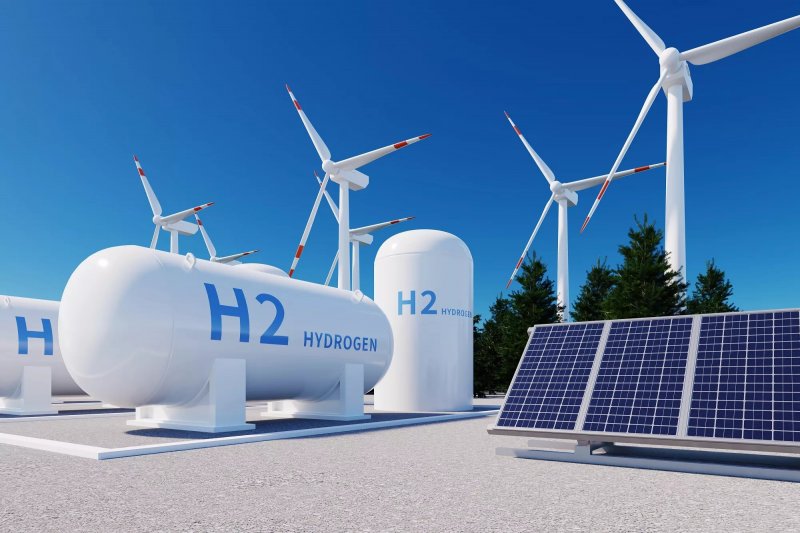
Hydrogen energy is one of the most promising and fast-developing solutions in the global shift toward clean and renewable energy, News.Az reports.
It is based on the use of hydrogen — the lightest and most abundant element in the universe — as a carrier of energy that can generate power, heat, or electricity without producing harmful carbon emissions. Unlike fossil fuels such as coal or oil, hydrogen produces only water vapor when it is used in a fuel cell or burned for power. This makes it a vital technology in the worldwide effort to combat climate change and achieve net-zero emissions in the coming decades.
Hydrogen is not found freely in nature in large quantities; it must be extracted from other substances, such as water or natural gas. For this reason, it is often referred to as an energy carrier rather than a direct energy source. The most common methods of production are through steam reforming of natural gas or through electrolysis — a process that uses electricity to split water into hydrogen and oxygen. Once produced, hydrogen can be stored in tanks, transported through pipelines, or converted into electricity using fuel cells.
Types and production of hydrogen
There are several types of hydrogen, classified by the source and method of production. Gray hydrogen is produced from natural gas or coal and emits carbon dioxide, making it the least environmentally friendly form. Blue hydrogen is also produced from natural gas but uses carbon capture and storage technology to prevent most emissions from entering the atmosphere. The cleanest form is green hydrogen, made by splitting water using renewable electricity from wind, solar, or hydro sources. Green hydrogen is considered the cornerstone of the future hydrogen economy because it is completely emission-free and sustainable.
Hydrogen energy works through a simple but powerful principle: when hydrogen combines with oxygen in a fuel cell, the chemical reaction generates electricity and heat. The only byproduct is water vapor. This technology can power cars, buses, trains, ships, and even airplanes, offering an alternative to traditional fossil fuels. Hydrogen can also be used to produce heat in industrial processes or to store energy for later use. Because renewable sources like wind and solar are intermittent, hydrogen provides a way to store excess energy and release it when needed, helping to stabilize power grids and reduce energy shortages.
Global development and investments
In recent years, hydrogen energy has moved from concept to large-scale development. By 2025, more than 45 countries had announced national hydrogen strategies, and global investments in hydrogen production and infrastructure had exceeded 200 billion dollars. The European Union has set a goal of producing 10 million tons of renewable hydrogen domestically and importing another 10 million tons by 2030 as part of its Green Deal. Japan, South Korea, and the United States are building regional hydrogen networks and investing heavily in hydrogen-powered transport. In the Middle East, Saudi Arabia’s Neom project — expected to produce 600 tons of green hydrogen per day — will become one of the world’s largest clean-energy facilities.
According to the International Energy Agency, global hydrogen production could reach 180 million tons by 2050, supplying up to 20 percent of total energy needs. Major economies see hydrogen as crucial for decarbonizing heavy industries like steelmaking, cement, and shipping, where reducing emissions is more difficult with electricity alone. Green hydrogen could replace fossil fuels in these sectors, cutting billions of tons of carbon dioxide emissions each year.
Advantages and challenges
Hydrogen energy offers numerous advantages. It produces no greenhouse gases when used, it can be generated from a variety of sources, and it enables energy storage on a scale that batteries cannot yet match. It can also be transported over long distances and used in sectors that are otherwise hard to decarbonize.
However, there are still challenges. Producing green hydrogen remains expensive, storage and transport require advanced technology, and safety measures must be carefully maintained due to hydrogen’s flammable nature. Expanding global infrastructure — including pipelines, refueling stations, and electrolysis plants — will require coordinated investments over many years. Despite these hurdles, the hydrogen industry is rapidly advancing. The cost of renewable electricity is falling, electrolysis technologies are improving, and governments are introducing policies and subsidies to accelerate hydrogen adoption. Experts predict that by 2030, green hydrogen could become cost-competitive with fossil fuels in many regions.
The future of hydrogen energy
Hydrogen energy represents one of the most important breakthroughs in the modern energy transition. It connects renewable power generation with clean transportation and sustainable industrial production. As technology evolves and production costs decline, hydrogen is set to play a central role in building a global low-carbon economy. It is not only a fuel of the future but also a bridge toward a cleaner, safer, and more energy-secure world.
Hydrogen’s flexibility — its ability to be produced, stored, transported, and converted efficiently — makes it a key element in reshaping how humanity produces and consumes energy. With rising international cooperation, falling costs, and expanding infrastructure, hydrogen is poised to become one of the defining energy solutions of the 21st century.


Similar news