Global shift toward renewable energy accelerates as nations embrace long-term sustainability goals


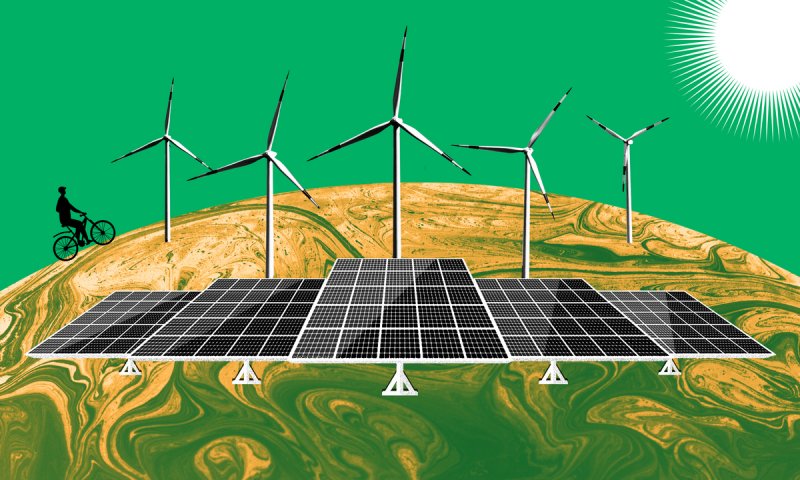
The global energy landscape is undergoing a historic transformation that is reshaping economies, geopolitics, and the planet’s future, News.az reports
As nations confront the dual challenge of meeting rising energy demand while cutting carbon emissions, renewable energy has emerged as the cornerstone of a new, sustainable era. From vast solar farms in the Middle East to offshore wind hubs in Europe and Asia, the world is witnessing a structural transition that will define the 21st century.
A Historic Turning Point in Global Energy
The International Energy Agency (IEA) projects that by 2030, nearly 90% of all new power generation will come from renewable sources—a monumental shift from the fossil-fuel-dominated grids of the past. Solar power leads the charge, with record-breaking installation rates and falling costs that make it the most affordable form of electricity in many regions. Wind power, both onshore and offshore, continues to expand rapidly, aided by technological advances in turbine design and energy storage systems.
This clean-energy surge has already begun to alter traditional power markets. Many countries now generate over half of their electricity from renewables, and others are setting ambitious targets to follow suit. For example, the European Union aims for a 45% renewable share by 2030, while China is targeting 1,200 gigawatts of combined solar and wind capacity in the same period.
Global Policy Momentum
Governments around the world are driving this transformation through large-scale investment programs and policy reforms.
-
In the United States, the Inflation Reduction Act (IRA) offers hundreds of billions of dollars in tax credits and incentives for clean energy projects, positioning the country as a major hub for renewable manufacturing.
-
The European Union’s Green Deal is channeling funds toward hydrogen development, offshore wind, and energy efficiency, aligning the bloc’s climate goals with industrial competitiveness.
-
China, the largest producer of renewable technology, continues to dominate the solar panel and battery markets, while also investing heavily in ultra-high-voltage grid networks to distribute renewable energy efficiently across its vast territory.
Emerging economies in Africa, Latin America, and Asia are also joining the shift. From Kenya’s geothermal expansion to India’s International Solar Alliance, these nations are using renewables not only to meet climate commitments but also to ensure energy access for growing populations.
The Economics of Clean Power
Falling costs remain the most powerful catalyst behind the green transition. Over the past decade, the price of solar panels has plunged by more than 80%, while onshore wind costs have fallen by half. Energy storage—once seen as the weak link in renewable integration—is also becoming cheaper, with lithium-ion battery prices declining by nearly 90% since 2010.
This cost revolution is fueling private investment at record levels. Global clean-energy investment exceeded $1.8 trillion in 2024, surpassing spending on fossil fuels for the first time. Corporations are signing long-term renewable power purchase agreements (PPAs) to secure stable, low-cost electricity, while financial institutions are increasingly divesting from coal and oil assets.
Job Creation and Industrial Opportunities
The renewable energy sector has become one of the world’s fastest-growing job creators. According to the International Renewable Energy Agency (IRENA), the sector employed over 14 million people in 2024, with solar alone accounting for nearly half of that figure. Green hydrogen, biofuels, and battery production are expected to add millions more jobs in the coming decade.
Countries are racing to localize clean-tech manufacturing to reduce supply-chain dependence and capture economic value. For instance, the United States and the EU are incentivizing domestic battery and EV production, while nations such as Indonesia and Chile are leveraging their mineral resources—nickel and lithium respectively—to enter global clean-energy value chains.
Challenges on the Road Ahead
Despite the momentum, the renewable transition faces persistent challenges. Energy storage capacity still lags behind peak demand in many regions, and grid infrastructure requires massive upgrades to handle intermittent generation. Policy uncertainty, bureaucratic delays, and local opposition to large projects can also slow deployment.
Moreover, geopolitical competition over critical minerals—such as lithium, cobalt, and rare earth elements—could create new supply risks even as nations move away from fossil fuel dependency.
A Permanent Shift Toward Sustainability
Still, the direction is clear: the age of fossil fuels is giving way to the age of renewables. The convergence of climate science, economics, and technology has made the clean-energy transition not only inevitable but irreversible. As innovation accelerates and policy frameworks mature, renewable energy is poised to power a future that is not just cleaner—but also more resilient, inclusive, and economically sound.
The renewable revolution is no longer a forecast. It is the defining energy story of our time—and an enduring cornerstone of global progress.


Similar news