What makes Volkswagen a global automotive powerhouse today


Volkswagen is one of the most influential names in the global automotive industry. For decades, the German manufacturer has shaped how millions of people move, work, and travel.
From its origins as a producer of affordable cars for ordinary citizens to its current role as a multinational group driving the transition toward electric mobility, Volkswagen’s story reflects the broader evolution of the modern automobile industry.
Today, Volkswagen is not just a brand but a complex industrial ecosystem whose decisions affect global supply chains, employment, technological standards, and climate policy debates. Understanding Volkswagen’s past, present, and future helps explain where the automotive world is heading.
Origins and historical context
Volkswagen was founded in 1937 in Germany with the explicit goal of creating a “people’s car” that would be accessible to a broad segment of society. The idea was simple: produce a reliable, affordable vehicle that could be owned by ordinary families. This concept laid the foundation for what would later become one of the most recognizable automotive brands in the world.
After the second world war, Volkswagen’s production facilities were rebuilt, and the company entered a period of rapid expansion. The Volkswagen Beetle became the symbol of this revival. Its simple engineering, durability, and distinctive design turned it into a global success. By the late twentieth century, the Beetle had become one of the best-selling cars in history and a cultural icon across continents.
Expansion into a global group
While Volkswagen initially focused on a single brand, its long-term strategy gradually shifted toward diversification. Over time, the company acquired or developed additional brands to serve different segments of the market. This transformation turned Volkswagen into a group structure rather than a single manufacturer.
Today, the Volkswagen Group includes mass-market brands, premium manufacturers, luxury marques, sports car producers, motorcycle companies, and commercial vehicle divisions. This portfolio allows the group to compete in nearly every automotive category, from compact city cars to high-performance supercars and heavy-duty trucks.
The group structure also enables Volkswagen to share platforms, technologies, and research across brands, reducing costs while maintaining distinct brand identities. This approach has been central to the company’s ability to scale production globally.
Global manufacturing and market presence
Volkswagen operates manufacturing plants in dozens of countries and sells vehicles in more than 150 markets. Europe remains the company’s traditional core, but its success increasingly depends on international markets.
China has become Volkswagen’s single largest national market, accounting for a substantial share of global sales. Long-standing partnerships with local manufacturers have allowed the group to adapt to Chinese consumer preferences and regulatory requirements. At the same time, Volkswagen maintains strong operations in North America, South America, and several emerging markets.
This global footprint provides resilience. When demand slows in one region, growth in another can help stabilize overall performance. However, it also exposes the company to geopolitical risks, trade disputes, and regional regulatory changes.
Engineering philosophy and brand identity
Volkswagen built its reputation on engineering reliability, practicality, and value for money. For decades, the brand positioned itself between premium manufacturers and low-cost producers, offering solid build quality without luxury pricing.
Models such as the Golf, Passat, and Polo became benchmarks in their respective segments. Their success was based not on radical design but on incremental improvement, consistency, and broad appeal. This conservative yet effective philosophy allowed Volkswagen to attract a loyal global customer base.
Within the wider group, different brands were assigned clear identities, ranging from performance and luxury to affordability and efficiency. Managing these identities while avoiding internal competition has been one of the group’s ongoing strategic challenges.
The diesel emissions scandal and its impact
One of the most defining moments in Volkswagen’s modern history came in 2015 with the diesel emissions scandal. Investigations revealed that certain vehicles were equipped with software designed to manipulate emissions tests, allowing cars to meet regulatory standards during testing while emitting higher levels of pollutants in real-world driving.
The consequences were severe. Volkswagen faced billions of euros in fines, legal settlements, and compensation costs. The scandal damaged public trust, strained relationships with regulators, and triggered leadership changes at the highest levels of the company.
Beyond financial losses, the scandal forced Volkswagen to confront fundamental questions about corporate culture, governance, and ethical responsibility. It became a turning point that reshaped the group’s strategic direction.
Strategic shift toward electrification
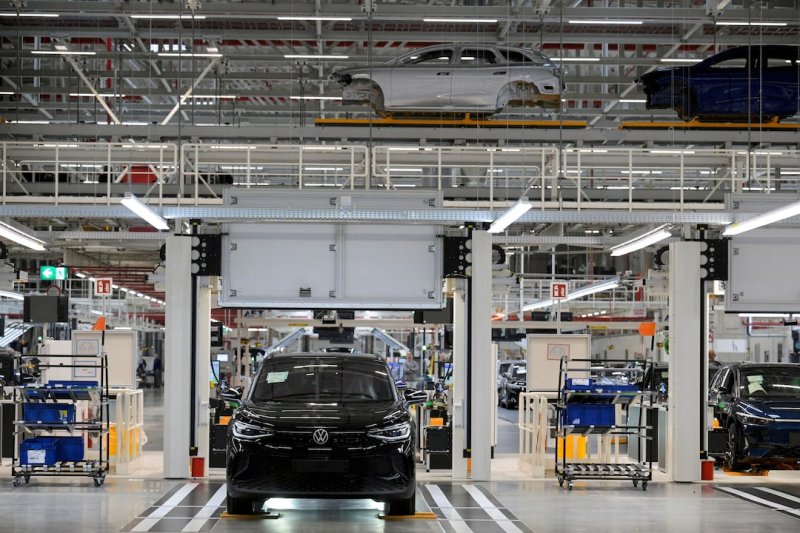
In the aftermath of the emissions crisis, Volkswagen accelerated its shift toward electric mobility. The company announced large-scale investments in electric vehicle development, battery technology, and charging infrastructure. Electrification was no longer a niche experiment but a core pillar of the group’s future.
The launch of the ID. family of electric vehicles symbolized this transition. These models were designed to bring electric cars to the mass market, combining competitive pricing with modern design and digital features. At the same time, premium brands within the group developed high-end electric models to compete with established luxury electric manufacturers.
Volkswagen’s electrification strategy also includes investments in battery factories, supply chain partnerships, and recycling systems, reflecting a long-term commitment to sustainability rather than short-term compliance.
Digitalization and software challenges
As vehicles become increasingly connected and software-driven, Volkswagen faces challenges that go beyond traditional automotive engineering. Modern cars rely on complex software systems for infotainment, safety, navigation, and driver assistance.
Recognizing this shift, Volkswagen has invested heavily in software development and digital platforms. The goal is to reduce reliance on external suppliers and create in-house expertise capable of competing with technology-focused rivals.
However, software development has proven to be one of the company’s most difficult transitions. Delays, technical issues, and internal restructuring have highlighted the gap between traditional manufacturing strengths and the demands of a digital-first automotive future.
Autonomous driving and mobility services
Volkswagen is also investing in autonomous driving technologies and new mobility services. While fully autonomous vehicles are still not widely available, the company sees automation as a key component of future transportation systems.
In parallel, Volkswagen has explored car-sharing, ride-hailing, and subscription-based ownership models. These initiatives reflect changing consumer behavior, especially in urban areas where younger generations may prioritize access over ownership.
Although these services currently represent a small share of revenue, they signal Volkswagen’s intention to remain relevant in a mobility landscape that extends beyond private car ownership.
Sustainability and climate commitments
Sustainability has become a central theme in Volkswagen’s public messaging and corporate strategy. The group has committed to reducing carbon emissions across its entire value chain, including production, logistics, and vehicle use.
This includes transitioning factories to renewable energy, improving resource efficiency, and developing circular economy solutions for batteries and materials. Volkswagen has also set long-term targets aimed at achieving climate neutrality.
Critics argue that implementation will be as important as ambition, particularly given the company’s past controversies. Nevertheless, regulatory pressure and market demand make sustainability not just a reputational issue but a business necessity.
Economic and geopolitical challenges
Volkswagen operates in an increasingly complex global environment. Trade tensions, supply chain disruptions, semiconductor shortages, and shifting industrial policies all affect production planning and costs.
In addition, competition is intensifying. New electric vehicle manufacturers, particularly from Asia, are challenging established players with aggressive pricing and rapid innovation cycles. Traditional rivals are also accelerating their own transitions toward electrification and digitalization.
Navigating these pressures while maintaining profitability and employment remains one of Volkswagen’s most significant strategic challenges.
Volkswagen’s role in the future of the automotive industry
Volkswagen’s scale gives it both advantages and responsibilities. As one of the world’s largest car manufacturers, its strategic choices influence industry standards, supplier networks, and regulatory discussions.
The company’s ability to successfully transition from internal combustion engines to electric and software-driven vehicles will be closely watched by governments, investors, and competitors alike. Success could reinforce Volkswagen’s position as an industry leader. Failure would have implications far beyond a single company.
Conclusion
Volkswagen’s journey from the original “people’s car” to a global automotive group reflects the broader transformation of mobility over the past century. The company has experienced remarkable success, serious setbacks, and profound strategic shifts.
Today, Volkswagen stands at a crossroads. Electrification, digitalization, and sustainability are redefining the automotive industry, and the company’s response will shape its relevance for decades to come. As history has shown, Volkswagen’s decisions rarely affect only itself. They resonate across markets, societies, and the global economy, making the company a central figure in the ongoing story of modern transportation.


Similar news