What the latest 24 hours reveal about the Ukraine–Russia conflict


Russian missile and drone strikes, intensified ground battles along key sectors of the front, and heightened diplomatic activity in Europe have defined the last 24 hours of the Ukraine–Russia war as of the evening of 6 January 2026, News.Az reports.
On the battlefield, Ukrainian officials reported another extremely active period of combat along the front line, with the heaviest concentration of clashes continuing across eastern and southern Ukraine. The Pokrovsk and Huliaipole directions remain among the most contested sectors, where Russian forces are pressing forward with infantry assaults, backed by artillery, drones and guided aerial munitions. Ukrainian forces report that they are relying on layered defensive lines, trench systems and small-unit counterattacks to slow Russian advances and inflict losses, while Russia appears to be pursuing a grinding attritional strategy focused on exhausting Ukrainian manpower and logistics rather than rapid breakthroughs.
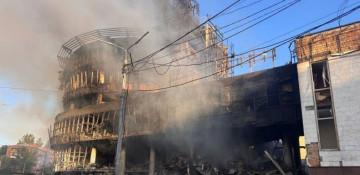
Russian long-range strikes again targeted Ukraine’s energy system, industrial capacity and urban infrastructure. Multiple missile strikes were reported against Kharkiv, Ukraine’s second-largest city, damaging energy installations and civilian facilities. Local authorities said emergency services and repair crews were deployed immediately, but warned residents of possible electricity and heating disruptions during the ongoing winter season. Another strike reportedly hit industrial facilities in central Ukraine, reflecting Russia’s continued effort to degrade Ukraine’s defense-related production base and broader economic resilience.
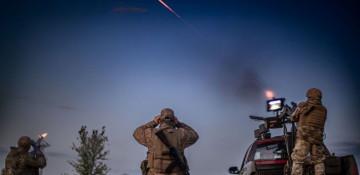
Air warfare is also evolving. Ukrainian and Western analysts reported that Russia has begun modifying Iranian-designed attack drones by mounting heat-seeking missiles normally used in shoulder-launched air-defense systems. These conversions turn relatively low-cost drones into improvised platforms potentially capable of targeting helicopters or low-flying aircraft. Military observers say this signals Moscow’s attempt to cheaply expand its ability to threaten Ukrainian air operations near the front line, forcing Kyiv to adapt and request more Western air-defense assets and interceptor missiles.
Ukraine, for its part, continued long-range drone operations aimed at deep targets inside Russia. Over the past day, Ukrainian drones reportedly struck energy and oil infrastructure in multiple Russian regions, with explosions and fires reported locally. One drone was also claimed to have hit a residential building in the Tver region, with Russian officials reporting damage but limited casualties. While independent verification remains restricted, the operation fits Ukraine’s broader strategic pattern of striking oil refineries, depots and logistics hubs to undermine Russia’s war economy, degrade military supply chains and increase economic pressure on Moscow.
Inside Ukraine, the last 24 hours also brought notable political developments. President Volodymyr Zelenskyy announced further senior-level reshuffles, including changes in the security services and economic advisory structures. The Ukrainian leadership has rotated a number of high-ranking officials in recent months in an effort to maintain public trust, strengthen institutional performance during wartime and respond to pressing reform expectations from Western partners. Analysts stress that political stability and effective governance in Kyiv remain critical factors in sustaining the war effort, managing international aid and preparing the framework for post-war recovery.
Across the border, Russia continues to confront the challenge of maintaining troop numbers for its operations in Ukraine. With the conflict showing no signs of a negotiated resolution, regional authorities have reportedly intensified recruitment campaigns, relying on a mix of financial incentives, contracts, pressure on public-sector workers and outreach to poorer or remote regions. Observers warn that these dynamics may deepen domestic social strains inside Russia, even as the Kremlin portrays the conflict as a long-term confrontation with the West that requires continued public sacrifice.
Diplomatically, the past day was dominated by high-level meetings in Paris, where European and North American partners held consultations under the so-called “Coalition of the Willing” format. Discussions reportedly focused on long-term security guarantees for Ukraine, military assistance frameworks, training cooperation and support for the development of Ukraine’s defense-industrial base. President Zelenskyy participated in the talks and held bilateral meetings with European leaders, emphasizing the importance of sustained, predictable Western support as Ukraine seeks to stabilize the front and modernize its armed forces.
However, expectations for immediate breakthroughs remain cautious. Some analysts note that shifting international priorities, especially in Washington, could complicate the finalization of comprehensive security commitments. With multiple global crises unfolding simultaneously, there are concerns in Kyiv that Ukraine could face intensified competition for political attention and financial resources, even as European states signal a willingness to expand their role.
The humanitarian and economic dimensions of the conflict also featured prominently in the last 24 hours. International organizations unveiled new multi-year plans to help rebuild Ukraine’s agricultural and rural infrastructure, which has suffered significant damage from shelling, land mines and displacement. Agriculture remains one of Ukraine’s most important economic sectors and a major contributor to global food supply. Restoring production capacity, transport routes and food-processing facilities is seen as essential not only for Ukraine’s domestic recovery, but also for stabilizing food markets worldwide.
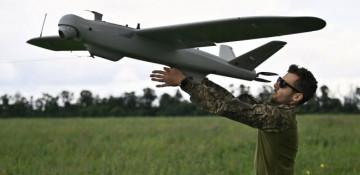
At the same time, Ukrainian authorities released new estimates highlighting the scale of drone warfare. According to official assessments, Ukrainian drone units have inflicted billions of dollars in damage on Russian military targets over recent months, striking tens of thousands of vehicles, artillery systems, logistics nodes and fortifications. Drones now play a central role in reconnaissance, precision strikes and psychological pressure, marking one of the most significant technological shifts of the war. Both sides are engaged in a rapid cycle of innovation, deploying electronic warfare, camouflage, decoys and counter-drone systems as they adapt to the unmanned battlefield.
Strategic assessments released over the past day suggest that, despite the intense tempo of operations, the overall military balance remains broadly stable. Russia continues to pursue incremental territorial gains through sustained pressure, while Ukraine seeks to hold defensive lines, attrit Russian forces and extend the reach of its long-range strike capabilities. Analysts describe the conflict as entering another protracted phase, with neither side currently positioned for a decisive breakthrough without significant external changes in manpower, technology or political commitment.
The broader geopolitical context also remains complex. The same Western governments providing financial and military support to Ukraine are simultaneously managing crises in other regions, including Latin America and the Middle East. This global environment risks stretching diplomatic attention and defense resources, raising questions about how long high-intensity support for Kyiv can be maintained at current levels. Ukrainian officials continue to stress that their country’s struggle has direct implications for European and international security, warning that any weakening of support could embolden Russia or widen instability.
Looking ahead, several key questions emerge from the latest 24-hour cycle. First, will intensified Russian strikes on energy infrastructure lead to widespread winter blackouts across Ukraine, potentially affecting civilian morale and industrial output? Second, will Ukraine’s deep-strike drone and missile campaign inside Russia further disrupt the Russian war economy, or provoke escalatory countermeasures? Third, can diplomatic efforts in Europe produce credible long-term security guarantees that reassure Ukraine and deter further aggression?
For now, the war remains locked in a tense equilibrium. The front line continues to shift only marginally, but both sides are demonstrating high operational tempo and persistent adaptation. Air and drone warfare are becoming increasingly important elements of the conflict. Diplomacy continues, but without a clear pathway to a comprehensive peace agreement. As the war moves deeper into its next phase, developments over the past 24 hours illustrate that events at the front, economic resilience, international diplomacy and technological innovation are now inseparable dimensions of the same ongoing struggle.


Similar news