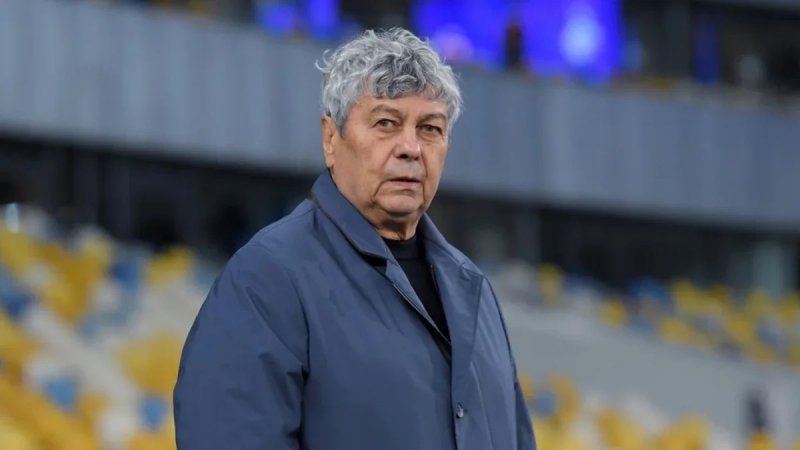
His legacy is not only defined by trophies, but also by his role in transforming clubs, developing talent, and introducing a distinct footballing philosophy that blends discipline with creativity.
Lucescu’s importance lies in his ability to succeed across different countries, cultures, and competitive systems. While many managers achieve success in one league or with one club, lucescu built a reputation as a strategist capable of adapting to various football environments. He is often described as a long-term architect rather than a short term tactician.
What made his playing career notable?
Before becoming a legendary coach, Lucecu had a successful playing career. He spent the majority of his time at Dinamo Bucharest, where he became a key figure and eventually captain. He played as an attacking midfielder or forward and was known for his technical skill, intelligence, and leadership on the pitch.
Lucescu also represented Romania at the international level, earning over 70 caps. One of the highlights of his playing career was participating in the 1970 FIFA World Cup. Even during his playing days, he was recognized for his tactical understanding of the game, which later became the foundation of his coaching career.
How did he transition into coaching?
Lucescu moved into coaching almost immediately after retiring as a player. His early managerial roles in Romania quickly demonstrated his potential. He managed the Romanian national team at a relatively young age, showing that he was already considered a sharp football mind.
His early coaching years were marked by discipline, organization, and a focus on structure. These elements would later define his teams across Europe. Unlike many former players, Lucescu did not rely solely on instinct. Instead, he approached coaching analytically, focusing on preparation and long term development.
Which clubs defined his managerial legacy?
Lucescu’s managerial career is extensive, but several clubs stand out as defining chapters.
His most iconic period came at Shakhtar Donetsk, where he coached from 2004 to 2016. During this time, he transformed the club into a dominant force in Ukrainian football and a regular competitor in European competitions. Under his leadership, Shakhtar won multiple league titles and achieved a historic UEFA Cup victory in 2009. He also introduced a unique system that combined Brazilian flair with European tactical discipline, which became the club’s signature style.
Another significant chapter was his time at Dynamo Kyiv. Taking charge of Shakhtar’s biggest rival was controversial, but lucescu quickly proved his professionalism by leading Dynamo to domestic success. Winning titles with both rival clubs demonstrated his adaptability and tactical intelligence.
Lucescu also had successful spells at Galatasaray, where he won the UEFA Super Cup, and Beşiktaş, where he secured domestic titles. In Italy, he managed Inter Milan, gaining experience in one of Europe’s most competitive leagues. Later, he coached Zenit Saint Petersburg and added a Russian league title to his achievements.
What is his coaching philosophy?
Lucescu’s coaching philosophy is built on several key principles.
First, he emphasizes tactical flexibility. Rather than relying on a single formation, he adapts his system depending on the opponent and available players.
Second, he prioritizes youth development. Throughout his career, he has consistently given opportunities to young players and helped them reach their full potential.
Third, he excels at managing multicultural squads. His success with integrating Brazilian players into European teams is a prime example of his ability to blend different footballing cultures.
Finally, he focuses on long term planning. Lucescu is known for building teams over time, rather than seeking immediate results at the expense of sustainability.
Why is he considered a pioneer in eastern european football?
Lucescu played a major role in raising the profile of Eastern European football. Before his success, clubs from the region were often viewed as less competitive compared to those in Western Europe.
At Shakhtar Donetsk, he demonstrated that with smart recruitment, tactical discipline, and strong leadership, clubs from smaller leagues could compete at the highest level. His approach to scouting and developing talent helped reshape how clubs in the region operate.
He also contributed to increasing the international visibility of Eastern European football by attracting foreign players and achieving success in European competitions.
What are his major achievements?
Mircea Lucescu is one of the most decorated managers in football history. Over the course of his career, he has won more than 30 major trophies.
His achievements include league titles in Romania, Türkiye, Ukraine, and Russia, as well as the UEFA Cup in 2009 with Shakhtar Donetsk. He also won the UEFA Super Cup with Galatasaray.
Beyond trophies, his longevity is one of his most remarkable achievements. Remaining competitive at the highest level for decades requires constant adaptation, something Lucecu has consistently demonstrated.
How did he influence modern football?
Lucescu’s influence extends beyond his own teams. He helped popularize the idea of combining technical South American players with structured European systems. This approach has since become common in modern football.
He also showed the importance of long-term planning and player development. Many clubs now focus on building sustainable systems rather than relying solely on transfers.
In Eastern Europe, he is considered a mentor figure. Many coaches have been influenced by his methods and philosophy.
What challenges did he face?
Lucescu’s career was not without difficulties. He worked in regions affected by political and economic instability, particularly in Eastern Europe. Managing clubs during such conditions required not only tactical skill but also strong leadership and adaptability.
He also faced criticism during less successful periods, particularly in highly competitive leagues like Italy. Additionally, managing fierce rivalries, especially in Ukraine, brought its own pressures.
Despite these challenges, Lucescu consistently found ways to rebuild and succeed.
What is his legacy in world football?
Mircea Lucescu’s legacy is defined by transformation and longevity. He is remembered as a coach who built teams, developed players, and elevated entire clubs.
He represents a model of sustainable success, showing that football is not only about short-term victories but also about creating systems that endure.
His influence is especially strong in Eastern Europe, where he helped change perceptions and standards of football.
Why does he remain relevant today?
Even in modern football, which is heavily influenced by data, finance, and global branding, Lucescu’s principles remain highly relevant.
His emphasis on discipline, adaptability, and player development continues to be essential for success. His career offers valuable lessons for clubs that aim to compete without the financial power of elite Western teams.
Final takeaway
Mircea Lucescu is more than a successful football manager. He is a transformative figure who reshaped the landscape of Eastern European football and influenced modern coaching practices. His career demonstrates that intelligence, adaptability, and long term vision can lead to lasting success in one of the most competitive sports in the world.