Azerbaijan’s urban development experience is becoming part of the global agenda


.png)
Editor’s note: Faig Mahmudov is a journalist based in Azerbaijan covering regional security, foreign policy, and geopolitical developments. The views expressed in this article are his own and do not necessarily reflect the official position or editorial stance of News.Az.
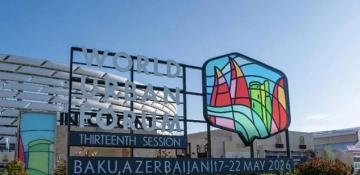
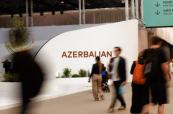
The 13th session of the United Nations World Urban Forum (WUF13), hosted by Azerbaijan, has gone down in history as a landmark event not only for our country but also for the broader international urban development and sustainability agenda. Bringing together more than 57,000 participants from 176 countries, the forum became the largest session ever held since the establishment of the World Urban Forum.
This record-breaking turnout stands as a vivid testament to the high level of trust that Baku and Azerbaijan have earned in organizing major international events, as well as to the country’s growing role as a platform for global cooperation and its rising international standing.
In today’s world, a nation’s reputation is measured not only by its economic performance or political influence. Hosting prestigious platforms where global challenges are debated by international organizations, heads of state, experts, and representatives of civil society is also regarded as a key indicator of a country’s position on the international stage. The decision to hold WUF13 in Baku is the result of the trust Azerbaijan has built over recent years and the positive international image it has successfully cultivated.
The scale of the forum itself underscores its significance. Tens of thousands of participants from 176 countries gathered in Baku to exchange views on urbanization, climate change, sustainable development, social inclusion, improving living environments, innovative urban governance, and the cities of the future. This was far more than a conference; it was one of the world’s most influential platforms for discussing the ideas and approaches that will shape urban development strategies for decades to come.
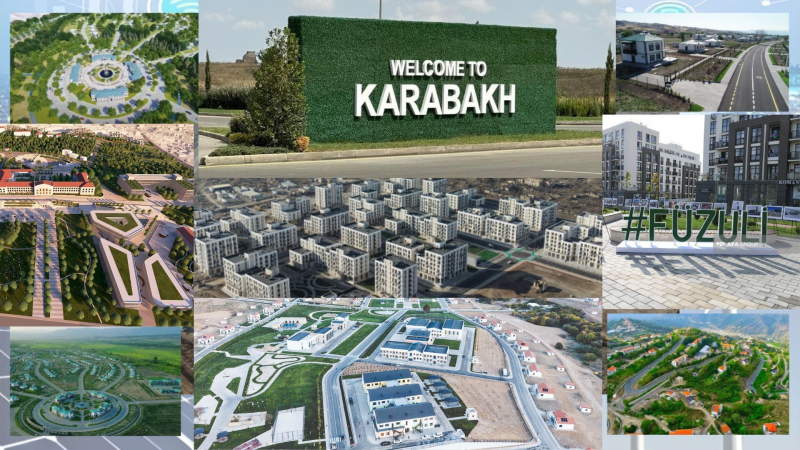
The fact that such a forum was held in Baku also demonstrates the high regard for Azerbaijan’s contribution to international urbanization processes. In recent years, large-scale infrastructure projects, the modernization of transport systems, the construction of new residential settlements, environmental initiatives, and the implementation of smart city concepts have attracted the attention of international experts. In particular, reconstruction efforts in Karabakh and East Zangezur, along with the introduction of “smart city” and “smart village” concepts, have generated considerable interest as examples of innovative approaches to urban development.
WUF13 was also significant as a showcase of Azerbaijan’s contribution to international cooperation. Numerous meetings were held between representatives from different regions of the world, new partnership opportunities were explored, and experiences in urban planning and sustainable development were exchanged. Against a backdrop of increasing polarization and geopolitical tensions across the globe, Baku successfully served as a reliable platform for dialogue, mutual understanding, and the search for common solutions.
In this regard, WUF13 represented another demonstration of Azerbaijan’s commitment to multilateral diplomacy. For many years, the country has contributed to promoting cooperation among states and international organizations, as well as fostering intercultural and inter-civilizational dialogue. The Baku Humanitarian Forum, global initiatives advanced during Azerbaijan’s chairmanship of the Non-Aligned Movement, COP29, and numerous other international events have all highlighted the success of this policy. WUF13 can be viewed as a continuation of this established trajectory.
The forum also once again showcased Azerbaijan’s organizational capacity and institutional capabilities. Hosting tens of thousands of participants, ensuring security, coordinating transportation and logistics, delivering seamless event management, implementing modern technological solutions, and maintaining high service standards demonstrated the extensive experience the country has accumulated in organizing major international gatherings. Today, Azerbaijan is recognized as one of the few countries capable of hosting the world’s most prestigious international events, and WUF13 reaffirmed that reputation.
Particular attention should also be paid to the fact that WUF13 became the second-largest international event held in the country after COP29. While COP29 highlighted Azerbaijan’s important role in the global climate agenda, WUF13 demonstrated that the country has also become a focal point for international discussions on urban development and sustainability. Together, these events confirm Azerbaijan’s status as a reliable international partner and an active contributor to addressing global challenges.
Within the framework of WUF13, Baku also had the opportunity to present its development model to an international audience. The capital’s transformation over recent decades attracted considerable interest among foreign visitors. Projects aimed at balancing the preservation of historical heritage with modern architecture, upgrading urban infrastructure, expanding public spaces, improving transportation networks, and increasing green areas have shaped Baku’s contemporary model of urban development. This model served as a practical and living example for forum participants.
From an economic perspective, WUF13 also generated significant benefits. The arrival of thousands of delegates from around the world positively impacted tourism, transportation, hospitality, and service industries. At the same time, new connections established during the forum laid the groundwork for future investment opportunities, expanded business partnerships, and deeper international cooperation. Events of this scale do not merely generate short-term economic activity; they also enhance a country’s investment attractiveness and international visibility over the long term.
Another important outcome of the forum was the demonstration that Azerbaijan has become one of the countries actively contributing to the shaping of the international urbanization agenda. Today, more than half of the world’s population lives in cities, and urbanization continues to accelerate rapidly. Sustainable urban development, adaptation to climate risks, social equity, and the integration of advanced technologies are among the defining issues of the global agenda. As the host of WUF13, Azerbaijan positioned itself as both an active participant in and a meaningful contributor to these critical discussions.
All of this shows that WUF13 was far more than a successfully organized international event. The forum served as another confirmation of Azerbaijan’s growing global standing, strengthening international confidence in the country and reinforcing its reputation as a reliable partner on the world stage. The record number of participants, the exceptionally high standard of organization, and the international resonance generated by the forum will ensure its place as a significant milestone in Azerbaijan’s modern history.
Baku’s hosting of the largest session in the history of the World Urban Forum is a powerful example of Azerbaijan’s contribution to the principles of global cooperation, multilateralism, and international solidarity. WUF13 once again demonstrated that Azerbaijan is not only a key actor in its region but also a trusted partner of the international community, a venue for global dialogue, and an important contributor to shaping the development agenda of the future. This achievement will have a lasting positive impact, further strengthening Azerbaijan’s international position and enhancing Baku’s reputation among the world’s leading cities for years to come.
(If you possess specialized knowledge and wish to contribute, please reach out to us at opinions@news.az).


Similar news