Why did US sanction Cuba’s state oil company?


The United States has imposed new sanctions on Cuba's state-owned energy company, Unión Cuba-Petróleo (CUPET), in the latest escalation of Washington's pressure campaign against the Cuban government.
The announcement by U.S. Secretary of State Marco Rubio represents one of the most significant actions targeting Cuba's energy sector in recent months and comes amid an already severe economic and fuel crisis on the island, News.az reports.
The move is part of a broader strategy by the U.S. administration to increase pressure on Havana through economic restrictions, diplomatic isolation, and targeted sanctions against key state institutions. U.S. officials argue that Cuba's leadership has used state-controlled energy resources to maintain political control and benefit government elites, while Cuban authorities condemn the measures as economic warfare designed to destabilize the country.
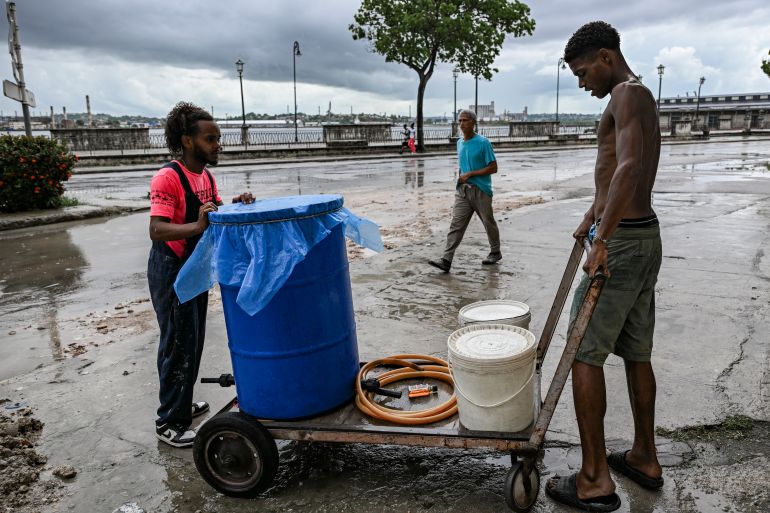
The sanctions arrive at a particularly difficult moment for Cuba, where fuel shortages, power outages, inflation, and economic hardship have already placed significant strain on society. As a result, the announcement has generated international debate over whether the measures will pressure the government or further worsen living conditions for ordinary Cubans.
What Is CUPET?
CUPET, short for Unión Cuba-Petróleo, is Cuba's state-owned oil and gas company and one of the most important entities in the country's economy.
The company oversees much of Cuba's energy sector, including oil exploration, refining, distribution, storage, and fuel imports. Because Cuba maintains a largely state-controlled economic system, CUPET plays a central role in supplying fuel to industries, transportation networks, power plants, government institutions, and households.
Energy security is particularly important for Cuba because the country depends heavily on imported fuel. Domestic production is insufficient to meet national demand, forcing the government to seek oil and petroleum products from international partners.
As a result, CUPET is not simply an energy company. It functions as a critical pillar of Cuba's economic infrastructure and directly affects electricity generation, transportation services, manufacturing activity, and daily life across the island.
This strategic importance explains why the company has become a major target in Washington's efforts to increase pressure on Havana.
Why Did Marco Rubio Announce These Sanctions?
According to the U.S. government, the sanctions are intended to target what Washington describes as corruption, political repression, and misuse of state resources by the Cuban leadership.
Rubio accused Cuba's communist government of diverting energy resources for political and personal purposes while ordinary citizens continue to experience fuel shortages and prolonged blackouts. U.S. officials argue that the country's energy sector has been used as a tool of political control rather than serving the needs of the population.
The U.S. government also argues that CUPET manages assets that were originally owned by American interests before the Cuban Revolution and subsequent nationalization of foreign-owned businesses.
The sanctions therefore fit into a broader narrative promoted by Washington that Cuba's leadership has mismanaged national resources and failed to address the country's deepening economic crisis.
For Rubio, whose political career has long included a hardline position toward Cuba, the sanctions represent another step in a wider campaign aimed at increasing pressure on the Cuban government.
What Exactly Do the Sanctions Do?
The sanctions impose restrictions on CUPET's ability to conduct transactions involving the United States and entities subject to U.S. jurisdiction.
Any assets under American control can be frozen, while U.S. persons and companies are generally prohibited from conducting business with the sanctioned entity. The measures also create additional risks for foreign organizations that maintain commercial relationships with CUPET.
Although Cuba already faces extensive U.S. restrictions under the decades-old embargo, targeting a major state-owned energy company increases economic pressure on one of the country's most strategically important sectors.
The practical impact extends beyond direct financial restrictions. Sanctions can discourage international companies, banks, insurers, and shipping firms from engaging with the targeted organization due to fears of regulatory consequences or future restrictions.
As a result, even companies outside the United States may become more cautious when dealing with CUPET.
Why Is Cuba’s Energy Sector So Important?
Energy lies at the center of Cuba's current economic challenges.
The island depends heavily on fuel imports to generate electricity and sustain transportation networks. In recent years, declining oil supplies from traditional partners and aging infrastructure have created recurring energy shortages.
Electricity generation remains particularly vulnerable because many power plants rely on imported fuel. When supplies decline, authorities are often forced to implement rolling blackouts and power rationing.
Fuel shortages also affect agriculture, manufacturing, tourism, logistics, and public transportation. In many cases, disruptions in energy supplies quickly spread throughout the wider economy.
Because of this interconnected role, pressure on the energy sector can have consequences that extend far beyond fuel markets.
This explains why Washington views energy sanctions as a potentially powerful tool and why Havana views them as a direct threat to national stability.
Why Is Cuba Experiencing Fuel Shortages and Blackouts?
Cuba's energy problems stem from a combination of structural and external factors.
The country's power infrastructure is aging and requires substantial investment. Many facilities have operated for decades and suffer from maintenance challenges, equipment failures, and limited modernization.
At the same time, Cuba has struggled to secure sufficient fuel imports. Changes in regional energy markets, declining support from traditional suppliers, and financial constraints have reduced access to reliable fuel supplies.
Economic difficulties have further complicated efforts to maintain infrastructure and purchase energy resources on international markets.
As a result, blackouts have become increasingly common across the island. In some regions, residents experience extended electricity interruptions that affect businesses, schools, hospitals, and daily life.
The sanctions arrive against this backdrop of already severe energy stress, making their potential impact particularly significant.
How Could These Sanctions Affect Cuba’s Economy?
The economic consequences could be substantial.
Energy is essential for nearly every sector of the economy. Any additional disruptions affecting fuel imports, refining operations, or energy distribution could intensify existing economic challenges.
Businesses may face higher operating costs and greater uncertainty. Manufacturing output could decline if power shortages become more frequent. Transportation services may experience additional disruptions, affecting both economic activity and daily mobility.
Tourism, one of Cuba's most important sources of foreign currency, could also be affected if electricity shortages and infrastructure problems worsen.
Financial markets and international investors often view sanctions as indicators of increased political and economic risk. This can further reduce investment opportunities and complicate efforts to attract foreign capital.
For a country already experiencing significant economic difficulties, additional pressure on the energy sector may have wide-ranging effects.
Will Ordinary Cubans Be Affected?
This question lies at the center of the debate surrounding the sanctions.
Supporters of the measures argue that they are aimed at government institutions rather than ordinary citizens. They contend that pressure on state entities can encourage political and economic reforms without directly targeting the population.
Critics, however, argue that sanctions on key sectors such as energy inevitably affect everyday life. Fuel shortages, transportation disruptions, rising prices, and power outages often have the greatest impact on ordinary households.
Humanitarian organizations have repeatedly warned that economic restrictions can reduce access to essential services, including healthcare, food distribution, and water supplies.
Because energy affects nearly every aspect of modern life, any disruption in this sector tends to spread throughout society.
As a result, the ultimate impact on ordinary Cubans remains one of the most controversial aspects of the policy.
How Has Cuba Responded?
The Cuban government has strongly condemned the sanctions.
Officials describe the measures as politically motivated actions intended to damage the Cuban economy and increase hardship for the population. Havana argues that the sanctions form part of a broader campaign aimed at destabilizing the government and forcing political change.
Cuban leaders also reject accusations that energy resources are being deliberately misused for political purposes. Instead, they point to decades of U.S. economic restrictions, declining access to international financing, and external economic pressures as major causes of the country's difficulties.
Government representatives maintain that sanctions worsen existing problems and make it harder to improve living conditions for citizens.
The dispute reflects a long-standing disagreement between Washington and Havana regarding responsibility for Cuba's economic challenges.
How Do These Sanctions Fit Into Broader U.S. Policy Toward Cuba?
The sanctions are part of what many analysts describe as a renewed "maximum pressure" strategy.
In recent months, Washington has overseen a series of measures targeting Cuban government institutions, senior officials, military-linked enterprises, and strategic economic sectors.
The objective is to increase economic and political pressure on the Cuban leadership while limiting its access to financial resources.
Supporters of the approach argue that decades of engagement failed to produce meaningful reforms and that stronger measures are necessary.
Critics contend that pressure campaigns have historically imposed significant costs on the population while producing limited political change.
The sanctions against CUPET therefore represent another phase in a broader effort to reshape U.S.-Cuba relations.
Could the Sanctions Increase Migration From Cuba?
Some experts believe that worsening economic conditions could encourage additional migration.
Economic hardship has long been one of the primary drivers of migration from Cuba. Fuel shortages, inflation, food insecurity, and declining public services can all contribute to decisions by individuals and families to seek opportunities elsewhere.
If sanctions further weaken economic conditions, migration pressures could increase.
This possibility concerns policymakers because migration flows often create humanitarian, political, and logistical challenges for both sending and receiving countries.
Whether the new sanctions will significantly affect migration patterns remains uncertain, but the issue is likely to receive increasing attention if economic conditions continue to deteriorate.
What Happens Next?
The future impact of the sanctions will depend on several factors.
One key question is whether the measures significantly disrupt CUPET's ability to obtain fuel, financing, insurance, or international business partnerships. Another is how Cuba responds to the new restrictions and whether alternative suppliers emerge.
International reactions may also shape the outcome. Some governments support increased pressure on Havana, while others oppose sanctions and advocate greater engagement.
At the same time, Cuba's internal economic situation will remain a critical variable. The country's energy crisis, inflation, infrastructure problems, and fiscal challenges all existed before the latest sanctions and will continue influencing developments.
The coming months will likely determine whether the sanctions achieve their intended political objectives or primarily contribute to economic hardship.
The Bottom Line
Marco Rubio's decision to sanction Cuba's state-owned oil company marks another significant escalation in Washington's campaign to pressure Havana. By targeting CUPET, the United States has focused on one of the most important institutions in Cuba's economy at a time when the country is already struggling with severe fuel shortages and electricity blackouts.
Supporters argue that the measures are necessary to hold Cuba's leadership accountable and increase pressure for reform. Critics warn that sanctions on such a critical sector could deepen economic hardship and worsen living conditions for ordinary citizens. As Cuba confronts one of the most challenging periods in its recent history, the effects of these sanctions will be closely watched not only in Havana and Washington, but across Latin America and the wider international community.
By Faig Mahmudov


Similar news