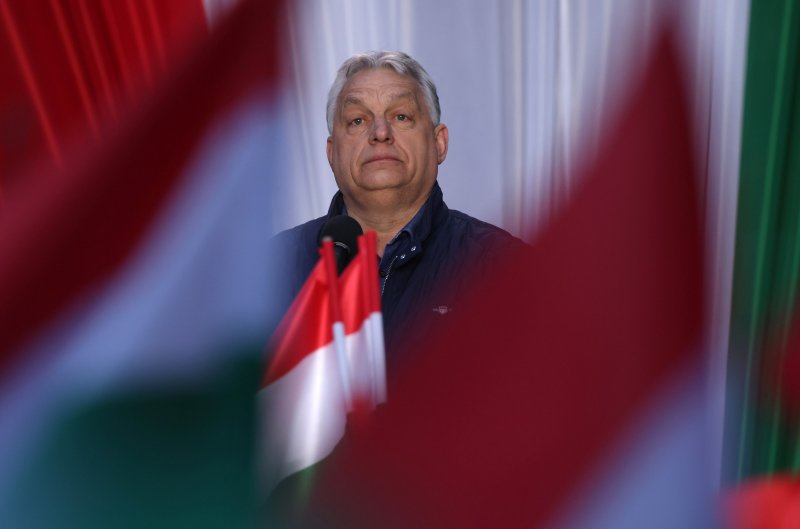
After more than 16 years in power, Prime Minister Viktor Orban and his Fidesz party were defeated by an opposition movement led by Peter Magyar. The result was not driven by a single issue or event, but rather by a complex convergence of economic pressures, political fatigue, institutional tensions, and shifting societal expectations.
Below is a comprehensive FAQ Explainer that unpacks the key reasons behind Orban’s defeat in detail.
What exactly happened in Hungary’s 2026 parliamentary election?
Hungary’s 2026 parliamentary election ended with a decisive loss for the ruling Fidesz party, marking the end of Viktor Orban’s long tenure as prime minister. The opposition, led by Peter Magyar and his Tisza Party, secured a parliamentary majority strong enough to form a government and initiate a political transition.
This outcome was historically significant for several reasons. First, it demonstrated that even a deeply entrenched political system can be challenged when voter mobilization reaches a critical threshold. Second, it showed that Hungary’s electorate was willing to move beyond a dominant leadership structure that had defined the country’s politics for more than a decade and a half.
The high voter turnout underscored the importance of the election. It reflected widespread public engagement and suggested that many citizens viewed the vote as a defining moment for Hungary’s future direction.
Was the election essentially a referendum on Viktor Orban’s rule?
In many respects, yes. The election functioned as a direct judgment on Viktor Orban’s leadership and political model. Over the years, Orban had transformed Hungary’s governance system into a highly centralized structure, often described by critics as an “illiberal democracy.”
Supporters argued that this model ensured stability, protected national sovereignty, and preserved cultural identity. Critics, however, contended that it weakened democratic institutions, reduced checks and balances, and concentrated power within a narrow political elite.
By 2026, these competing narratives had crystallized into a clear electoral choice. Voters were not simply selecting between parties, they were choosing between two fundamentally different visions of governance. The result indicated that a significant portion of the electorate was ready for systemic change.
Why was the opposition more successful this time than in previous elections?
The opposition’s success can largely be attributed to unity, leadership credibility, and message discipline. In previous elections, Hungary’s opposition forces were fragmented, ideologically diverse, and often unable to coordinate effectively. This fragmentation benefited Fidesz, allowing it to maintain dominance even when its overall vote share declined.
In 2026, the emergence of Peter Magyar changed this dynamic. As a former insider within the broader political system, Magyar possessed both institutional knowledge and political legitimacy. He was not easily dismissed as an outsider or an inexperienced challenger.
Equally important was the opposition’s ability to consolidate around a focused agenda. Instead of presenting a wide array of competing priorities, the campaign centered on a few key issues: corruption, economic management, democratic accountability, and relations with the European Union. This clarity made the opposition’s message more accessible and persuasive to voters.
How significant were economic issues in shaping voter behavior?
Economic concerns played a central role in the election outcome. While Hungary experienced periods of economic growth during Orban’s tenure, by the mid 2020s, many citizens were facing mounting financial pressures.
Inflation had eroded purchasing power, particularly affecting lower and middle income households. Rising costs of living, including food, energy, and housing, became a daily concern for a large segment of the population. Even if macroeconomic indicators appeared stable, the lived experience of many voters told a different story.
Another critical factor was the issue of European Union funding. Hungary had billions of euros in funds frozen due to disputes over rule of law and governance standards. This had both immediate and long term implications. On one hand, it limited public investment and development opportunities. On the other, it reinforced the perception that Hungary’s political direction was isolating it from key economic partners.
For many voters, economic dissatisfaction was not just about current hardships, but about future uncertainty. The opposition’s promise to restore access to EU funds and improve economic governance resonated strongly in this context.
Did corruption play a decisive role in the election?
Corruption was one of the most prominent themes in the campaign and played a significant role in shaping public opinion. Over time, accusations of favoritism, cronyism, and the concentration of wealth among politically connected individuals became a recurring feature of Hungary’s political discourse.
While such allegations had been present in previous election cycles, by 2026 they had accumulated to a point where they significantly influenced voter attitudes. The perception that economic opportunities were being distributed unfairly created a sense of frustration and injustice.
The opposition capitalized on this sentiment by framing the election as a choice between maintaining a system perceived as opaque and transitioning to one based on transparency and accountability. This framing proved effective, particularly among urban voters, professionals, and younger demographics.
What role did young voters play in Orban’s defeat?
Young voters were a critical factor in the election outcome. Over the years, support for Viktor Orban had gradually declined among younger generations. This shift was driven by several factors, including differences in political values, exposure to global perspectives, and dissatisfaction with domestic opportunities.
Younger voters tended to prioritize issues such as democratic governance, freedom of expression, and integration with European institutions. They were also more likely to be influenced by digital media and alternative sources of information, which provided narratives different from those of traditional outlets.
In 2026, higher youth turnout amplified these trends. The generational divide in voting patterns became more pronounced, contributing significantly to the opposition’s overall vote share. This suggests that the election outcome was not only a reflection of current conditions, but also an indicator of longer term societal change.
Did voter fatigue after 16 years in power contribute to the result?
Voter fatigue was an important underlying factor. Long periods of political dominance often lead to a gradual erosion of public enthusiasm, even among supporters. Over time, governance structures can appear stagnant, and the absence of meaningful competition can reduce accountability.
In Hungary’s case, Viktor Orban’s extended tenure created a sense that the political system had become too entrenched. For some voters, the desire for change was less about specific policies and more about the need for renewal and fresh leadership.
This sentiment was not confined to opposition strongholds. It extended into segments of the electorate that had previously supported Fidesz, indicating a broader shift in political attitudes.
How did foreign policy influence voter perceptions?
Foreign policy played a nuanced but important role in the election. Viktor Orban’s approach to international relations, particularly his stance toward the European Union and his positioning on geopolitical issues, had long been a subject of debate.
Supporters viewed his policies as a defense of national sovereignty and an assertion of independent decision making. Critics, however, argued that these positions risked isolating Hungary and undermining its strategic partnerships.
By 2026, concerns about international isolation had gained traction among voters. The perception that Hungary was increasingly at odds with its European partners contributed to a sense of uncertainty about the country’s global standing. The opposition’s commitment to rebuilding relationships and restoring Hungary’s role within the European framework appealed to voters seeking stability and predictability.
What role did the European Union play in the election outcome?
The European Union was a central background factor influencing the election. The ongoing disputes between Hungary and EU institutions over rule of law issues had tangible consequences, most notably the freezing of significant financial resources.
For many voters, this was not an abstract political issue but a practical concern. EU funds are closely linked to infrastructure development, public services, and economic growth. The loss or delay of these funds had visible impacts on local communities.
The opposition’s promise to resolve these disputes and unlock funding created a compelling argument for change. It framed the election as an opportunity to restore Hungary’s economic prospects and reintegrate more fully into the European system.
Did the structure of Hungary’s political system affect the result?
Hungary’s political system had been widely regarded as favorable to the ruling party. Electoral rules, district boundaries, and media influence were often cited as factors that contributed to Fidesz’s long standing dominance.
However, in 2026, the scale of opposition support was sufficient to overcome these structural advantages. High voter turnout reduced the relative impact of systemic biases, and the opposition’s unified approach prevented vote splitting.
This demonstrated that while institutional factors can shape electoral outcomes, they are not insurmountable when there is strong public mobilization and a clear alternative.
Was the outcome expected by analysts and observers?
Prior to the election, most analysts anticipated a competitive race. Opinion polls indicated that the opposition had gained momentum, but there was still uncertainty about whether it could translate this into a decisive victory.
The clarity and scale of Orban’s defeat exceeded many expectations. This suggests that late shifts in voter sentiment, as well as turnout dynamics, played a significant role. It also highlights the limitations of polling in capturing complex political environments.
What does this result mean for Hungary’s political future?
The election marks the beginning of a new political phase in Hungary. The incoming leadership faces the challenge of implementing reforms while maintaining stability. Key areas of focus are likely to include judicial independence, media freedom, anti corruption measures, and economic policy.
At the same time, the legacy of the previous system remains significant. Institutions shaped during Orban’s tenure will not change overnight, and political polarization is likely to persist. Managing this transition will require careful balancing of reform and continuity.
Can Viktor Orban return to power in the future?
While Viktor Orban’s defeat is significant, it does not necessarily mark the end of his political influence. As a seasoned politician with a strong support base, he remains a central figure in Hungary’s political landscape.
Future developments will depend on several factors, including the performance of the new government, the cohesion of the opposition coalition, and broader economic and geopolitical trends. Political comebacks are not uncommon, particularly in systems with strong party structures.
What are the main reasons Viktor Orban lost the election?
The defeat of Viktor Orban can be understood as the result of multiple interconnected factors rather than a single cause. These include economic dissatisfaction, concerns about corruption, the emergence of a credible opposition leader, declining support among younger voters, tensions with the European Union, and voter fatigue after a long period in power.
Together, these elements created a broad coalition of voters seeking change. The 2026 election was therefore not just a routine political contest, but a defining moment in Hungary’s democratic evolution.