Why is Russia withdrawing from Karabakh when Armenia is being actively armed? – OPINION


Editor's note: Ruslan Shevchenko, political analyst, doctor of history
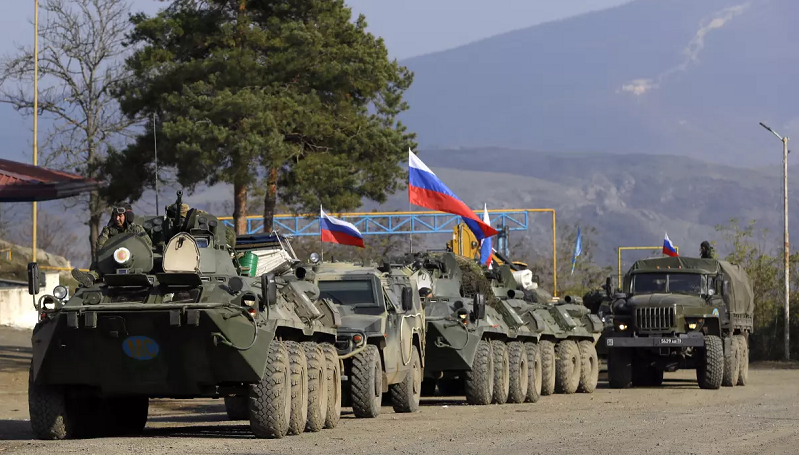
The analysis of the withdrawal of Russian peacekeepers from Karabakh highlights two primary factors that are significant in the context of regional security and international relations.
The first factor pertains to the erosion of the original mission of the peacekeeping forces. Deployed in Karabakh in November 2020, the Russian peacekeepers were initially tasked with "protecting the Armenian population from potential reprisals by Azerbaijan" following the cessation of military hostilities in the region. However, this mission encountered unforeseen challenges when, between September 25 and October 3, 2023, there was a mass exodus of the Armenian population from the area. This dramatic demographic shift left the region nearly devoid of civilians, thereby undermining the justification for continuing the peacekeeping efforts.
The second factor involves more intricate geopolitical dynamics, including the intent of the Russian government to influence Armenian domestic politics. Russia aims to undermine Armenian Prime Minister Nikol Pashinyan, who is inclined towards closer ties with Western countries—a stance perceived by the Kremlin as a threat. Concurrently, an analysis of Azerbaijan’s foreign policy under President Ilham Aliyev highlights his efforts to maintain balanced relations with Russia. This strategy seeks to preserve stability and foster beneficial economic and military partnerships.
Moreover, unresolved issues persist, such as the return of Azerbaijani enclaves occupied by Armenia in the early 1990s and Armenia’s non-compliance with the opening of the "Zangezur Corridor" as stipulated in the November 9, 2020, agreement. These challenges continue to demand international attention and dialogue to address the ongoing dispute between Azerbaijan and Armenia.
The West actively fills the influence vacuum in Armenia, and with assistance from France, as well as Greece and India to a lesser extent, is rearming the Armenian army. These efforts, however, are unlikely to prevent Armenia from a potential military crisis; they may only postpone an inevitable clash in the looming conflict. In this context, new challenges also emerge for Azerbaijan, which involve the interests of other states and could deepen regional tensions.
The escalation in the region could draw in Turkey, Azerbaijan's primary military ally. In this regard, Vladimir Putin's efforts to convince Recep Tayyip Erdogan during their meetings to avoid intervening in the conflict are critically important. As an ally of Iran, which is Turkey’s main regional rival, Russia faces the challenging task of providing credible assurances against Iranian interference, considering Iran’s historical and political ties with Armenia and its concerns about Turkish ascendancy. The potential shift of control over enclaves and the Zangezur Corridor to Azerbaijan could significantly alter the geopolitical balance in Turkey's favor, deepening strategic challenges for Iran and encouraging Turkey to expand its influence in Central Asia.
Azerbaijan’s relationship with Israel, involving assistance with oil products, intensifies negative perceptions from Iran, as reflected in various Iranian media outlets. This complicates Russia's efforts to mediate the conflict and maintain at least a semblance of neutrality among the key players, essential for avoiding an escalation in the South Caucasus. Russia must also manage the potential influx of refugees, which could cause significant socio-economic imbalances within the country and create conditions for regional instability.
Russia and the West's approaches to regional policy in Armenia demonstrate divergent strategies and objectives. Moscow's motives might include elements of personal retribution for losing influence in the region, highlighting its commitment to sustaining Russian presence in the South Caucasus. Conversely, the West, particularly France and other NATO countries, views its policy in Armenia as a win-win situation. Their main objective is to consolidate their foothold on the post-Soviet Caucasian stage, aligning with Armenian Prime Minister Nikol Pashinyan’s ambitions for closer ties with the West. This strategy involves supporting the Armenian military and bolstering influence, despite the potential risks to Armenia's territorial integrity in the event of conflict escalation.
For Azerbaijan, the current situation necessitates a continuation of its cautious and balanced foreign policy. Successfully executing this strategy could considerably enhance Azerbaijan's geopolitical standing in the region. A prudent, balanced approach will help the country avoid further conflicts, maintain stable relations with key regional players, and reinforce its status as a significant actor in the South Caucasus. This highlights the importance for Azerbaijan to continue carefully balancing its international actions, particularly in the context of escalating geopolitical tensions in the region.


Similar news