Why do Putin–Tokayev talks reflect a shifting regional balance?


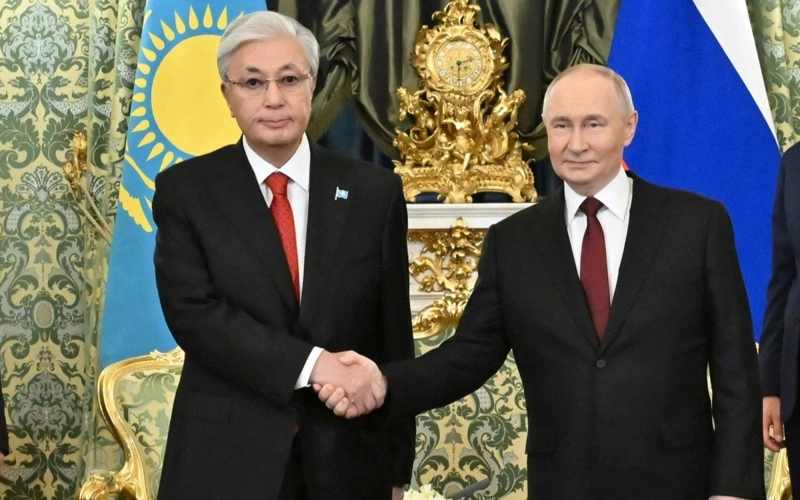
The latest meeting between Vladimir Putin and Kassym-Jomart Tokayev comes at a delicate juncture for both Russia and Kazakhstan, as shifting geopolitical realities, economic pressures and regional security concerns reshape relations across Central Asia.
Kazakhstan has long maintained close political and economic ties with Russia, rooted in shared history, deep trade links and membership in regional organizations such as the Eurasian Economic Union. However, in recent years, Astana has increasingly sought to pursue a more independent foreign policy.
RECOMMENDED STORIES
President Tokayev has emphasized Kazakhstan’s sovereignty and territorial integrity, while carefully balancing relations with major global players including China, the European Union and the United States. This multi-vector approach reflects Kazakhstan’s effort to avoid overreliance on any single partner while preserving stability at home.
For Moscow, maintaining influence in Central Asia remains a strategic priority, particularly as Western sanctions and geopolitical isolation continue to reshape its global position. The talks therefore offer an opportunity for Russia to reaffirm its role as a key partner in the region.
Economic pressures and trade recalibration
Economic considerations are central to the discussions. Russia remains one of Kazakhstan’s largest trading partners, but the impact of international sanctions on Moscow has created new challenges for cross-border trade and financial transactions.
Kazakhstan has had to carefully navigate these constraints, ensuring compliance with international regulations while preserving economic cooperation with Russia. At the same time, Astana has been expanding trade corridors that bypass Russian territory, including routes through the Caspian Sea and South Caucasus.
Energy cooperation also remains a key pillar of the relationship. Kazakhstan relies on Russian infrastructure for a significant portion of its oil exports, particularly via pipelines that connect to global markets. Any disruptions or policy shifts in this area could have major economic implications.
Security concerns in a changing region
Security dynamics in Central Asia are also evolving, adding another layer of complexity to the talks. Russia has traditionally played a dominant role in regional security through mechanisms such as the Collective Security Treaty Organization.
However, shifting threats, including instability in neighboring regions and the broader impact of global conflicts, have prompted countries like Kazakhstan to diversify their security partnerships.
Tokayev has signaled a willingness to cooperate with multiple actors to ensure national security, while still recognizing Russia’s importance as a defense partner. This balancing act underscores the nuanced nature of the relationship.
Geopolitical tensions and diplomatic signaling
The broader geopolitical environment continues to influence bilateral ties. Russia’s strained relations with the West have had ripple effects across the region, forcing countries like Kazakhstan to tread carefully in their diplomatic engagements.
Astana has avoided taking overtly confrontational positions, instead promoting dialogue and neutrality where possible. This approach allows Kazakhstan to maintain constructive relations with all sides while safeguarding its national interests.
For Moscow, high-level engagements with regional leaders such as Tokayev serve as a signal that it retains influence and diplomatic engagement despite international pressures.
A relationship under adjustment
Ultimately, the Putin–Tokayev talks reflect a relationship that remains strong but is undergoing gradual adjustment.
Both sides share mutual interests in economic cooperation, regional stability and energy connectivity. Yet, changing geopolitical conditions are compelling them to redefine the parameters of their partnership.
As Central Asia becomes an increasingly important arena for global competition and connectivity, the ability of Russia and Kazakhstan to manage their differences while sustaining cooperation will be crucial.
The outcome of these talks may not produce immediate breakthroughs, but they highlight the careful diplomacy required to navigate an increasingly complex regional landscape.
By Faig Mahmudov


Similar news