Why passengers worldwide are affected by Qatar Airways disruptions


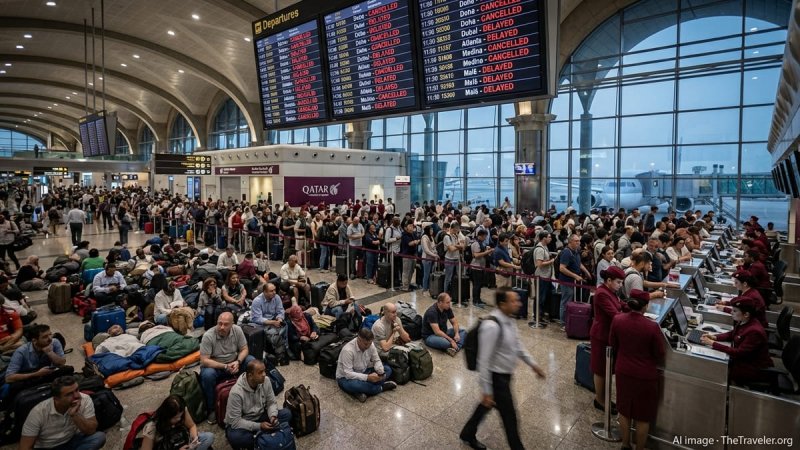
The ongoing geopolitical tensions in the Middle East have significantly disrupted international aviation, with several countries temporarily closing their airspace as a precautionary measure.
Among the airlines most affected by these developments is Qatar Airways, one of the world’s leading international carriers whose operations are centered at Doha’s Hamad International Airports, News.Az reports.
RECOMMENDED STORIES
In its latest operational update, Qatar Airways confirmed that scheduled flight operations remain temporarily suspended due to the closure of Qatari airspace. The airline emphasized that flights will resume only once aviation authorities determine that the situation is safe for commercial air travel.
This development has created widespread disruption for passengers traveling to, from, or through Doha, as well as for global aviation networks that rely on the Gulf region as a major transit corridor between continents.
Below is a detailed FAQ explainer outlining what the latest update means for passengers, the aviation industry, and the broader travel sector.
What is the latest update from Qatar Airways regarding flight operations?
Qatar Airways has announced that its scheduled flight operations remain temporarily suspended due to the ongoing closure of Qatari airspace. The airline explained that the suspension affects departures, arrivals, and transit flights through its hub in Doha.
According to the airline, operations will resume only when aviation authorities confirm that the country’s airspace has been reopened and deemed safe for civilian aviation.
Qatar Airways has also stated that it will continue to provide regular updates as the situation evolves and authorities assess regional security conditions.
Passengers have been advised not to travel to the airport unless they receive confirmation that their flight is operating.
Why has Qatar Airways suspended its flights?
The suspension is directly linked to escalating military tensions across parts of the Middle East, which have prompted several countries to temporarily close or restrict their airspace.
Airspace closures are a common precaution during periods of heightened military activity. Governments and aviation authorities take such steps to protect civilian aircraft from potential risks associated with missile launches, drone activity, or other military operations.
Because Qatar’s airspace is currently closed, Qatar Airways cannot legally operate commercial flights until authorities reopen the skies.
Who makes the decision to close airspace?
Airspace closure decisions are made by national aviation regulators. In Qatar, the authority responsible for civil aviation safety and airspace management is the Qatar Civil Aviation Authority.
When security threats emerge, the authority can issue notices restricting or suspending flight operations in order to protect civilian aviation.
Airlines must comply with these directives and cannot independently operate flights if national authorities determine that conditions are unsafe.
Once authorities confirm that the situation has stabilized, they may reopen airspace and allow airlines to resume normal operations.
Are any Qatar Airways flights operating during the suspension?
Although scheduled commercial flights remain suspended, Qatar Airways has been organizing a limited number of special relief flights.
These flights are primarily intended to help stranded passengers reach their home destinations.
Some relief services have been arranged from nearby regional airports, connecting passengers to several European destinations.
These flights are being organized on a controlled basis, and passengers are contacted directly by the airline if they are eligible to travel.
Qatar Airways has stressed that passengers should not go to the airport unless they receive official notification from the airline.
How many passengers are affected by the disruption?
Qatar Airways operates one of the largest international airline networks in the world, with Doha serving as a major global transit hub connecting more than 160 destinations.
Under normal circumstances, tens of thousands of passengers travel through Hamad International Airport each day.
The suspension of flights therefore affects a large number of travelers, including passengers:
traveling to Qatar
departing from Qatar
connecting through Doha to other destinations
In addition to passenger travel, cargo shipments transported on passenger aircraft have also been disrupted.
Which other airlines are affected by the regional airspace closures?
Qatar Airways is not the only airline facing disruption due to the regional security situation.
Several airlines across the Gulf region and beyond have also suspended flights or adjusted routes.
Major carriers operating from hubs in Dubai, Abu Dhabi, and other cities have been forced to cancel flights or reroute aircraft to avoid affected airspace.
International airlines flying between Europe and Asia have also modified flight paths to avoid potential conflict zones.
These changes have caused delays, longer flight times, and operational challenges for airlines worldwide.
How long could the suspension last?
It remains unclear how long the suspension of Qatar Airways flights will continue.
The airline has stated that operations will resume once aviation authorities reopen Qatari airspace and confirm that conditions are safe for commercial aviation.
Even after airspace reopens, it may take time for flight schedules to return to normal.
Airlines must reposition aircraft and crews, rebook thousands of passengers, and coordinate with airports and aviation authorities across multiple countries.
As a result, it may take several days or even weeks for the global flight network to fully stabilize.
What should passengers do if their flight has been cancelled?
Passengers whose flights have been affected are encouraged to check their booking status through the airline’s website or mobile application.
Travelers should also ensure their contact information is updated so that the airline can notify them of any schedule changes.
The airline has advised passengers not to travel to the airport unless they receive confirmation that their flight is operating.
Flexible travel policies have also been introduced for affected passengers, allowing many travelers to change their travel dates without additional fees.
Depending on the type of ticket purchased, passengers may also be eligible for refunds.
Why are airspace closures so disruptive for aviation?
Modern aviation relies on carefully coordinated international flight corridors that allow aircraft to travel safely between countries.
When airspace in a strategic region is closed, airlines must reroute flights around the affected area.
These changes can lead to longer flight times, higher fuel consumption, and scheduling complications.
In some cases, rerouting is not feasible due to distance limitations or lack of alternative routes.
When this occurs, airlines may suspend flights entirely until safe airspace becomes available again.
How important is Doha as a global aviation hub?
Doha’s Hamad International Airport is one of the most important transit hubs in global aviation.
Qatar Airways operates a hub and spoke network that connects passengers traveling between continents.
Through Doha, travelers connect between Europe, Asia, Africa, North America, and Australia.
Because of this central role in international travel, disruptions at Doha have ripple effects across the global aviation system.
Flights that rely on the airport as a connecting hub are forced to cancel or reroute, affecting travel plans worldwide.
How do conflicts affect aviation safety?
Commercial aviation follows strict international safety protocols during periods of military conflict.
Airlines and aviation authorities constantly monitor security threats such as missile launches, military radar activity, and drone operations.
If intelligence assessments identify potential risks to civilian aircraft, governments may restrict or close affected airspace.
International aviation organizations also issue safety notices warning airlines to avoid specific areas.
These measures are designed to ensure that civilian aircraft are never placed in danger.
Could the aviation disruption affect global tourism?
Yes, aviation disruptions can have significant consequences for the tourism industry.
The Middle East serves as a major travel hub linking Europe, Asia, and Africa.
When airlines suspend flights or airspace closes, tourism flows decline because travelers cannot easily reach their destinations.
Hotels, tour operators, and travel companies may experience reduced bookings as travelers postpone trips until the situation stabilizes.
However, the long term impact will depend largely on how quickly regional tensions ease and flight operations resume.
Are cargo shipments affected as well?
Yes, cargo logistics can also be disrupted.
Many passenger aircraft carry freight in addition to travelers, including electronics, pharmaceuticals, and perishable goods.
When passenger flights are suspended, the available capacity for air cargo declines.
This can slow the movement of goods and create logistical challenges for supply chains that rely on air transport.
Some cargo may be redirected to dedicated freight aircraft or alternative transport routes.
What happens next for Qatar Airways?
Qatar Airways has stated that it will continue monitoring the situation closely in coordination with aviation authorities.
The airline has emphasized that passenger safety remains its highest priority.
Flight operations will resume only after authorities reopen the airspace and confirm that it is safe for commercial aviation.
Until then, the airline will continue assisting affected passengers and providing operational updates.
Conclusion
The suspension of Qatar Airways flights demonstrates how geopolitical tensions can rapidly disrupt global aviation networks.
With Doha serving as a key transit hub connecting multiple continents, the closure of Qatari airspace has had a significant impact on international travel.
While airlines and aviation authorities work to ensure passenger safety, travelers worldwide are facing cancellations, delays, and changing travel plans.
The resumption of normal flight operations will ultimately depend on improvements in the regional security situation and the reopening of Middle Eastern airspace.
For now, passengers are advised to stay informed through official airline communication channels and wait for confirmation before traveling to the airport.
By Faig Mahmudov


Similar news