Why the attempt on a GRU leader is a strategic message, not a random crime


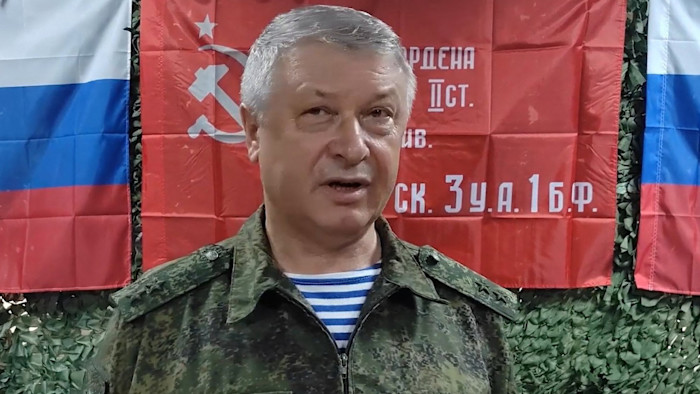
An attempted assassination in Moscow targeting Vladimir Alekseyev, a lieutenant general and deputy head of Russia’s Main Intelligence Directorate (GRU), has triggered intense scrutiny inside Russia and abroad.
The attack took place inside a residential building, a setting that underscores both the brazenness of the assault and the growing vulnerability of senior security figures even in tightly controlled environments, News.Az reports.
RECOMMENDED STORIES
While the investigation remains ongoing, the incident has already been framed by analysts as part of a wider pattern of targeted violence against high-ranking military and intelligence officials since the start of the Ukraine war.
This FAQ Explainer examines what is known about the attack, who Alekseyev is, why he is a significant figure, how this episode fits into a broader sequence of killings and attempted killings, and what the political and security implications may be for Russia, Ukraine, and the wider international arena.
Who is Vladimir Alekseyev?
Vladimir Alekseyev is one of the most senior figures within Russia’s military intelligence establishment. Since 2011, he has served as deputy head of the GRU, the agency responsible for military intelligence, special operations coordination, and a wide range of covert activities abroad. Over more than a decade in this role, Alekseyev has been associated with some of the Kremlin’s most sensitive foreign and security operations.
Alekseyev was awarded the title Hero of Russia for his role in the Syrian campaign, reflecting his standing within the military hierarchy. His name has also appeared repeatedly in Western sanctions regimes. The United States sanctioned him in 2016 over alleged malicious cyber activities linked to interference in the US presidential election. In 2019, the European Union added him to its sanctions list over alleged involvement in the poisoning of Sergei Skripal in the United Kingdom using the nerve agent Novichok.
These factors make Alekseyev not just a senior officer, but a symbol of the GRU’s external reach and of the confrontational phase of Russia’s relations with the West over the past decade.
What exactly happened during the attack?
According to Russian investigative authorities, Alekseyev was shot multiple times in a residential building in northwestern Moscow on the morning of February 6. Telegram channels and Russian media outlets report that the attacker waited for him on a stairwell one floor above his apartment, suggesting prior knowledge of his movements and residence.
Neighbors reportedly called an ambulance after hearing the gunshots and discovering Alekseyev wounded, with accounts describing extensive bloodshed on the floor. The shooter fled the scene and has not been publicly identified. Alekseyev was taken to intensive care and, according to unofficial reports, remains in serious condition.
The circumstances indicate a targeted assassination attempt rather than a random act of violence. The choice of location and timing implies planning, surveillance, and a willingness to strike in a space usually considered secure.
Why is this assassination attempt particularly significant?
Assassination attempts against senior intelligence officials inside Moscow are rare and politically sensitive. The GRU operates at the core of Russia’s security architecture, and its leadership is normally protected by multiple layers of security. An attack on a deputy head of the agency signals either a serious breach in internal security or a deliberate message intended to demonstrate reach and capability.
The incident also occurred immediately after trilateral talks involving Russia, Ukraine, and the United States in Abu Dhabi. While there is no publicly confirmed link between the talks and the attack, the timing has fueled speculation that the attempt may carry political or strategic signaling value.
For the Kremlin, the attack raises uncomfortable questions about internal stability, elite security, and the effectiveness of counterintelligence measures at a time when Russia is already under significant military and economic pressure.
What role did Alekseyev play during the Wagner mutiny?
Alekseyev gained public attention during the June 2023 Wagner mutiny, when fighters from the private military company Wagner entered Rostov-on-Don and briefly challenged the authority of the Russian military leadership. During that crisis, Alekseyev reportedly engaged in direct talks with Yevgeny Prigozhin, attempting to de-escalate the situation.
He later recorded a video address urging Wagner fighters to stop and not participate further in the rebellion. His involvement positioned him as a key intermediary during one of the most serious internal security crises Russia had faced in decades. That role may have earned him both allies and enemies within various power networks, a factor analysts consider when assessing potential motives behind the attack.
How does this incident fit into a broader pattern of targeted killings?
The attempted assassination of Alekseyev is not an isolated case. Since 2023, a series of high-profile killings and attacks have targeted senior Russian military figures, often using explosives or firearms and frequently occurring on Russian territory.
In December 2025, Lieutenant General Fanil Sarvarov was killed in Moscow by a car bomb. Sarvarov headed the Operational Training Directorate of the Russian General Staff and had previously participated in conflicts in the North Caucasus and Syria. Days later, another explosion occurred nearby, injuring police officers.
Earlier, Lieutenant General Igor Kirillov, head of Russia’s radiation, chemical, and biological protection troops, was killed along with his assistant by an explosive device planted in a scooter. Kirillov was known for public claims accusing Ukraine of developing chemical and biological weapons.
In April 2025, a car bomb in Balashikha near Moscow killed Lieutenant General Yaroslav Moskalik, deputy head of the Main Operational Directorate of the General Staff. That attack coincided with a visit to Moscow by White House special envoy Steve Witkoff for talks with President Vladimir Putin on the Ukraine conflict.
Taken together, these incidents point to a sustained campaign targeting individuals deeply involved in Russia’s military planning and operational command.
Who might be behind the attack?
Officially, Russian authorities have not named suspects or attributed responsibility. Russian media have speculated about various possibilities, including the involvement of a female attacker, but these claims remain unverified.
In previous cases, Russian investigators have alleged Ukrainian involvement, sometimes asserting that suspects were recruited by Ukrainian intelligence or military services. Kyiv, for its part, has typically neither confirmed nor denied responsibility, maintaining strategic ambiguity.
Other possibilities discussed by analysts include internal rivalries, criminal networks, or disgruntled insiders. However, given Alekseyev’s profile and the broader pattern of attacks, most observers view the incident through the lens of the ongoing Russia-Ukraine conflict and covert warfare.
Why are intelligence and military figures being targeted?
Targeting senior officers serves multiple strategic purposes. It can disrupt command and control, intimidate other officials, and demonstrate operational reach. Assassinations also carry symbolic value, signaling that even top figures are vulnerable.
For Ukraine or actors aligned with it, such attacks may be seen as asymmetric responses to Russia’s military advantages. For Russia, they represent a form of hybrid warfare being waged on its own territory, blurring the line between battlefield conflict and internal security threats.
What does this mean for Russia’s internal security?
The attempted killing of Alekseyev intensifies pressure on Russia’s security services to demonstrate control. It raises questions about how attackers are able to gather intelligence, track movements, and carry out operations in urban centers under heavy surveillance.
In response to previous incidents, Russia has tightened security around senior officials, increased counterintelligence measures, and expanded investigations into suspected networks. However, the recurrence of such attacks indicates persistent vulnerabilities.
How does timing influence interpretations of the attack?
Timing plays a crucial role in how such incidents are interpreted. The attack on Alekseyev occurred immediately after trilateral talks involving Russia, Ukraine, and the United States. While no direct connection has been established, the proximity invites speculation about signaling or attempts to influence negotiation dynamics.
What are the implications going forward?
Whether Alekseyev survives, whether suspects are identified, and whether responsibility is officially attributed will shape the next phase of this story. More broadly, the case highlights how modern conflicts increasingly extend beyond traditional battlefields and into covert, symbolic, and psychological domains.
By Faig Mahmudov


Similar news