Why the topic of nuclear safety has returned to the global agenda


For much of the past two decades, nuclear safety gradually faded from the center of global public debate, News.Az reports.
While experts, regulators, and international organizations continued their work quietly, broader political and media attention shifted toward other issues such as terrorism, financial crises, pandemics, and climate change. Today, however, nuclear safety has firmly returned to the global agenda. This renewed focus is not accidental. It is driven by a convergence of geopolitical, technological, environmental, and social factors that have reshaped how governments and societies assess risk in an increasingly unstable world.
This evergreen analysis explains why nuclear safety has re-emerged as a global priority, what factors are driving this shift, and why the issue is likely to remain relevant for years to come.
Geopolitical instability and heightened risk awareness
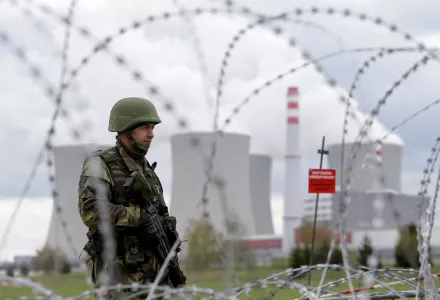
One of the most significant reasons nuclear safety has returned to prominence is the deterioration of global security conditions. Rising geopolitical tensions, regional conflicts, and confrontations between major powers have revived concerns about the safety of nuclear facilities and materials.
Even when nuclear weapons are not directly involved, instability increases the risk of accidents, miscalculations, and unintended consequences. Nuclear power plants, fuel storage sites, and research facilities are often located in politically sensitive regions. When tensions escalate, questions inevitably arise about their protection, resilience, and emergency preparedness.
The modern security environment has blurred the line between military and civilian risk. Nuclear safety is no longer viewed solely as a technical or environmental issue but as a strategic concern linked to national and international stability.
The legacy of past nuclear accidents
Historical memory plays a powerful role in shaping public and political attention. Major nuclear accidents remain deeply embedded in global consciousness, serving as reminders of what can go wrong even in peacetime.
Decades after such disasters, their long-term consequences continue to influence energy policy, public health research, and environmental management. These events demonstrated that nuclear accidents can transcend borders, overwhelm institutions, and leave lasting social scars.
As new generations encounter nuclear debates in the context of current crises, these historical lessons are being re-examined. Policymakers are increasingly aware that complacency is dangerous, and that past accidents offer warnings rather than closed chapters.
Aging nuclear infrastructure worldwide
A less visible but highly influential factor is the aging of nuclear infrastructure. Many nuclear power plants currently in operation were designed and built several decades ago. While life-extension programs and upgrades are common, aging systems pose growing safety challenges.
As components wear out and original designers retire, maintaining safety standards becomes more complex and costly. Public and political attention has increasingly turned to whether older facilities can continue to operate safely in a rapidly changing risk environment.
This issue is particularly sensitive in countries where nuclear power remains central to energy supply. The balance between energy security and nuclear safety has become a major policy debate, pushing safety concerns back into the spotlight.
Climate change and environmental stress
Climate change has added a new dimension to nuclear safety discussions. Rising temperatures, extreme weather events, flooding, droughts, and sea-level rise all pose challenges to nuclear facilities that were designed under different environmental assumptions.
Cooling systems depend on stable water sources and predictable temperatures. Flood defenses must withstand increasingly intense storms. Wildfires and heatwaves threaten power supply and emergency response capabilities.
As climate risks grow, nuclear safety can no longer be separated from environmental resilience. This intersection has drawn renewed attention from policymakers, scientists, and the public, particularly in regions already experiencing climate-related disruptions.
The global energy transition and nuclear power’s role
The global push to reduce carbon emissions has revived debates about the role of nuclear energy in achieving climate goals. For some countries, nuclear power is seen as a low-carbon alternative that can provide reliable baseload electricity.
This renewed interest has brought nuclear safety back into public discussion. Expanding or maintaining nuclear capacity requires public trust, and trust depends on credible safety assurances.
New reactor designs promise improved safety features, but skepticism remains. The question is no longer just whether nuclear power is necessary, but whether it can be managed safely under modern conditions. As nuclear energy re-enters climate policy discussions, nuclear safety naturally follows.
Technological complexity and cyber risks
Modern nuclear facilities rely heavily on digital systems for monitoring, control, and communication. While these technologies enhance efficiency and precision, they also introduce new vulnerabilities.
Cybersecurity risks have become a major concern across critical infrastructure sectors, and nuclear facilities are no exception. Even without hostile intent, software failures or system malfunctions can have serious consequences.
The growing awareness of cyber threats has expanded the definition of nuclear safety beyond physical systems. Protecting nuclear installations now requires expertise in digital security, human factors, and system integration, further elevating the topic on the global agenda.
Nuclear safety beyond power plants
Another reason nuclear safety has regained attention is the broader understanding of where nuclear risks exist. Safety concerns are no longer limited to large power reactors.
The nuclear fuel cycle includes mining, enrichment, transportation, waste storage, and decommissioning. Radioactive materials are also used in medicine, research, and industry. Each of these areas presents unique safety challenges.
Incidents involving lost or mishandled radioactive sources, while less dramatic than reactor accidents, have demonstrated that nuclear safety is a daily issue affecting civilian life. This expanded perspective has reinforced the need for comprehensive safety frameworks.
Public trust, transparency, and information flows
In an era of instant communication, public trust has become both more fragile and more important. Information about potential nuclear risks spreads rapidly, often accompanied by speculation or misinformation.
Governments and operators are under greater pressure to demonstrate transparency and accountability. When trust is lacking, even minor incidents can trigger widespread concern and political backlash.
This environment has forced nuclear safety back into policy debates, not only as a technical requirement but as a matter of governance and public confidence. Effective communication and openness are now recognized as essential components of safety itself.
Lessons from global crises
Recent global crises have highlighted how quickly complex systems can fail under stress. Supply chains, healthcare systems, and critical infrastructure have all shown vulnerabilities that were previously underestimated.
These experiences have influenced how societies think about risk management. Nuclear safety, with its potential for high-impact consequences, has naturally been re-evaluated in this broader context of systemic resilience.
The question policymakers increasingly ask is not whether a system can function under normal conditions, but how it performs under extreme and unexpected pressure.
International cooperation and shared responsibility
Nuclear safety is inherently transnational. Radiation does not respect borders, and accidents in one country can affect many others. This reality has reinforced the importance of international cooperation.
Global institutions, peer reviews, and shared standards play a critical role in identifying risks and promoting best practices. As geopolitical tensions rise, maintaining these cooperative mechanisms becomes more challenging yet more essential.
The renewed focus on nuclear safety reflects recognition that isolation and secrecy increase risk, while collaboration enhances collective security.
Societal resilience and preparedness
Public discussions about emergency preparedness, risk awareness, and resilience have expanded in recent years. Nuclear safety fits naturally into this broader conversation.
Preparedness planning, emergency drills, and public education are increasingly seen as integral to national resilience strategies. Nuclear incidents, even if unlikely, require high levels of readiness due to their potential impact.
This shift toward resilience-based thinking has elevated nuclear safety from a specialized topic to a mainstream policy concern.
A realistic conclusion
The return of nuclear safety to the global agenda is driven by a convergence of factors: geopolitical instability, aging infrastructure, climate change, technological complexity, energy transition debates, and evolving public expectations. None of these trends are temporary.
Nuclear safety is no longer a background technical issue managed quietly by experts. It has become a visible, multidimensional challenge linked to security, environment, governance, and public trust.
As long as nuclear technologies remain part of global energy systems, medical practice, and strategic realities, nuclear safety will remain a central issue. Its renewed prominence reflects not alarmism, but realism in a world where high-impact risks demand sustained attention, transparency, and cooperation.


Similar news