Why Utah’s AI data center fight is becoming a national debate


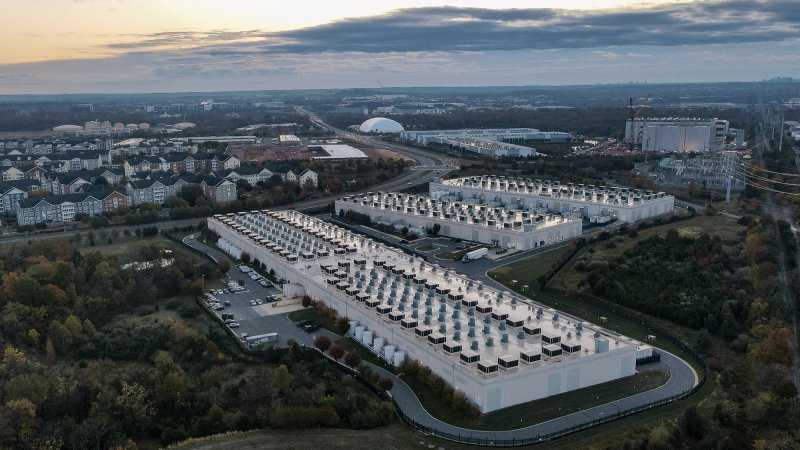
The growing debate around artificial intelligence infrastructure in the United States has entered a new phase after businessman and investor Kevin O’Leary sharply criticized protests targeting a major planned data center project in Utah.
O’Leary argued that demonstrations allegedly amplified or coordinated through AI generated campaigns risk undermining America’s technological competitiveness at a time when global powers are racing to dominate artificial intelligence development.
RECOMMENDED STORIES
The controversy has reignited broader questions about the environmental impact of AI infrastructure, the influence of automated online activism, the future of energy intensive computing facilities, and the balance between local community concerns and national strategic priorities.
Below is a detailed explainer examining what happened, why it matters, and how the debate could shape the future of AI expansion in the United States.
What sparked the controversy?
The dispute emerged around plans connected to a large scale data center development in Utah, where local opposition groups raised concerns over water consumption, electricity demand, environmental effects, and long term sustainability.
As AI systems become more powerful, companies increasingly require enormous computing facilities capable of processing vast amounts of information. These facilities rely on thousands of advanced chips operating continuously, consuming large quantities of power and water for cooling systems.
During public discussions surrounding the Utah project, O’Leary criticized protest campaigns that he claimed were being artificially amplified online through AI generated messaging and coordinated digital activism.
According to O’Leary, such campaigns threaten critical infrastructure projects that are essential for maintaining America’s leadership in artificial intelligence technologies.
Who is Kevin O’Leary and why are his comments important?
Kevin O’Leary is widely known as an entrepreneur, venture capitalist, and television personality through the show Shark Tank.
In recent years, O’Leary has become increasingly vocal about technology investment, digital infrastructure, energy policy, and economic competitiveness. His comments often attract attention because of his influence in investment circles and his advocacy for rapid technological expansion.
O’Leary has repeatedly argued that the United States must accelerate construction of AI related infrastructure, including data centers, semiconductor facilities, and energy generation systems, to remain competitive against countries such as China.
For supporters of aggressive AI expansion, O’Leary’s remarks reflect a growing frustration within the technology and investment sectors regarding resistance to major infrastructure projects.
Why are AI data centers becoming so controversial?
AI data centers are among the most resource intensive facilities in the modern economy.
Unlike traditional internet infrastructure, advanced AI systems require massive computational power to train and operate large language models, image generators, autonomous systems, and predictive analytics tools.
This creates several major concerns:
Electricity consumption
AI systems require huge amounts of electricity. Some advanced facilities consume as much energy as small cities. As AI adoption grows rapidly, experts warn that electricity grids may face increasing pressure.
Water usage
Many data centers rely on water cooling systems to prevent overheating. In dry regions such as Utah and parts of the American West, local residents worry about long term water sustainability.
Land development
Large facilities can alter landscapes, increase industrial activity, and affect nearby communities through traffic, construction, and infrastructure expansion.
Carbon emissions
If powered by fossil fuels, AI infrastructure can significantly increase greenhouse gas emissions.
Economic inequality
Critics argue that major technology companies often receive tax incentives and public subsidies while local communities bear environmental costs.
These concerns have fueled protests in multiple US states beyond Utah.
Why did O’Leary mention AI backed protests specifically?
One of the most controversial aspects of the debate involves allegations that parts of the protest movement used AI generated content or automated online amplification tactics.
O’Leary suggested that certain campaigns opposing the Utah data center appeared unusually coordinated across social media platforms. He argued that AI tools may have been used to generate large volumes of content, petitions, or online engagement aimed at influencing public perception.
This has opened another debate about whether artificial intelligence itself is beginning to shape political activism and public discourse in ways that are difficult to detect.
Some analysts believe AI generated activism could become increasingly common because modern tools can rapidly create convincing text, graphics, videos, and coordinated messaging campaigns.
Others argue that accusations of “AI backed protests” may unfairly delegitimize genuine grassroots concerns from local communities.
Is there evidence that AI was used in the protests?
Publicly available evidence remains limited and disputed.
While AI tools are increasingly common in digital communications, proving coordinated automated influence campaigns can be difficult. Many activists now routinely use AI tools for drafting messages, creating graphics, organizing information, or producing videos.
That does not necessarily mean protests are artificial or manipulated.
Critics of O’Leary’s remarks argue that labeling opposition movements as “AI backed” risks dismissing legitimate environmental and community concerns.
Supporters of O’Leary counter that sophisticated digital amplification can distort public debates and make fringe campaigns appear larger than they really are.
The issue reflects a broader global challenge surrounding online authenticity in the AI era.
Why is Utah attracting major AI infrastructure investment?
Utah has emerged as an increasingly attractive destination for data center development due to several factors.
These include:
• Relatively affordable land
• Expanding energy infrastructure
• Business friendly regulations
• Growing technology sector
• Strategic geographic location
• Access to fiber optic networks
Utah has already seen rapid growth in technology investment over the past decade, particularly around the region sometimes referred to as “Silicon Slopes.”
Technology companies view the state as an important location for future cloud computing and AI operations.
However, rapid expansion has also intensified debates over environmental sustainability and resource management.
Why are communities worried about water use?
Water has become one of the central issues in the Utah dispute.
Many western US states face ongoing drought pressures and long term concerns about water availability. Large data centers can consume millions of gallons of water annually for cooling purposes.
Critics argue that expanding AI infrastructure in water stressed regions may worsen existing environmental challenges.
Supporters of the projects argue that modern cooling technologies are becoming more efficient and that data centers generate jobs, investment, and tax revenue.
Still, environmental groups increasingly view water intensive AI facilities as part of a broader sustainability challenge tied to the global technology boom.
How much energy do AI systems actually consume?
The energy requirements of modern AI are enormous and growing rapidly.
Training advanced AI models can require thousands of powerful processors operating simultaneously for weeks or months. Running AI applications at scale also requires constant computing power.
Some projections suggest AI related electricity demand could significantly reshape national power grids over the next decade.
Major technology companies are therefore investing heavily in:
• Nuclear energy
• Solar power
• Wind energy
• Battery storage
• Advanced cooling systems
• Small modular reactors
The AI race is increasingly becoming an energy race as well.
Why do technology investors see data centers as strategically important?
For investors like O’Leary, AI infrastructure represents a key component of future economic power.
Countries able to build large scale computing networks may gain advantages in:
• Defense technology
• Financial systems
• Healthcare innovation
• Scientific research
• Cybersecurity
• Autonomous transportation
• Manufacturing automation
Many technology leaders argue that slowing AI infrastructure development could weaken national competitiveness.
This geopolitical framing has become increasingly common as tensions between the United States and China intensify over advanced technologies.
How are environmental activists responding?
Environmental groups reject claims that opposition to AI infrastructure is anti innovation.
Instead, many activists argue that communities deserve transparency regarding environmental impact, resource consumption, and long term planning.
Critics of the Utah project say residents have legitimate concerns about sustainability, infrastructure strain, and local quality of life.
Some also fear that AI companies are expanding faster than regulatory systems can keep up.
Environmental advocates increasingly call for:
• Stronger water use regulations
• Renewable energy requirements
• Environmental impact transparency
• Community oversight
• Sustainable cooling technologies
• Responsible urban planning
The debate is therefore not simply about one data center but about the broader future of AI expansion.
Could AI generated activism become a larger political issue?
Yes. Experts increasingly believe AI generated political communication may become a defining issue in future public debates.
AI systems can now generate:
• Realistic text campaigns
• Social media posts
• Videos
• Images
• Voice recordings
• Automated responses
This raises concerns about misinformation, manipulation, astroturfing, and digital authenticity.
Governments worldwide are already exploring regulations surrounding AI generated political content.
The Utah controversy may therefore represent an early example of how AI itself becomes part of political activism and infrastructure disputes.
Why are technology companies racing to build more data centers now?
The global AI boom has dramatically increased demand for computing capacity.
Companies developing AI products require massive processing infrastructure to train increasingly sophisticated models. Demand for cloud computing services has also surged as businesses adopt AI tools across industries.
This has created an international race to secure:
• Computing power
• Semiconductor supply chains
• Energy resources
• Fiber connectivity
• Skilled labor
• Strategic land locations
Technology giants and investors view delays in infrastructure development as potentially costly in a highly competitive market.
How does this connect to the wider AI boom?
The Utah debate is part of a much larger transformation underway globally.
Artificial intelligence is reshaping industries ranging from finance and healthcare to education and defense. Governments and corporations increasingly see AI as essential to economic growth and national security.
As a result, demand for AI infrastructure is exploding worldwide.
This includes:
• Semiconductor factories
• Data centers
• Cloud computing hubs
• Energy projects
• Research facilities
The rapid pace of expansion is creating tensions between technological ambition and environmental sustainability.
Could governments impose stricter rules on AI data centers?
Possibly.
As concerns grow over electricity demand and water usage, governments may introduce tighter regulations for future projects.
Potential measures could include:
• Environmental reporting requirements
• Water usage limits
• Renewable energy mandates
• Community consultation rules
• Energy efficiency standards
• Carbon reduction targets
Some policymakers argue that AI infrastructure should be treated similarly to other major industrial developments with rigorous oversight.
Others warn that excessive regulation could slow innovation and investment.
How are technology companies trying to address criticism?
Many major companies are already promoting sustainability initiatives linked to AI expansion.
These efforts include:
• Carbon neutral commitments
• Renewable energy partnerships
• Advanced liquid cooling systems
• Water recycling technologies
• Energy efficient chip design
• Nuclear power exploration
Technology firms increasingly recognize that environmental criticism could threaten public support for future AI expansion.
As a result, sustainability messaging has become a central part of corporate AI strategy.
What does this controversy reveal about the future of AI politics?
The Utah dispute highlights how artificial intelligence is no longer simply a technology issue.
AI is increasingly becoming a political, environmental, economic, and geopolitical issue simultaneously.
Future debates around AI are likely to involve conflicts between:
• Economic growth and environmental protection
• National competitiveness and local concerns
• Innovation and regulation
• Automation and public trust
• Technological speed and democratic oversight
The controversy also demonstrates how digital activism itself may evolve through AI assisted communication.
Could similar disputes happen elsewhere?
Almost certainly.
As AI infrastructure expands globally, conflicts over energy use, water resources, environmental impact, and land development are expected to intensify.
Similar debates are already emerging in multiple regions across the United States and internationally.
Areas with limited water resources or strained power grids may become particularly sensitive battlegrounds for future projects.
At the same time, governments eager for investment and technological leadership may continue supporting rapid expansion.
Why does the issue matter beyond Utah?
The dispute reflects broader questions shaping the future global economy.
Artificial intelligence is expected to influence nearly every major industry in coming decades. Building the infrastructure required to support that transformation will involve massive investment and potentially significant environmental tradeoffs.
The Utah debate therefore represents a microcosm of a larger global challenge:
How can societies support technological advancement while managing sustainability, public trust, and local community concerns?
That question is likely to become increasingly important as the AI race accelerates.
Could the controversy influence future public opinion about AI?
Yes.
Public attitudes toward artificial intelligence remain mixed. While many people see AI as a source of innovation and economic opportunity, others worry about privacy, employment disruption, misinformation, surveillance, and environmental impact.
High profile infrastructure disputes may shape how communities perceive the AI industry overall.
If residents associate AI projects with excessive resource consumption or lack of transparency, opposition could grow stronger.
Conversely, supporters argue that AI development will create jobs, improve productivity, and drive future prosperity.
The long term outcome may depend on whether governments and companies can balance rapid innovation with responsible development.
What happens next in the Utah dispute?
The future of the project will likely depend on regulatory reviews, public consultations, environmental assessments, and negotiations between developers and local authorities.
Debates surrounding AI infrastructure are expected to intensify nationwide as demand for computing capacity continues to rise.
Regardless of the final outcome, the controversy has already become symbolic of a broader struggle over how societies adapt to the accelerating AI revolution.
For supporters like Kevin O’Leary, expanding AI infrastructure is an economic and strategic necessity.
For critics, unchecked expansion risks creating environmental and social consequences that communities may struggle to manage.
The clash between those perspectives is likely to define many future debates surrounding artificial intelligence development in the years ahead.
By Faig Mahmudov


Similar news