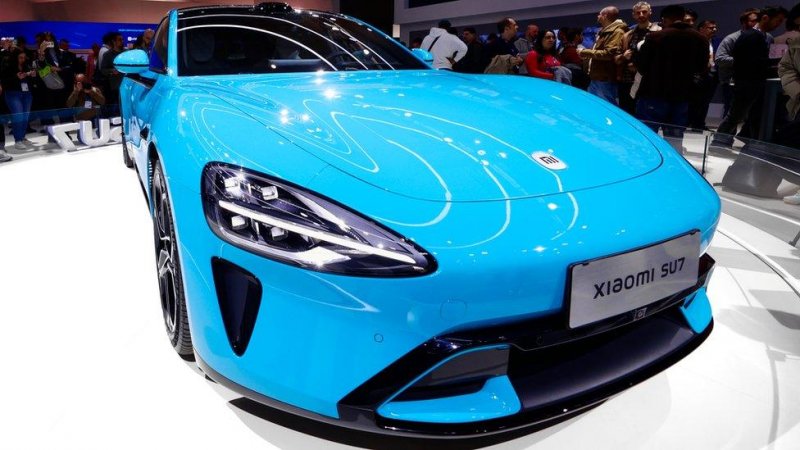
As Xiaomi accelerates its expansion in the electric car market following the success of its SU7 sedan, many experts believe the company is now trying to build a vertically integrated EV empire capable of competing with the world’s biggest automotive and battery manufacturers.
The move has raised several important questions. Why is Xiaomi investing heavily in batteries? How important are batteries in the electric vehicle business? Can Xiaomi really challenge BYD and CATL? And what could this mean for the future of China’s EV market?
Here is a detailed FAQ explainer on Xiaomi’s battery ambitions and why the company’s latest strategy could become one of the most significant developments in the global EV race.
Why is Xiaomi investing in battery manufacturing?
Xiaomi’s investment in battery related business operations appears to be part of a long term strategy aimed at reducing dependence on external suppliers while strengthening control over its electric vehicle ecosystem.
Batteries are among the most expensive and strategically important parts of an electric vehicle. Industry estimates suggest battery systems account for roughly 35% to 45% of total EV production costs. Companies that manufacture their own batteries often gain significant advantages in pricing, supply chain stability, profit margins and technological innovation.
By entering battery production, Xiaomi could improve its competitiveness against major Chinese EV companies that already operate highly integrated manufacturing systems.
What exactly did Xiaomi do?
Recent Chinese business registration filings showed Xiaomi established a new company called Xiaomi Jingxu Technology Co., Ltd. The registered business scope reportedly includes battery manufacturing and battery sales.
Although Xiaomi has not officially confirmed full scale battery production plans, the move strongly suggests the company wants deeper involvement in battery development and supply chain management.
The development immediately fueled comparisons with BYD, which evolved from a battery manufacturer into one of the world’s largest electric vehicle companies.
Why are analysts comparing Xiaomi to BYD?
The comparison comes from the business model Xiaomi appears to be pursuing.
BYD became highly successful partly because it manufactures many critical EV components internally, especially batteries. This vertical integration allowed BYD to lower costs, improve production efficiency and gain stronger control over technology development.
Analysts believe Xiaomi may now be attempting a similar strategy by combining:
- Consumer electronics expertise
- Smart ecosystem integration
- Software development
- Artificial intelligence capabilities
- Electric vehicle manufacturing
- Battery production
This approach could allow Xiaomi to create a tightly connected technology ecosystem spanning smartphones, smart homes and electric vehicles.
How important are batteries in the EV industry?
Batteries are considered the heart of modern electric vehicles.
They influence nearly every major performance category, including:
- Driving range
- Charging speed
- Vehicle safety
- Production costs
- Weight efficiency
- Long term reliability
Battery technology also plays a major role in determining whether an EV company can remain profitable and competitive.
Because battery supply chains are expensive and complex, many automakers rely on specialized suppliers like CATL or BYD. However, companies that develop in house battery systems may gain major strategic advantages.
Which companies currently supply Xiaomi batteries?
Until now, Xiaomi has largely depended on external suppliers for its EV battery needs.
Reports indicate Xiaomi has sourced batteries from:
- BYD’s FinDreams Battery division
- CATL, the world’s largest EV battery manufacturer
Industry data recently showed Xiaomi became one of BYD battery division’s biggest external customers in China.
This dependence likely increased Xiaomi’s interest in developing its own battery capabilities.
What electric vehicles has Xiaomi launched so far?
Xiaomi officially entered the EV market with the launch of the SU7 electric sedan.
The vehicle quickly attracted strong attention in China due to:
- Competitive pricing
- Advanced technology features
- Smart ecosystem integration
- High performance specifications
- Xiaomi’s powerful brand recognition
The company later introduced performance focused variants, helping position itself as a serious player in China’s highly competitive EV market.
The rapid popularity of the SU7 significantly accelerated investor interest in Xiaomi’s automotive ambitions.
Is Xiaomi planning more electric vehicles?
Yes. Industry reports indicate Xiaomi plans to expand its EV lineup aggressively in the coming years.
Expected future developments reportedly include:
- Electric SUVs
- Extended range electric vehicles
- Updated sedan versions
- More premium performance models
The company is believed to be targeting broader market segments as competition intensifies among Chinese automakers.
Why is China dominating the EV battery market?
China currently leads the world in battery production and EV manufacturing for several reasons:
- Massive government investment
- Strong industrial supply chains
- Access to critical raw materials
- Large domestic EV demand
- Advanced manufacturing infrastructure
- Aggressive technological innovation
Chinese companies such as BYD and CATL now dominate the global battery market and supply major international automakers.
This dominance has transformed China into the central battleground for the future of electric mobility.
Could Xiaomi really compete with BYD and CATL?
Competing directly with established battery giants will be extremely difficult.
BYD and CATL possess:
- Decades of battery expertise
- Massive production capacity
- Advanced research operations
- Global supply networks
- Strong government relationships
However, Xiaomi has several important advantages of its own:
- Significant financial resources
- Huge consumer ecosystem
- Strong software expertise
- Experience scaling hardware production
- Powerful brand loyalty among younger consumers
While Xiaomi may not immediately challenge battery leaders, its entry could intensify competition and accelerate innovation across the sector.
What role does software play in Xiaomi’s EV strategy?
Software is one of Xiaomi’s biggest strengths.
Unlike traditional automakers, Xiaomi already has extensive experience building connected digital ecosystems through smartphones, smart home products and consumer electronics.
This allows the company to integrate vehicles into a broader smart technology environment where users can connect:
- Phones
- Cars
- Home devices
- AI systems
- Entertainment platforms
Many analysts believe this ecosystem strategy could become one of Xiaomi’s biggest competitive advantages in the EV industry.
How does this affect the global EV market?
Xiaomi’s battery ambitions could increase pressure on both traditional automakers and existing EV leaders.
If Xiaomi successfully develops competitive battery technology, the company could:
- Reduce production costs
- Improve supply chain independence
- Accelerate innovation
- Increase global EV competition
- Expand exports into international markets
The move may also encourage more technology companies to deepen investments in automotive manufacturing and energy storage systems.
Could Xiaomi expand globally with its EV business?
Although Xiaomi’s EV operations are currently heavily focused on China, global expansion appears likely in the future.
The company already operates internationally through its smartphone and electronics business, giving it valuable global brand recognition and distribution experience.
However, international expansion would involve several challenges, including:
- Trade restrictions
- Safety regulations
- Tariffs
- Competition from Tesla and European automakers
- Geopolitical tensions
Still, many analysts believe Xiaomi eventually aims to become a global EV brand rather than a China only manufacturer.
Why are investors paying close attention to Xiaomi’s battery plans?
Investors increasingly view batteries as one of the most valuable sectors of the future energy economy.
Battery technology influences not only electric vehicles but also:
- Renewable energy storage
- Artificial intelligence infrastructure
- Smart grids
- Consumer electronics
- Industrial automation
Any company capable of building advanced battery systems could gain enormous long term strategic importance.
Xiaomi’s battery ambitions therefore represent much more than simply making car parts.
What are the biggest risks for Xiaomi?
Despite strong momentum, Xiaomi also faces major risks.
These include:
- Extremely high research and development costs
- Intense competition in China
- Battery safety concerns
- Supply chain pressures
- Potential overproduction in the EV market
- Economic slowdowns affecting consumer demand
Battery manufacturing is also technically difficult and highly capital intensive, meaning success is far from guaranteed.
What happens next?
The next major question is whether Xiaomi will build large scale battery factories or focus mainly on battery research and partnerships.
Industry observers will closely watch for:
- New factory announcements
- Strategic partnerships
- Battery patents
- New EV launches
- Government approvals
- Supply chain investments
If Xiaomi fully commits to battery manufacturing, the company could become one of the most influential new players in the global electric mobility industry.
Conclusion
Xiaomi’s reported battery investment strategy marks a major turning point in the company’s transformation from consumer electronics giant to full scale EV competitor. By pursuing greater control over battery production and supply chains, Xiaomi appears to be following a path similar to BYD’s highly successful vertically integrated model.
While challenging established battery leaders like BYD and CATL will not be easy, Xiaomi’s financial strength, technology ecosystem and rapidly growing EV presence make it one of the most closely watched companies in the global electric vehicle race.
As competition intensifies and battery technology becomes increasingly central to the future of transportation, Xiaomi’s next moves could help shape the next era of the EV industry.