World enters a new era of multipolar competition as global power shifts accelerate


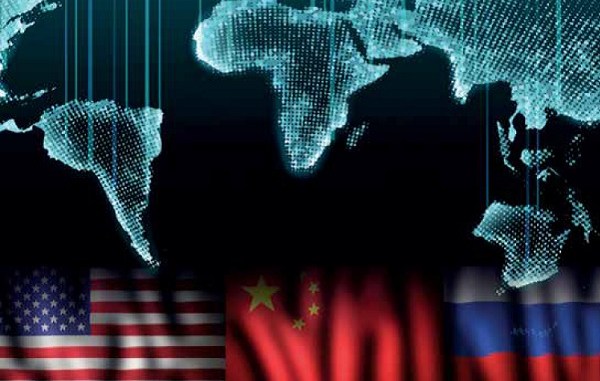
The international system is undergoing one of the most profound transformations since the end of the Cold War, as power moves away from a single dominant center and spreads across multiple geopolitical poles, News.az reports.
From Washington to Beijing, Brussels to New Delhi, and from regional capitals to emerging middle powers, the global balance is being reorganized through strategic rivalries, economic realignments and unprecedented technological competition.
For decades, the United States maintained unmatched military, economic and diplomatic influence. Today, although Washington remains the world’s strongest power, its uncontested dominance has given way to a dynamic multipolar environment. China’s rapid rise, Russia’s revisionist ambitions, the European Union’s strategic redefinition, India’s expanding global posture and the growing activism of regional players like Türkiye, Saudi Arabia, Iran, Brazil and South Africa are reshaping global politics.
At the center of this new era is the strategic rivalry between the United States and China. The world’s two largest economies are locked in an intense competition that extends across trade, technology, military capabilities and ideological influence. Washington aims to preserve an open, rules-based international order, while Beijing seeks to reshape global governance structures in ways that reflect its expanding interests and political model. This competition has profound consequences for Asia, Africa, Europe and the broader Indo-Pacific region, where countries increasingly feel pressure to align or balance carefully between the two giants.
Europe, meanwhile, faces a delicate balancing act. Russia’s invasion of Ukraine has forced the European Union and NATO to strengthen transatlantic unity, invest in defense and reconsider energy security. However, Europe also struggles with internal divisions, economic slowdown and debates over strategic autonomy. While Brussels seeks to position itself as a third pole between the United States and China, its ability to act decisively remains limited by political fragmentation. At the same time, Russia is attempting to reassert itself as a central player in global geopolitics despite heavy sanctions, diplomatic isolation and the long-term costs of the war. Its growing partnerships with China, Iran and North Korea point to an emerging counter-West alignment.
One of the most remarkable developments is the rise of so-called “middle powers” — states that are neither global superpowers nor minor actors, but influential enough to shape regional and sometimes global outcomes. Türkiye navigates a strategic role between NATO, Russia and the Middle East; Saudi Arabia asserts itself as a finance and energy powerhouse; the United Arab Emirates expands its diplomatic footprint from Africa to Asia; and India positions itself as a leading voice of the Global South. Brazil, Mexico, Indonesia, Egypt and Nigeria also seek greater roles in shaping global agendas on climate, trade, food security and development.
BRICS+ has emerged as one of the most visible symbols of multipolarity. With new members such as Saudi Arabia, Egypt, Ethiopia, Iran and the UAE, the group represents a significant portion of the world’s population and energy resources. Although BRICS+ is far from a unified bloc, its expansion demonstrates growing dissatisfaction with Western-dominated institutions like the IMF and World Bank, and a desire for alternative platforms of economic and political cooperation.
Technology is another driving force of the new balance of power. Access to artificial intelligence, advanced chips, telecom infrastructure, rare earth elements and cybersecurity capabilities has become as vital as military strength. The competition over supply chains — from semiconductors to battery minerals — is intensifying strategic rivalries and redrawing alliances. Countries rich in critical minerals, such as those in Central Asia, Africa and Latin America, increasingly find themselves courted by global powers seeking long-term energy and technology security.
At the same time, the Global South is more assertive than ever. Many countries refuse to choose sides between great powers and instead pursue multi-vector foreign policies. Their priority is not ideological alignment but economic development, sovereignty and strategic flexibility. This trend has challenged traditional Western influence and given emerging powers new diplomatic advantages.
Yet the transition to multipolarity also carries risks. The erosion of global governance institutions, from the United Nations to the World Trade Organization, raises concerns about leadership vacuums, competing security architectures and fragmented economic rules. The world is witnessing rising military spending, more authoritarian tendencies, and increasing conflict zones — from Ukraine and the Middle East to the Indo-Pacific — all of which could destabilize the emerging order.
As multipolarity becomes the defining feature of the international system, the key question is whether global powers can manage rivalry without entering direct confrontation. The coming years are likely to see intensified diplomatic competition, new regional coalitions and efforts by states to adjust to a world where power is distributed more widely, but also more unpredictably.
The era of unipolarity is over. What comes next — stability or confrontation — will depend on whether the world’s leaders can adapt to the new geopolitical map and find ways to balance rivalry with cooperation.


Similar news