Global military alliances are entering a new era of transformation


Global military alliances are undergoing their most significant transformation in decades as shifting power balances, regional conflicts, and emerging security threats push states to reconsider long-standing defence partnerships, News.az reports.
The traditional structure built around Cold War blocs is giving way to a multilayered system of flexible coalitions, minilateral security groups, and rapidly evolving defence arrangements that increasingly reflect regional priorities rather than global ideological divisions.
Analysts say the shift marks the transition from a world of predictable alliances to one where states cooperate on an issue-by-issue basis, forming temporary or specialised security partnerships that serve immediate strategic needs. This new landscape is defined by the resurgence of NATO, the rise of Indo-Pacific coalitions, the expansion of regional defence networks, and the growing influence of middle powers seeking greater autonomy.
NATO remains the most prominent global military alliance, but its role is evolving. The war in Ukraine accelerated the alliance’s return to its core mission of deterring Russia while simultaneously pushing it to engage more deeply with Indo-Pacific partners such as Japan, South Korea, Australia and New Zealand. The entry of Finland and Sweden has shifted NATO’s northern posture, expanding its presence in the Baltic and Arctic regions. Yet the alliance faces internal tensions over defence spending, strategic priorities and long-term relations with China.
At the same time, the US is reshaping its global strategy through new Indo-Pacific alliances designed to counterbalance China. The Quad — composed of the United States, India, Japan and Australia — has transformed from a diplomatic dialogue platform into a security-oriented grouping focusing on maritime security, defence technology, cybersecurity and supply chain resilience. Though not a formal military alliance, the Quad’s growing cooperation reflects a new model of flexible, mission-specific defence partnerships.
Another key development is the deeper institutionalisation of AUKUS, the trilateral pact between the United States, the United Kingdom and Australia. What began as an agreement on nuclear-powered submarines has expanded into advanced cooperation on AI, cyber defence, hypersonic technology and undersea capabilities. AUKUS represents a broader trend: alliances built around technology sharing, industrial coordination and defence innovation, not just troop deployments or territorial defence.
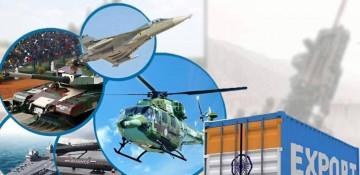
Across Asia, the Philippines, Japan and South Korea have all strengthened bilateral and trilateral security ties with Washington, driven by territorial tensions and growing concerns about North Korea’s missile programmes. Japan, traditionally constrained by its pacifist constitution, has embarked on a historic defence expansion, with new security agreements across Southeast Asia. South Korea is expanding its defence partnerships beyond the peninsula, emerging as a major global arms exporter involved in Europe, the Middle East and Central Asia.
The Middle East is witnessing its own realignment. Gulf states, particularly Saudi Arabia and the UAE, are recalibrating their defence strategies to balance relations with the United States, China and Europe. Instead of relying solely on Washington, they are investing in domestic defence industries, expanding ties with Türkiye, deepening cooperation with Asian partners and participating in joint maritime security frameworks. The Abraham Accords created new military cooperation channels between Israel and several Arab states, though political uncertainty continues to shape their trajectory.
In Europe’s neighbourhood, Türkiye has become a central player in the formation of flexible security arrangements. Ankara’s growing defence industry — including drones, missile systems and electronic warfare technologies — has expanded its political influence, enabling military partnerships from the Caucasus to Central Asia, Africa and the Balkans. Türkiye’s balancing between NATO obligations, regional ambitions and independent defence ties illustrates how middle powers are reshaping global security dynamics.
Africa is also seeing the emergence of new security blocs. Several states are shifting away from traditional partnerships with former colonial powers, while deepening links with Türkiye, China and Russia through arms sales, training programmes and counterterrorism cooperation. Regional organisations such as ECOWAS and the African Union increasingly attempt to address security crises themselves, though challenges persist due to limited resources and divergent political interests.
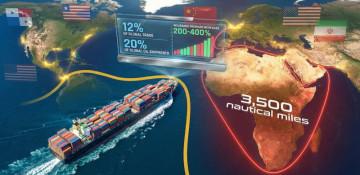
Another trend defining the evolution of military alliances is the growing importance of minilateralism — small, mission-focused groups designed to respond more quickly than large multilateral organisations. These include maritime security coalitions in the Red Sea, anti-piracy missions in the Indian Ocean, joint patrols in the South China Sea and trilateral defence forums in regions previously dominated by a single major power. Such groups allow countries to collaborate without the political and bureaucratic burdens of full alliances.
Technology is becoming a driving force behind alliance formation. Countries are forming partnerships based on shared interests in defence tech, cyber capabilities, space security and artificial intelligence. Joint drone production, satellite intelligence sharing and missile defence cooperation now shape many regional partnerships as much as traditional troop deployments. States that lead in defence technology — including the US, South Korea, Türkiye, Israel and the UK — increasingly use industrial partnerships as diplomatic tools.
As global power competition intensifies, military alliances are no longer static or permanent. They are fluid, overlapping and adaptive, shaped by the strategic calculations of states navigating a fragmented world order. Traditional alliances continue to function, but they now coexist with an expanding web of regional coalitions, technology-based partnerships and diplomatic balancing strategies.
This new era of military realignment reflects a broader geopolitical truth: power is becoming more distributed, and states are seeking security not through one dominant bloc but through a mix of traditional alliances and flexible, purpose-driven partnerships. The future of global security will be defined by this complexity — a world where alliances shift as fast as the threats they are designed to confront.


Similar news