$150 billion into the economy: Kazakhstan transforms its transport infrastructure


Editor's note: President of the public foundation "World of Eurasia" (Kazakhstan), Kazakh political scientist Eduard Poletayev. The article expresses the personal opinion of the author and may not coincide with the view of News.Az.
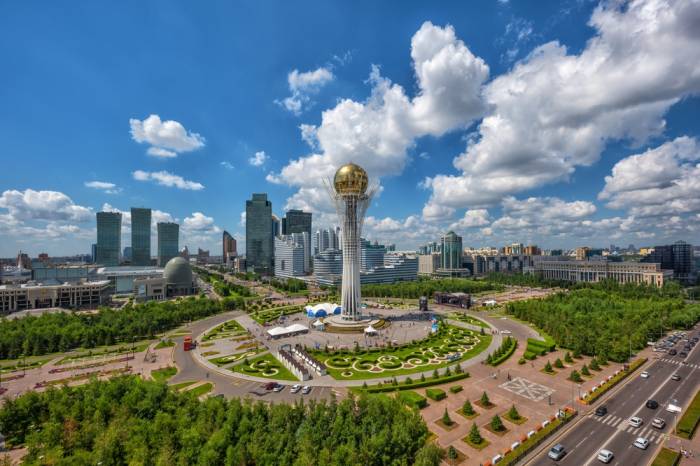
Astana recently hosted the 36th annual meeting of the Foreign Investors Council under the President of Kazakhstan , an event held every year since 1998. Kazakhstan has set ambitious goals, aiming to attract $150 billion in foreign investment by 2029 , with a strong focus on transportation and logistics. This target year also marks the end of President Tokayev’s term, elected for a single term as per constitutional amendments, making 2029 a pivotal year for the country.Many of Kazakhstan’s economic plans are mapped out to align with this timeline, including a goal to double the nation’s GDP to $450 billion by 2029. President Tokayev highlighted Kazakhstan's commitment to strengthening its position as a central transit hub in Eurasia, with the Trans-Caspian Route, also known as the Middle Corridor , playing a crucial role in this vision.
To support this, Kazakhstan plans to modernize 11,000 kilometers of existing railways and build over 5,000 kilometers of new rail lines. While the Trans-Caspian route already includes extensive road and rail networks, there are “bottlenecks” that require upgrades, second tracks, and electrification to reduce delays. Kazakhstan is also investing in new freight terminals and vessels. This is especially relevant given that the plans envision increasing the current cargo turnover along the Trans-Caspian route several times, reaching up to 10 million tons per year.
The Trans-Caspian route is key in Kazakhstan’s strategy to establish Eurasia as a major transit hub, but it isn’t the only route in play. The broader Eurasian transport network includes the “North-South” corridor, a project championed by Russia and supported by Kazakhstan and Azerbaijan , featuring two main pathways: one through Azerbaijan and another via Kazakhstan and Turkmenistan.
The integration of these corridors enables flexible freight distribution, increasing the competitiveness of land routes. For instance, goods from China can travel through Kazakhstan, across the Caspian, and reach Europe via Azerbaijan, or head south through Turkmenistan to the Persian Gulf and the Indian Ocean. These options contribute to a dynamic and diversified transport network.
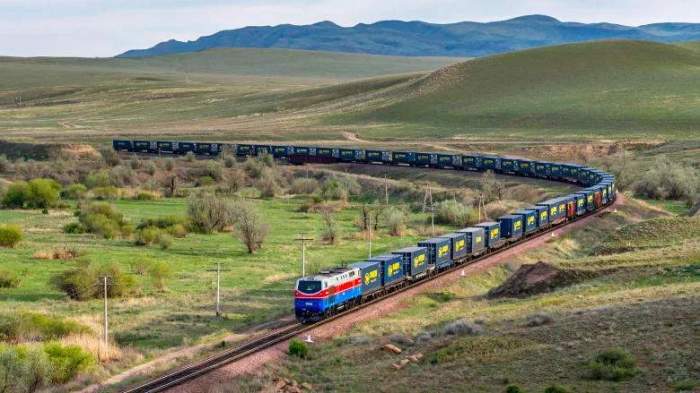
The Trans-Caspian route has been in the making for over a decade; in 2014, the International Association for its development was established, starting operations in 2017 with headquarters in Astana. This long-term project has positioned the route to fill a niche in international freight, offering benefits that include faster delivery, direct routes, and greater stability compared to maritime options.
Amid today’s geopolitical tensions, both Kazakhstan and Azerbaijan continue to demonstrate steady development in their political and economic systems, gaining the trust of foreign investors and drawing attention to the Trans-Caspian route, which is also under discussion with European partners. Notably, talks are underway regarding a potential $10 billion investment to further expand this corridor, underscoring strong international interest despite current uncertainties.
Kazakhstan and Azerbaijan now have new avenues to reach global markets, driving economic diversification, GDP growth, and creating business opportunities. The strategic importance of the Trans-Caspian route is regularly underscored at the highest levels, including in the President’s annual Address to the Nation and during international engagements.
The prospects are promising, with current freight volumes growing and transit times improving. By 2029, the goal is to reach an annual freight volume of 10 million tons—a substantial increase from 1.5 million tons in 2022 and 2.5 million tons in 2023. Delivery times have also seen reductions, from an initial 53 days down to 20 days, with further plans to cut this to 10-15 days for complete routes from inland China.
Typically beginning in the Chinese city of Xi’an, the route's length varies based on the destination, be it the Black Sea, the Mediterranean, or other regions. Speed and reliability remain key factors, and, for instance, an active rail bypass around Almaty is underway to ease congestion, accelerating transit times by avoiding delays within the city.
Ultimately, the Trans-Caspian route’s success also depends on China’s capacity to maintain strong export flows. Ensuring loaded return trips for containers is essential to keep costs competitive. Overall, the development of the Trans-Caspian corridor reflects a response to geopolitical shifts, aiming to create a robust transport network focused solely on stable business and reliable logistics, independent of geopolitical conflicts.
(If you possess specialized knowledge and wish to contribute, please reach out to us at opinions@news.az).


Similar news