Afghanistan admitted to the implementation of the TAPI project


By Samir Muradov
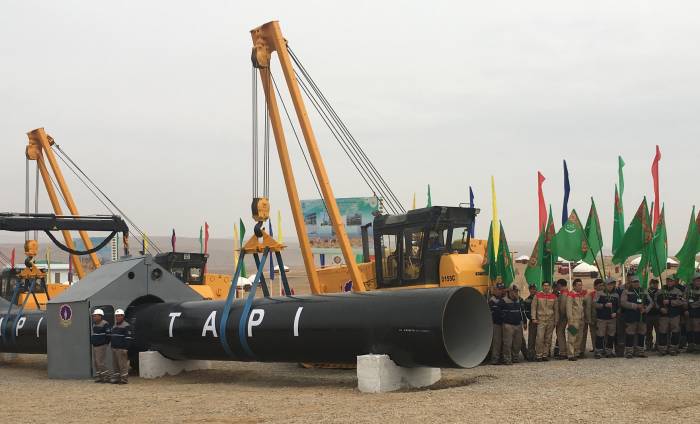
Turkmenistan has restarted construction on a critical section of the Turkmenistan-Afghanistan-Pakistan-India (TAPI) pipeline , a massive project that had been stalled due to regional instability. In a ceremony on September 11, 2024, with leaders from Turkmenistan and Afghanistan in attendance, the project finally regained momentum.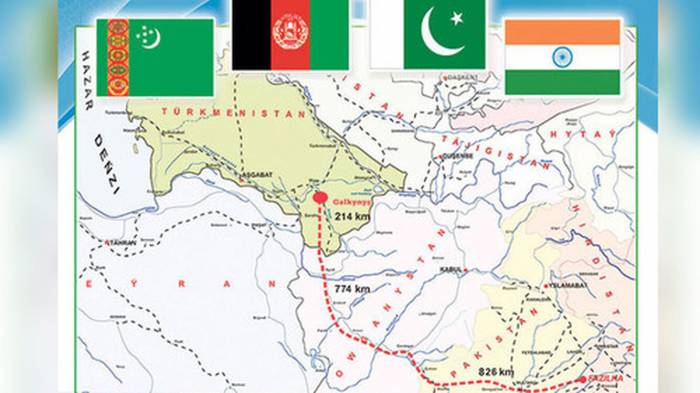
The TAPI pipeline, one of Central Asia’s most ambitious infrastructure projects, was first conceived in the early 2000s. Its primary goal is to transport Turkmenistan’s vast gas reserves through Afghanistan and into Pakistan and India. The pipeline is expected to significantly boost the economies of these countries and stands as a potential symbol of stability in the region. However, security concerns, especially in Afghanistan, have long been the biggest hurdle.
For Turkmenistan, TAPI is a vital link to the South Asian energy market. The country’s Galkynysh gas field, the second largest in the world, holds enormous potential. Supplying gas to major markets like Pakistan and India could dramatically strengthen the Turkmen economy.
The project is managed by the TAPI Pipeline Co. Ltd consortium, which includes companies from Turkmenistan, Afghanistan, Pakistan, and India. Turkmenistan’s state-run "Turkmengaz" holds an 85% stake, with the remaining shares divided equally among Afghanistan, Pakistan, and India.
Having Pakistan and India on board presents not only a huge opportunity for improving energy security in these nations but also a rare chance for collaboration between the two, given their long-standing tensions. Pakistan and India are set to receive 14 billion cubic meters of gas each per year, while Afghanistan will get 5 billion cubic meters.
The project has faced repeated delays, largely due to the challenging security situation in Afghanistan. Since the Taliban’s return to power in 2021, fresh complications have emerged. Although the new government has pledged to ensure a safe construction environment, concerns about long-term stability remain. In October 2023, Afghan authorities made a significant move by purchasing land along the pipeline’s route, marking the first real progress in restarting construction in Afghanistan.
However, Afghanistan remains the most fragile part of the TAPI equation. Its strategic position is essential to the project’s success, but it also poses the greatest risks. Persistent threats from extremist groups, economic instability, and political uncertainty continue to cast doubt on the project’s future.
TAPI promises to strengthen Turkmenistan’s position as a key gas exporter while addressing the energy needs of Pakistan and India by providing them with a steady supply of affordable gas. Turkmenistan has already completed its portion of the pipeline, and new infrastructure projects along the Afghan border offer hope for faster integration into the regional economy.
Despite their complicated political relationship, both Pakistan and India share a strong interest in TAPI’s success. This is one of the few cases where economic cooperation could potentially overcome political tensions, paving the way for regional collaboration. For Afghanistan, the pipeline could mean not just access to gas, but also a stable source of revenue through transit fees—crucial for rebuilding its economy.
Russia has also shown interest in the project. In January 2023, Moscow indicated its readiness to join TAPI, viewing it as a complement to its own energy initiatives, such as gas supplies through Central Asia and the "Pakistan Stream." This could reshape the region’s energy dynamics, with Russia playing an increasingly active role while advancing its geopolitical interests.
The TAPI project is more than just a pipeline—it’s a symbol of cooperation, stability, and hope for a region that has endured years of conflict and political upheaval. While its implementation is still uncertain due to security challenges and the political ambitions of global powers, the resumption of construction on the Serhetabat-Herat section marks an important step forward. It could become a turning point in reshaping the energy landscape of Central and South Asia.


Similar news