After Iran's missile strike: What's next for the region?


By Samir Muradov
Two months after the assassination of Hamas leader Ismail Haniyeh and just four days following the death of Hezbollah’s Secretary-General Hassan Nasrallah, Iran has finally decided to carry out its long-promised massive strike on Israel. This move can be seen as a response to a series of defeats among key allies of Tehran in the Middle East. The events are part of a larger regional power game, where each player attempts to assert their strength and influence, especially amid the prolonged conflict between Israel and Iran. While the effectiveness of the attack remains under scrutiny, the information war surrounding these events highlights its significance for Iran's domestic policy.
Preliminary estimates suggest that around 200 ballistic missiles were fired at Israeli territory. However, it quickly became clear that Israel's air defense systems, including American complexes , played a crucial role in repelling the attack. Most of the missiles were intercepted, reaffirming the power of Israel's missile defense. Despite the technical superiority and defensive success, the consequences were not entirely avoided. Although many missiles landed in empty areas, social media began to circulate videos of destruction, albeit limited due to Israel’s strict censorship.Reports from Israeli sources indicate that civilian structures were affected, and there were even claims of casualties and injuries among the civilian population. For instance, one missile struck the West Bank, killing one Palestinian and injuring seven others. In Tel Aviv, two people were injured by shrapnel, and several residents were hurt while rushing to bomb shelters. This confirms that despite the high efficiency of Israel’s defense, some impacts were unavoidable. However, at this point, no Israeli military installations appear to have been affected, or this information has yet to be disclosed.
Iran, on the other hand, is trying to portray the event as a victory. Iranian and Arabic media outlets are actively spreading claims of the alleged high success of the attack. For example, the Fars news agency claims that 80% of the missiles reached their targets , while the Shafaqna agency reports that the targets hit included 20 Israeli F-35 fighters and a tank concentration in the Netzarim area of central Gaza. However, these statements raise significant doubts, especially given the lack of confirmation from Israel. Most likely, these reports are intended for a domestic audience to boost morale among Iranians, who may feel vulnerable after Israel’s recent strikes on key resistance figures.
The economic aspect of the attack also warrants attention. By using mostly outdated missiles, Iran was clearly seeking not only military but also economic gains. The cost of launching such missiles is significantly lower than the cost of the interceptors and air defense systems used by Israel and its allies. This makes the strike, despite its limited effectiveness, financially advantageous for Tehran. Economic pressure on Israel through defense spending has become an important tool in Iran’s arsenal, although it is unlikely to be a decisive factor in the long run.
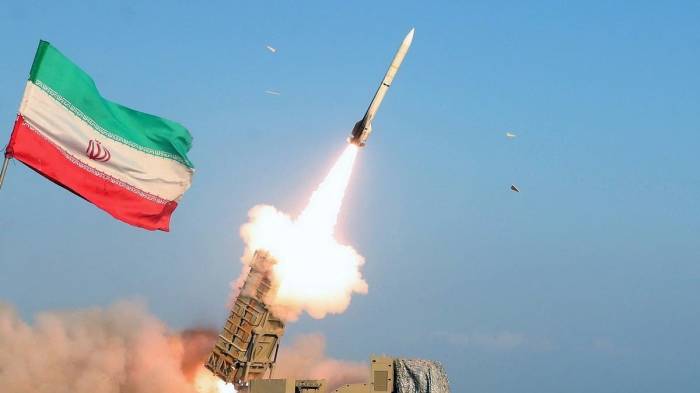
Nevertheless, even considering the financial aspects, the military success of the attack seems limited. Iran could have achieved more significant results if its allies in Lebanon and Gaza had opened fire on Israel simultaneously. However, this did not happen, suggesting a lack of coordination within the so-called “axis of resistance.” This underscores disagreements or an inability to act synchronously, which significantly reduces the threat to Israel.
It’s also worth noting that just one day before the missile strike, there was a terrorist attack in Jaffa, Tel Aviv. Two armed men opened fire in a tram and on the street, killing eight people before being neutralized by Israeli security forces. Speculation is rife online that the terrorist attack and the missile strike may be connected and that the attack was used as a distraction for the missile strike on Israel. However, this theory raises more questions than it does credibility, as it is unclear whether there was any coordination between these events.
The missile strike and the terrorist attack highlight a familiar regional strategy: each side strives to exploit every opportunity to strengthen its position on the international stage. Iran’s goal was not so much military success as it was an informational victory. This is a typical Tehran strategy, where strikes against Israel aim to bolster domestic and regional influence while demonstrating resilience despite intense pressure. Although the effectiveness of the attack in military terms seems questionable, Iranian media are actively presenting it as a triumph, creating the necessary narrative for domestic consumption.
Nonetheless, Israel has shown that despite Iran's aggressive actions, its air defense systems can manage such threats, minimizing damage. Ultimately, this attack mirrors Iran’s April raid, where the primary goal was not to inflict significant damage but to demonstrate strength. Israel remains in a defensive posture, but it is closely monitoring both the military and informational aspects of the conflict.
Both sides are now engaged in an information war, and for the moment, Israel clearly holds the upper hand. Tehran, despite its bold statements, has not achieved significant success, forcing it to rely on internal propaganda to save face with its citizens and regional allies.


Similar news