Ali Semin: The U.S. cannot annex Canada, even if Trump wants it - INTERVIEW


Ali Semin
Donald Trump’s desire to integrate Greenland and Canada into the United States has sparked serious discussions on the international stage. With this initiative, Trump aims to expand the global influence of the U.S. and strengthen its economic power. One of his key arguments is the claim that the U.S. loses $250 billion annually due to Canada.
In an interview with News.az, Dr. Ali Semin, İstanbul Gelişim University Faculty Member. , emphasized that the realization of this idea is highly unlikely. According to him, such actions contradict international law and could lead to serious global repercussions.Trump’s approach has been compared to Russia’s annexation of Crimea , stirring debates even within the U.S. Moreover, his hardline stance on social issues such as LGBT rights and abortion has also drawn significant attention. Ali Semin notes that while Trump’s nationalist policies aim to maintain American hegemony, these steps will only increase both domestic and international pressure on the U.S. Such expansionist initiatives could set a dangerous precedent for other states.
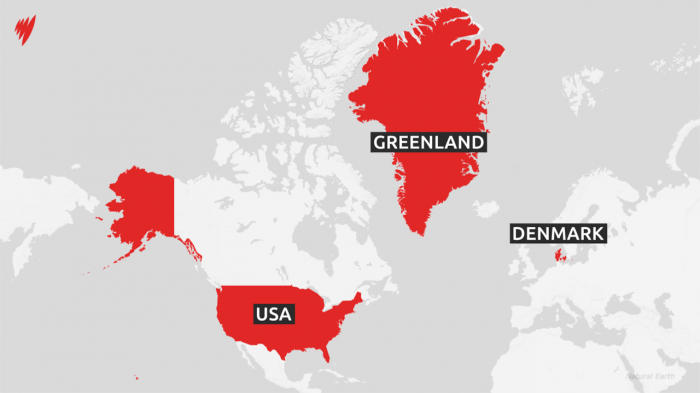
- Why does Trump consider U.S. control over Greenland crucial for global security, and why does Denmark oppose this idea?
- After taking office, Trump signaled his intention to expand U.S. borders. Whether he can achieve this remains uncertain.
However, his focus on Canada and some strategic regions, such as the Gulf of Mexico , is evident. During Trump’s presidency, the U.S. showed a clear desire to expand its influence in its own region—an approach that could be described as "Trump’s hegemony." It is also important to highlight that he differs significantly from previous American presidents.
Nevertheless, the feasibility of such plans remains questionable. Even if they exist on paper, their implementation would face significant challenges. Trump reportedly wants to incorporate certain regions into the U.S. as the 51st and 52nd states .
However, given the complexity of the global system and the domestic challenges the U.S. faces, achieving this within a four-year presidential term seems highly unrealistic.
At the same time, Trump faces three major challenges. The first is the issue of migration. As is well known, he has imposed strict sanctions on Colombia, raising tariffs from 25% to 50%. He also revoked visas for individuals close to the Colombian government and suspended diplomatic relations.
Trump’s return to office could trigger shifts and disruptions in the international system, but this does not mean that Canada or any other region will become part of the U.S. The likelihood of this scenario remains extremely low. Trump presents himself as an American nationalist rather than a globalist. However, the U.S. political system has its own checks and balances, and the extent to which he can act within it must be considered.
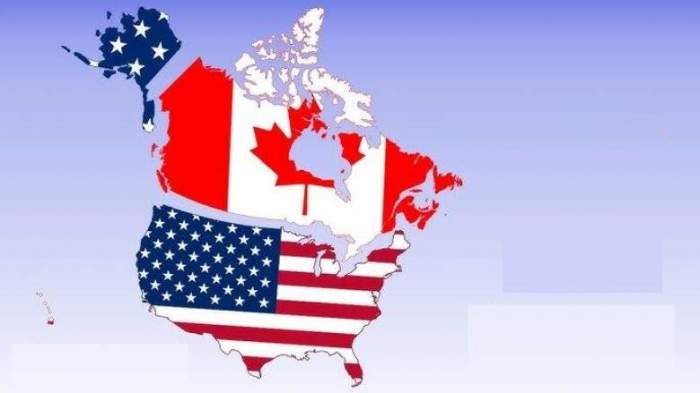
- How does Trump justify his proposal for Canada to become the 51st state, and what benefits does he promise?
- It is clear that Trump is not only sending a message to his domestic audience but also to Europe. He appears eager to engage in geopolitical competition not only within North America but also with Europe. For instance, he once claimed he could end the war in Ukraine within 24 hours. However, more than a week after January 20, it became evident that Trump had changed his stance, now stating: "This is not our war, it is Europe’s war. Let the Europeans handle it." This indicates that he intends to pursue the same political course. However, it is unlikely that this will yield the desired results for him.
The American media has been actively debating this issue. Based on Trump’s statements and messaging, it appears that his focus is shifting away from territorial expansion and toward addressing challenges to U.S. hegemony. For this reason, opinions in the European press remain divided—some believe he can implement his vision, while others do not.
Canada has a population of approximately 40 million (as of 2023) and covers a vast territory of 9,985,000 km². The idea of annexing such an extensive landmass into the U.S. is highly complex. Canada is the second-largest country in the world after Russia. It is not just an ordinary country—it consists of 10 provinces and three territories.
Trump is a politician primarily focused on economic matters. Canada is a member of both the G8 and G20 and ranks among the world’s top 10 economies. Its exports are largely tied to natural resources and timber, with the U.S. and China being its primary trading partners. Therefore, Trump’s desire to integrate Canada into the U.S. carries both economic and trade significance.
Canada also possesses 10% of the world’s forests, making it a country of strategic importance. If the U.S. were to absorb Canada, it would surpass Russia in terms of land area. History has shown that the larger a country’s territory, the greater its status as a global superpower. Trump understands that in the 21st century, military, economic, and diplomatic strength alone are insufficient for global dominance—hence his interest in territorial expansion. He believes that incorporating Canada into the U.S. would strengthen its economy. However, realistically speaking, this is an incredibly complex issue.
Another key factor is Canada’s diverse ethnic composition, which includes English, French, Scottish, Irish, and German communities. Meanwhile, Trump’s policies are strongly anti-immigration—he has made it more difficult to obtain a Green Card and has restricted birthright citizenship. In this context, integrating Canada into the U.S. seems highly unlikely. Acquiring the land is one thing, but what would Trump do with Canadian citizens? Would he expel them from the country?
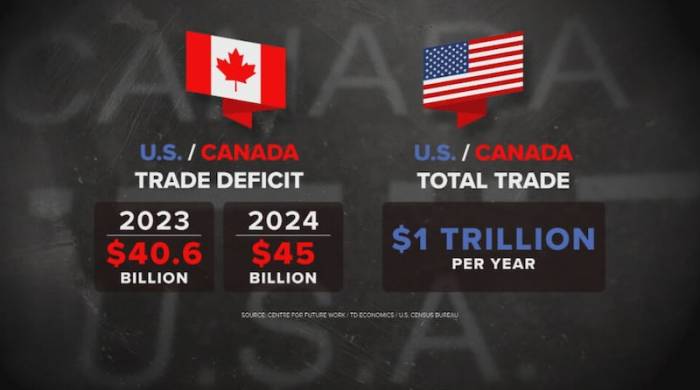
- How does Trump support his claim that the U.S. loses $250 billion annually due to Canada?
- Trump justifies his claim by stating: "We lose $250 billion every year because of Canada, but if we make it part of the U.S., we won’t lose that money." However, Canadian officials have categorically rejected this notion. Trump has a tendency to find pretexts for pressuring other countries, but actually enforcing such measures has proven challenging.
For such plans to be realized, Trump would need to build a powerful support system, which could lead to internal conflicts or even a civil war in the U.S. It is unlikely that Trump would be willing to take such risks. His political agenda is centered around American nationalism. For instance, he withdrew the U.S. from the Paris Climate Agreement and the World Health Organization, citing financial concerns.
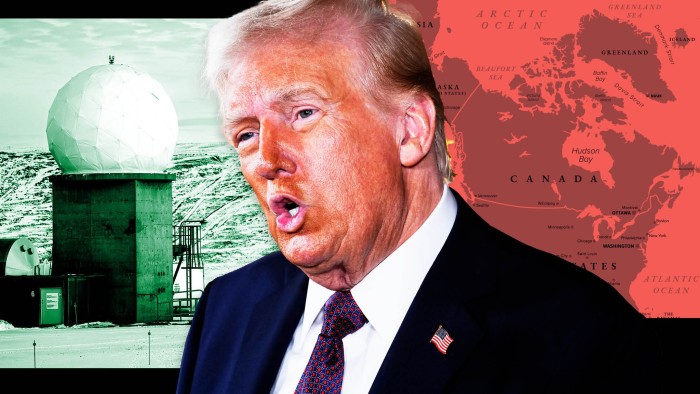
- What similarities exist between Trump’s idea of annexing Canada and Greenland and Russia’s annexation of Crimea?
- There are indeed certain parallels. Historically, Canada was once part of the British colonies in North America. If Trump were to attempt annexation, it would complicate the U.S. position on Russia. Since the outbreak of the Ukraine war, particularly after January 2022, the U.S. has demanded that Russia withdraw from occupied territories. However, if Trump himself pursues territorial expansion, American diplomacy would face accusations of double standards.
A similar dynamic can be observed in other countries. If nationalist leaders come to power, they may use this precedent to justify their own territorial ambitions. History has shown that the global order is shaped by examples set by leading nations—if Trump succeeds in implementing his vision, it could serve as a model for others.


Similar news