Is the world order collapsing? A look at the rise of power politics


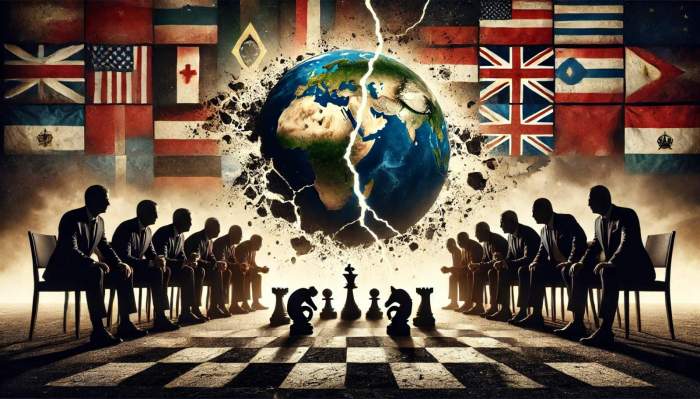
Image: Chatgpt
The international system appears to be unraveling before our eyes. In the early days of the new U.S. administration, many hoped the global stage would see a gradual return to predictability and cooperation.
Instead, an unexpected wave of assertive—and at times aggressive—policy moves has shaken the very foundations of international norms. We now find ourselves at a crossroads, where legal frameworks and diplomatic decorum risk being replaced by raw displays of power.Recent reports in the Financial Times reveal that President Donald Trump’s phone conversation with Danish Prime Minister Mette Frederiksen devolved into blunt territorial demands over Greenland . According to current and former European officials, Trump’s tone was nothing short of confrontational. While some initially speculated that the president’s remarks on acquiring Greenland were merely a symbolic gesture to gain political leverage, those involved in the conversation indicate that Washington’s claim is indeed serious.
Though extraordinary, these statements are part of a broader pattern. Since taking office, Trump has signaled a willingness to expand U.S. territory and influence by whatever means necessary—territorial expansion that harkens back to eras many believed were consigned to history books. Evidently, the administration regards the resource-rich Arctic island not just as a bargaining chip, but as a strategic asset it genuinely aims to secure.
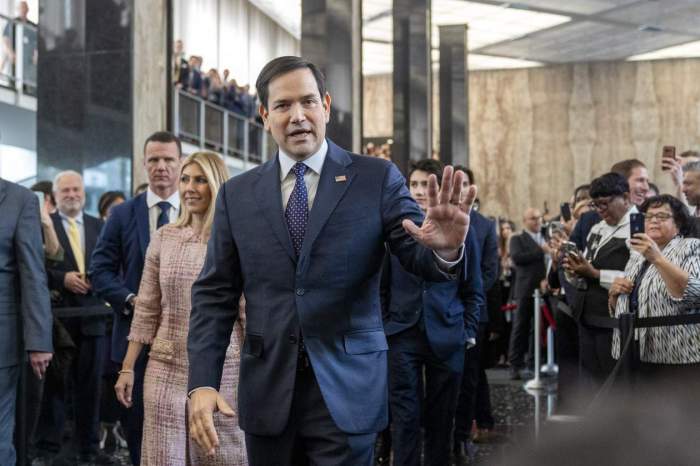
Secretary of State Marco Rubio greets people as he arrives to speak to State Department staff on Tuesday in Washington. | Jacquelyn Martin/AP
Simultaneously, newly appointed Secretary of State Marco Rubio has announced his first overseas trip will be to Panama. Rubio, known for advocating a tougher stance on Latin America, has repeatedly claimed that Panama’s independence over the canal is threatened by foreign (particularly Chinese) influence—a notion Panamanian authorities have refuted. Critics argue this “China threat” serves as a convenient pretext for the real goal: exerting U.S. control over the Panama Canal, a critical artery of global trade.
Panama, for its part, has attempted to reassure the international community that the canal is not under any foreign dominance. Yet the White House has shown little interest in these clarifications. The subtext is clear: legal norms and international protocols matter less and less in a climate where might often makes right, especially when the party applying pressure is a superpower.
The core concern is not any single conversation or territorial claim, alarming though they may be. It is the broader disintegration of the system of mutual restraint and legal agreements that has defined the post–World War II era. In the wake of the Cold War, hopes ran high that major-power tensions would lessen, ushering in an era of stability. Yet, in the decades since, we have instead seen a progressive breakdown of arms-control treaties, a weakening of multilateral institutions, and a rising climate of distrust.
Many are now asking whether foundational principles—respect for sovereignty, non-aggression, and the peaceful resolution of disputes—will continue to guide state behavior. If the United States overtly pursues territorial acquisitions and disregards international legal mechanisms, what is to stop other nations from doing the same?
In Europe, quiet whispers point to a uncomfortable question: if Washington believes it has legitimate designs on Greenland, is it truly so different from Moscow’s position vis-à-vis Crimea and Eastern Ukraine? Such parallels, while fraught, reflect the depth of disillusionment among Western allies who once looked to Washington as the cornerstone of the postwar order.
Even before this latest shift in U.S. foreign policy, Russia and China had been asserting themselves in ways that challenge the status quo. Russia’s annexation of Crimea in 2014 and its ongoing involvement in Eastern Ukraine set off a diplomatic crisis in Europe. Meanwhile, China’s expansive claims in the South China Sea and its Belt and Road Initiative have stirred intense debate over whether Beijing intends to reshape global governance on its own terms.
However, the United States had long positioned itself as the champion of the existing rules-based order—an order that, while imperfect, provided a framework to resolve disputes without resorting to open conflict or annexation. Now, it seems that Washington itself may be joining the competition of raw power moves, effectively discarding many of the norms it once vigorously defended. This turn toward realpolitik signals a worrying era of heightened rivalry, one in which treaties, alliances, and international organizations could become mere pawns in a larger geopolitical game.
Few institutions are more emblematic of global cooperation than the United Nations. Yet throughout its history, the UN’s efficacy in curbing the unilateral actions of its most powerful member, the United States, has been limited at best. Washington has often bypassed UN resolutions or vetoed Security Council initiatives that ran counter to its interests. In this latest iteration, the White House appears even less inclined to heed international bodies, and there is scant reason to believe the UN can constrain unilateral American ambitions.
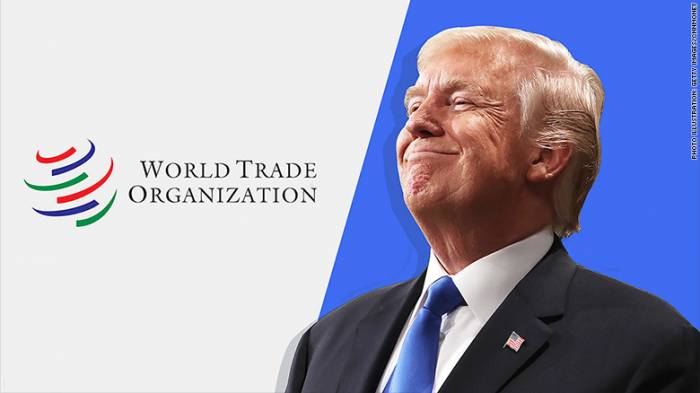
Image: therealnews
Moreover, other critical frameworks—such as the World Trade Organization and various arms-control treaties—are under immense strain. The Trump administration has signaled it may be prepared to rewrite or abandon existing agreements that, in its view, place constraints on U.S. freedom of action. If the world’s most influential nations show they regard treaties as disposable, confidence in international legal guarantees will collapse, and the possibility of forging new, durable agreements in the future will diminish drastically.
European capitals, once accustomed to relying on the stability guaranteed by American leadership, now face a quandary. Should they confront Washington head-on over these aggressive claims and risk economic retaliation? Or should they offer only token resistance, effectively legitimizing a redefinition of geopolitics that privileges raw power over diplomacy?
Already, the new U.S. administration has threatened to impose tariffs on European goods if countries do not agree to buy American oil and gas—a move that pits European economic survival against the principle of free markets. Europe’s leaders, wary of a trade war and the potential fracturing of the NATO alliance, have so far opted for cautious diplomacy. But in their timidity, some argue, they risk enabling Washington’s increasingly unilateral actions.
This intensifying climate of uncertainty has dire implications for global markets. If major sea routes like the Panama Canal become politicized or even effectively controlled by a single nation, other countries could face disruptions to global supply chains. European and Asian markets, deeply intertwined with American trade, risk being held hostage to U.S. policy shifts.
Moreover, as the administration pursues “resource-driven diplomacy”—in which energy exports become a weapon of economic coercion—regional blocs might scramble for alternative supply lines. Such a competitive scramble could exacerbate geopolitical tensions, incentivizing states to form new alliances or accelerate arms buildups to protect their interests.
What looms is not the conventional nightmare of a direct military clash between superpowers—though that cannot be entirely discounted. Instead, a more insidious danger lurks: the gradual fracturing of states and alliances under unrelenting pressure, as once-accepted boundaries and sovereignties are called into question. Nations with historic grievances might resurrect old claims, emboldened by the decline of universal norms. In effect, each government may feel it has no choice but to prioritize self-preservation, stoking suspicion among neighbors and fueling the sort of chain reactions that can lead to regional destabilization.
The 20th century showed us the catastrophic costs of unchecked expansionism and power politics. Two world wars and a decades-long Cold War taught us that a durable peace requires more than the balance of terror; it also requires frameworks of trust and legal norms upheld by all significant powers. After 1945, the world painstakingly built institutions, treaties, and mechanisms of cooperation to prevent a return to the darker chapters of the preceding decades.
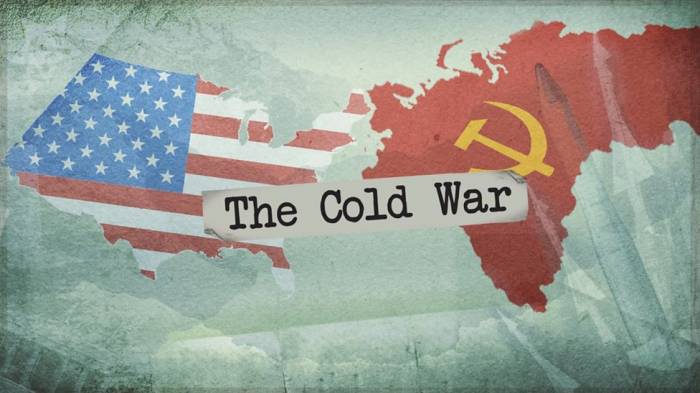
Image: BBC
Today, we risk forgetting these lessons. If Washington continues to disregard international law—and if other powers follow suit—there is little to prevent an acceleration of chaos. The apparatus designed to manage crises and resolve disputes could collapse under the weight of rampant unilateralism.
It is not too late for nations to reaffirm and reinforce the principles of international law. European leaders, as well as powers in Asia, Latin America, and Africa, must carefully assess whether accommodating or appeasing Washington’s demands serves their long-term interests. Meanwhile, the United States itself stands at a pivotal moment: does it truly wish to abandon a legacy of rules-based leadership that, albeit imperfect, helped sustain relative global stability for decades?
The world is indeed at a tipping point. If leaders around the globe do not find the resolve to challenge the normalization of territorial grabs and the erosion of international norms, the international system that has underpinned global peace and prosperity since 1945 could dissolve. In its place may emerge a fractured environment defined by competing spheres of influence and an unstable balance of power.
As history reminds us, once the threads of international cooperation begin to unravel, rebuilding them becomes an arduous, sometimes impossible, task. The stakes could not be higher. The time to act—to reaffirm diplomacy, multilateral engagement, and respect for sovereignty—is now. If we fail, the world may well look back on this moment as the one that sealed the fate of a once-stable global order.
(If you possess specialized knowledge and wish to contribute, please reach out to us at opinions@news.az).


Similar news