“America’s golden age” begins: Trump’s tariff list that shook the world


Tural Heybatov
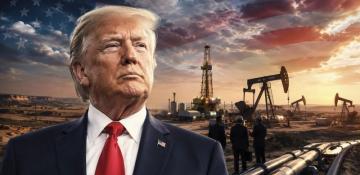
“The day of liberation has come,” declared U.S. President Donald Trump as he announced that new tariffs on imports from 183 countries would take effect at midnight on April 3. According to Trump, other countries have long profited from unrestricted access to the American market while simultaneously limiting access for American goods to their own. Now, he claimed, trillions upon trillions of dollars will flow into the United States, marking the beginning of a “golden age” for the American people.
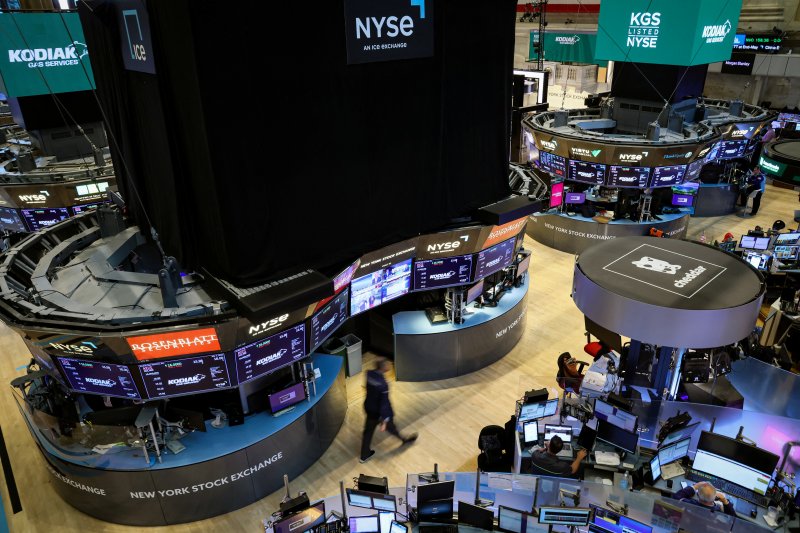
As reported by Radio Free Europe/Radio Liberty, financial markets reacted instantly to the president’s remarks. Although Trump spoke after trading hours on Wall Street, market futures—which reflect investor sentiment—signaled a potential drop of 3–4 percent on the evening of April 3. “Markets fear the beginning of a trade war,” warned the popular U.S. business channel CNBC. Asian stock markets had already declined during early trading on April 3 after White House Council of Economic Advisers member Stephen Miran admitted that the tariffs would cause “short-term difficulties.”
The list of countries subjected to the new tariffs, unveiled by Trump, quickly became the headline of the day—and it is likely to remain a global news focus for quite some time. Trump’s so-called “America’s Day of Liberation” has impacted virtually every nation with a functioning economy. The list includes 183 countries, with tariff rates varying depending on each country’s trade imbalance with the U.S. Economists have pointed out that U.S. tariffs are, in many cases, only half as high as the duties those countries already impose on American goods. In cases where the U.S. tariffs are at the minimum rate of 10 percent, they are considered “mirror” tariffs.
All countries in the South Caucasus and Central Asia made the list. The minimum 10 percent tariff was applied to most of these states, with one notable exception—Kazakhstan, which was hit with a 27 percent tariff. The highest tariffs, set at 49 percent, were imposed on Cambodia, Vietnam, and Sri Lanka—moves that will undoubtedly have serious consequences for their economies. The United States’ main global competitor, China, was assigned a 34 percent tariff (while China itself imposes a 67 percent tariff on American goods). The European Union was hit with a 20 percent tariff. U.S. media outlets noted that tariffs were even imposed on several countries with which the U.S. had a trade surplus in 2024, including the tiny Pacific territory of Tokelau.
According to American media, the new retaliatory tariffs do not apply to goods such as steel, aluminum, and automobiles, as these items had already been subjected to earlier tariff hikes. Separate duties will soon be introduced on other categories not yet affected, including copper, pharmaceuticals, semiconductors, and lumber products. The individualized tariffs for each country will take effect on April 9.
The list is long, and detailing every country is impractical. It’s more intriguing to consider which countries were not included: Russia, Belarus, Cuba, and North Korea.
White House Press Secretary Karoline Leavitt told U.S. news site Axios that Russia was excluded from the list because existing U.S. sanctions have already “significantly curtailed trade volumes.” According to the U.S. Department of Commerce, trade between Russia and the U.S. has sharply declined since the start of the war in Ukraine. In 2021, U.S. imports from Russia totaled $36 billion, but by 2024, that figure had plummeted to $3.5 billion—still nearly twice as much as imports from Ukraine. Notably, Trump recently threatened punitive measures against those who continue to buy Russian oil.
Experts, however, have raised questions about inconsistencies in Leavitt’s explanation. If Russia and the other omitted countries were excluded due to sanctions and diminished trade volumes, why is Iran included—when there is virtually no trade between Iran and the U.S. at all?
While Trump’s list did not spark outright shock across the globe, it certainly came as an unpleasant surprise for many. Some experts believe Trump’s move could trigger a global trade war. Some even predict that the Republican Party may lose control of Congress next year as a result, given the likely domestic impact of rising inflation and slower economic growth.
However, there are also voices in support of Trump’s actions. Richard Stern, a policy expert at the Heritage Foundation, told CNN that foreign nations have indeed exploited trade barriers, subsidized domestic products, and stolen American intellectual property. He argued that the tariffs are not an end in themselves for Trump, but rather a strategic tool to break down those barriers and create a “truly free and open global trade system.”
Around the world, analysts are already tallying the potential fallout of the U.S. administration’s bold new course.
According to Euronews, the German Association of the Automotive Industry warned that American factories rely heavily on supplier networks, particularly in Canada and Mexico, meaning that the tariffs could have sweeping global consequences. VDA spokesman Simon Schütz said price increases are inevitable—and will hit American consumers first. “In the long run, if tensions escalate, this will affect growth, prosperity, and potentially jobs on both sides of the Atlantic,” he noted. German carmakers are major players in the U.S. market, employing over 140,000 people and producing more than 900,000 vehicles annually—half of which are exported.
As for Azerbaijan, which also appeared on Trump’s list, the country is not a major U.S. trading partner. Nevertheless, the new measures will inevitably have some effect on the Azerbaijani economy. In addition to oil, Azerbaijan exports goods to the U.S. such as fruit juices, jams, carpets, textiles, pharmaceutical and perfume-related plants, wine, various chemicals, and electronic equipment. In turn, Azerbaijan imports cars, electrical appliances, iron, steel, and food products from the U.S. In 2024, imports from the U.S. rose by 1.8 times, and exports increased by 8.4 times. According to experts, energy products from Azerbaijan will likely be the last to be impacted by the new tariffs.
In an interview with The New York Times, Eswar Prasad, an economist at Cornell University, stated that the key consequence of Trump’s actions is the abrupt end of the era of free trade.
“Instead of reforming the rules that many of America’s trade partners have used to their advantage, Trump has decided to blow up the very system that governs international trade,” the economist concluded.
So the process is underway. All that remains is to watch closely—and see where it leads.


Similar news