Azerbaijan and Uzbekistan just changed the energy balance in Central Asia


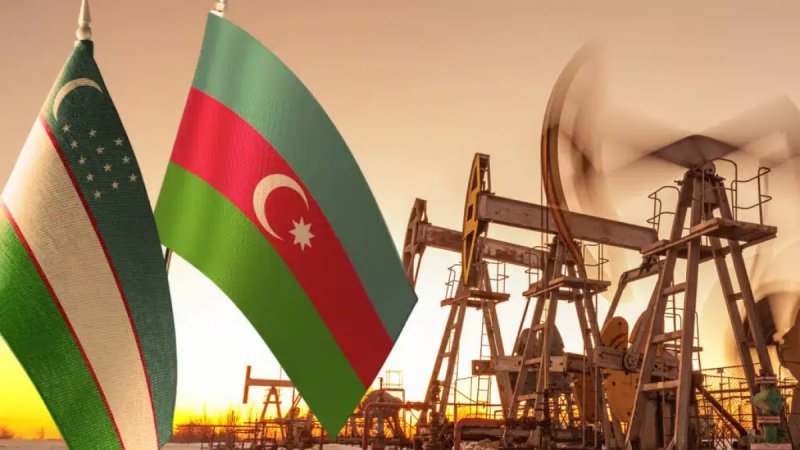
The discovery of large hydrocarbon reserves on Uzbekistan’s Ustyurt Plateau marks one of the most significant developments in Central Asia’s energy landscape in decades, and the geopolitical implications are already visible. What began as a cautious exploration initiative between Uzbekneftegaz and Azerbaijan’s SOCAR has evolved into a strategic shift capable of transforming Uzbekistan from a chronic importer into a self-sufficient energy producer with regional influence.
Cooperation between Baku and Tashkent in the energy sector accelerated in August 2024, when Uzbekneftegaz and SOCAR signed a cooperation agreement. A production sharing agreement followed in July 2025, formalizing Azerbaijan’s direct participation in geological surveys and extraction.
SOCAR’s involvement proved decisive: despite earlier skepticism, modern exploration techniques and Azerbaijan’s upstream expertise led to a breakthrough that Uzbekistan had pursued unsuccessfully since the Soviet era.
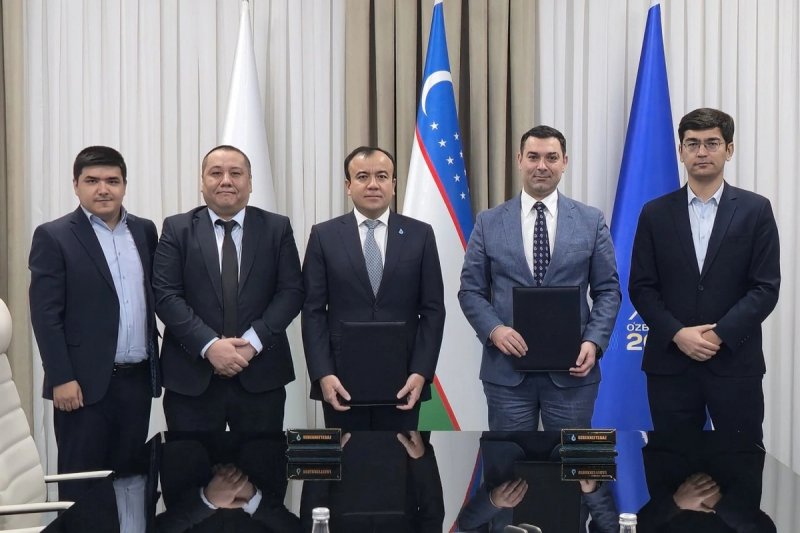
Source: SOCAR
The turning point came in September 2025, when President Shavkat Mirziyoyev announced the discovery of massive gas reserves at a depth of 6,500 meters — the largest exploration success in Uzbekistan’s modern history. According to preliminary data, the reserves on the Uzbek portion of the plateau may include up to 100 million tons of oil and 35 billion cubic meters of gas. For a country where hydrocarbon production has been steadily declining over the past 15–20 years, the discovery represents a strategic reversal.
Until recently, Uzbekistan produced around 70 billion cubic meters of gas and eight million tons of liquid hydrocarbons annually. Technological inefficiencies and depletion of Soviet-era wells brought production into decline. By early October 2025, output stood at just 490,000 tons, a notable decrease from 542,000 tons in 2024 and 585,000 tons in 2023. Against this backdrop, the Ustyurt discovery is not just a geological victory but a potential industrial revival.
Source: uzdaily.uz
The production sharing framework negotiated with SOCAR gives Uzbekistan access to technology, long-term financing, and regional export channels. According to reporting from Uzbek media, the agreement will allow the country to fully eliminate its dependence on imported oil and secure domestic supplies for at least 25 years. Gas from the field will serve internal demand, while refined petroleum products are expected to support industrial growth and price stability.
The project will be implemented in phases over three to five years, with an estimated investment of $2 billion. The first drilling phase will focus on seismic surveys and exploratory wells, while infrastructure, including pipelines, processing facilities, and potentially a new refinery, will be built in subsequent stages. The first well is projected to come online by 2030.
An important dimension of the discovery is Azerbaijan’s role. SOCAR initially hesitated to enter the project, having reviewed Soviet and early post-Soviet data indicating low potential. The fact that the breakthrough came only after the integration of modern deep-drilling and 3D seismic technologies underscores how far regional energy capabilities have advanced and how Azerbaijan has positioned itself as a technological rather than merely extractive partner.
Source: APA
Interest in the project has now expanded beyond bilateral cooperation. British Petroleum (BP), SOCAR’s long-standing partner in the Caspian Sea, is reportedly evaluating involvement, a move that could elevate Ustyurt into a multinational strategic asset and accelerate the project’s commercialization.
If resource estimates prove accurate, Uzbekistan and Azerbaijan may jointly build a new oil refinery, supplementing the country’s existing facilities in Fergana, Bukhara, and Altyaryk. A modern refinery is already under construction in the Jizzakh region with a planned annual capacity of five million tons, but its operation depends on imported feedstock. The Ustyurt reserves may fundamentally alter that equation.
Beyond its technical and economic significance, the discovery reshapes the regional energy balance. Uzbekistan currently ranks among the world’s top 50 oil-producing countries, but large-scale extraction could push it significantly higher. Analysts in Kazakhstan have already expressed concern that once Uzbekistan becomes self-sufficient, Astana may lose one of its key export markets — a shift with implications for revenue flows and market competition across Central Asia.
The Ustyurt discovery also aligns with Uzbekistan’s broader economic strategy, which prioritizes diversification, industrial modernization, and reducing dependency on external energy supplies. In this context, Tashkent’s partnership with SOCAR is more than an energy agreement — it is a geopolitical investment in autonomy, technological sovereignty, and regional influence.
For Azerbaijan, the project reinforces SOCAR’s role as a regional leader and signals Baku’s growing strategic presence in Central Asia, a development aligned with the Middle Corridor connectivity strategy and broader Caspian integration initiatives.
By Tural Heybatov


Similar news