Azerbaijan launches major geological survey in Karabakh and East Zangezur


Major geological assessment work is currently underway in the Karabakh and East Zangezur economic regions to evaluate the mineral potential of these territories. Azerbaijan’s Geological Exploration Agency has already launched preparatory activities. Earlier, it was reported that over the next two months, specialists will conduct lithological, petrographic, and mineralogical studies, along with field measurements, to identify promising areas for mineral exploration. In addition, magnetic surveys will be carried out along a 150-kilometer route.
To implement this work, the Azerbaijani company Geo Company LLC, which provides geological exploration services, was selected and has already signed a contract. The exploration work is expected to cost around 200,000 manats.

Source: AzerTAG
Speaking Monday at an event marking the 80th anniversary of the National Academy of Sciences of Azerbaijan, President Ilham Aliyev highlighted the rich natural resources of the liberated territories.
According to the President, geological exploration holds major importance, especially in Karabakh and East Zangezur, because these territories were not thoroughly studied during the Soviet era. “Even if they had been, the technologies of that time would not have allowed for a full-scale exploration,” he noted. “Today’s advanced technologies open up entirely new opportunities for geological research.”
Armenian media previously reported that in 1988, geological assessment materials on the mineral wealth of Karabakh and East Zangezur were illegally taken from Azerbaijan to Armenia. However, the documents were never used during the years of occupation.
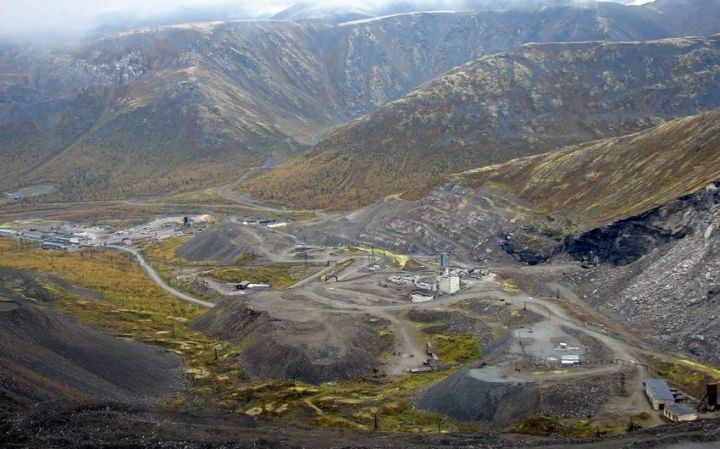
Among the stolen materials was a May 1968 report submitted to the Azerbaijani government based on a special Murovdag expedition, which studied the Karabakh region along with the Kalbajar, Lachin, Gubadli, and Zangilan districts. The report detailed reserves of precious and nonferrous metals (categories A1 + B1): gold – 1,250 tons, silver – 4,550 tons, copper – 1,840,000 tons, lead – 660,000 tons, zinc – 775,000 tons, cobalt – 150,000 tons, and chromium – 2,250,000 tons (or 3,500,000 tons including flanks). It also noted large reserves of aluminum raw materials, iron ore with iron content up to 45–55 percent, and traces of rare-earth elements such as lithium and beryllium.
Source: Trend
Current geological data allow experts to refer to Karabakh and East Zangezur as the “Azerbaijani Urals” due to the richness and diversity of their mineral resources. More than 800 deposits of useful minerals have been identified in these territories.
The Karabakh and East Zangezur economic zones contain significant deposits of gold, copper, mercury, lead, and zinc. The territories also hold extensive reserves of construction materials such as marble, granite, tuff, basalt, limestone, perlite, alabaster, vermiculite, and raw materials for cement and clay production. There are also deposits of chromite, coal, decorative stones, semi-precio us stones, and rare-earth metals.
The East Zangezur economic region is particularly rich in precious metals, especially the Kalbajar and Zangilan districts. Kalbajar, often called Azerbaijan’s gold treasury, has been explored since the 1950s. By 1993, before the Armenian occupation, the area’s deposits were included in the state balance and contained approximately 130 tons of gold, 190.33 tons of silver, 45.82 tons of tellurium, 248.89 tons of selenium, and 939 tons of mercury.
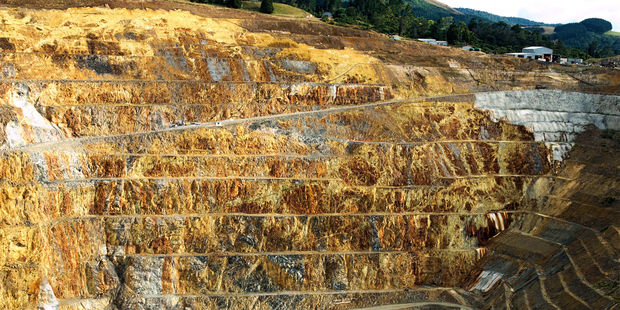
The most well-known gold deposits in Kalbajar are Soyudlu with reserves of 112.5 tons, and the Agduzdag and Tutgun deposits, which together contain more than 13 tons. Geological surveys are already underway at Agduzdag and Tutgun, while other promising sites in the district are actively being studied.
Agduzdag alone contains around 100 gold-bearing quartz and quartz-carbonate veins, five of which have industrial-grade gold mineralization. The ores fall into two main categories: pure gold and electrum, a natural gold-silver alloy that contains 35–40 percent silver.
Source: APA
In Zangilan, the main gold reserves are concentrated in the Vezhnali deposit, where one block contains 2,169 tons of gold and another holds 4,347 tons.
During the years of Armenian occupation, many of these deposits were plundered, including Soyudlu and Gizilbulag in Kalbajar, Vezhnali in Zangilan, and Demirli in Tartar. Evidence of illegal mining was confirmed by Azersky satellite imagery, operated by Azerkosmos OJSC. Companies from several countries, including the United Kingdom, France, Iran, the United States, Russia, Switzerland, Germany, and the Netherlands, were involved in the illegal extraction of Azerbaijan’s natural resources. In total, investors from 20 countries took part in illicit mining activities on the occupied territories.
Aside from looting, the Armenian side also attempted geological exploration on the occupied lands. A so-called “geological laboratory” was set up in Khankendi, where prospecting efforts were carried out. According to Armenian media, this work identified deposits of nonferrous metal ores and coal in the Agdara district, and zinc, lead, copper, gold, pyrite, and feldspar in the Khojavand district. However, further exploration and development required investment and specialists.
The separatist regime hoped these findings would attract foreign investors, but none were willing to invest in a political “grey zone.”
By Tural heybatov


Similar news