Azerbaijan's hydrogen future: Is Baku ready for an export revolution? – INTERVIEW


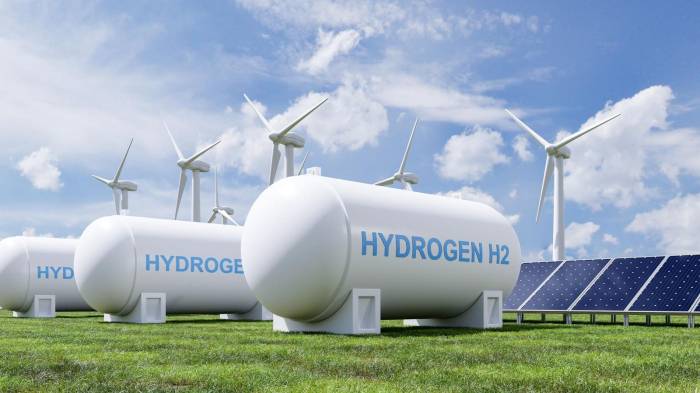
Photo: Hydrogen energy storage gas tank for clean electricity solar and wind turbine facility. 3d rendering via Getty Images
By Asif Aydinli
Interview with News.Az featuring Igor Yushkov, Leading Analyst at the National Energy Security Fund and Expert at the Financial University under the Government of the Russian Federation.
Photo: Sputnik
– The Azerbaijani government plans to produce hydrogen and export it to the EU, which aims to widely adopt this fuel by 2030. How prepared is Azerbaijan’s energy sector for such exports? Are the necessary capacities and infrastructure in place?
- Currently, Azerbaijan faces several questions regarding the prospects for hydrogen exports. One of the key challenges is the absence of a well-formed European hydrogen market. Despite numerous declarations by European countries about the need to develop the hydrogen industry and import hydrogen, there is still no infrastructure in place for its transportation, storage, and use.
Azerbaijan, while announcing plans for hydrogen production, must adapt to Europe’s future needs. However, European demand is not yet defined in terms of volumes or timelines. Therefore, at this stage, a logical step would be to carry out preparatory work and engage in dialogue with European partners. It is crucial to determine what type of hydrogen will be in demand—green, grey, or blue—and to build production capacities accordingly.
The most prioritized direction for Europe is green hydrogen, which is produced through water electrolysis using electricity from renewable sources. European countries are aiming for decarbonization and addressing the issue of storing energy generated by solar and wind power plants. However, creating a full-fledged infrastructure for green hydrogen in Europe will take significant time. For Azerbaijan to secure a position in this market, investments will be required to purchase and install electrolyzers and to develop renewable energy sources.
An alternative option for Azerbaijan is the production of grey or blue hydrogen from natural gas. This direction requires fewer investments and aligns with the current level of gas production in the country. However, grey hydrogen, produced without capturing carbon dioxide, is not in demand in Europe. Blue hydrogen, where greenhouse gases are captured and stored, is considered more environmentally friendly, but its market value is not yet established.
At this stage, Azerbaijan is experiencing high demand for its natural gas in the European market. The capacities of the TANAP and TAP pipelines are fully synchronized with production volumes at the Shah Deniz-2 field, enabling the annual supply of 10 billion cubic meters of gas to Europe and 6 billion cubic meters to Turkey. In this situation, gas exports remain a more economically viable solution than investments in the hydrogen industry.
Until the European hydrogen market is established, Azerbaijan should focus on preparatory work and assessing the prospects of collaboration with Europe. In the short term, it is more profitable to continue exporting natural gas to meet current European consumer needs. The development of the hydrogen industry can be postponed until demand and infrastructure for this resource become more defined.
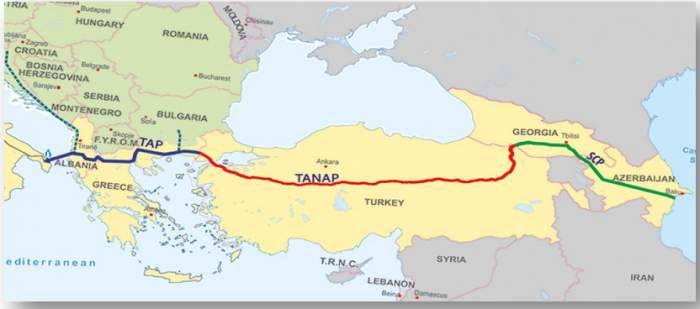
Photo: The Ministry of Energ of Azerbaijan
– The transit contract for Russian gas through Ukraine to Europe expires on December 31, 2024. How relevant are negotiations on replacing Russian gas with Azerbaijani supplies?
- The likelihood of continuing Russian gas transit through Ukraine diminishes with each passing month. Although a final decision has yet to be made, the situation remains uncertain. Ukraine seeks to monopolize negotiations with European partners, asserting that it will not extend its contract with Gazprom. However, it hints that if Europe wishes to retain Russian gas supplies, direct agreements will need to be made.
A proposed scenario resembles the arrangement with the Druzhba oil pipeline. Under sanctions against Lukoil, Ukraine insisted on shifting the delivery point to the Belarus-Ukraine border. Consequently, oil transits Ukraine under the ownership of Hungary’s MOL, not Lukoil. A similar approach is being considered for gas: transfer points for Russian gas could be moved to the Russia-Ukraine border, with European companies arranging transit services.
However, Europeans worry Ukraine might leverage this arrangement to exert pressure, such as setting conditions for financial or military aid. This uncertainty prolongs negotiations. While the outcome remains unclear, tensions are high.
– Can we expect higher natural gas prices in Europe?
- Gas prices will largely depend on weather conditions. A cold winter traditionally increases daily gas consumption. Europe is already drawing heavily from underground storage, with reserves depleting by 10% in the first two weeks of November.
U.S. sanctions on Gazprombank, which processes payments for Russian gas, could also influence prices. If Ukraine halts transit, pipeline deliveries could drop from 30–32 billion cubic meters to just 5 billion, intended only for Moldova and Serbia. Such a scenario, particularly during the peak winter season, would undoubtedly trigger a price spike.
However, the exact extent of the price increase will depend on several factors, including consumption levels, weather conditions, and the availability of alternative energy sources.
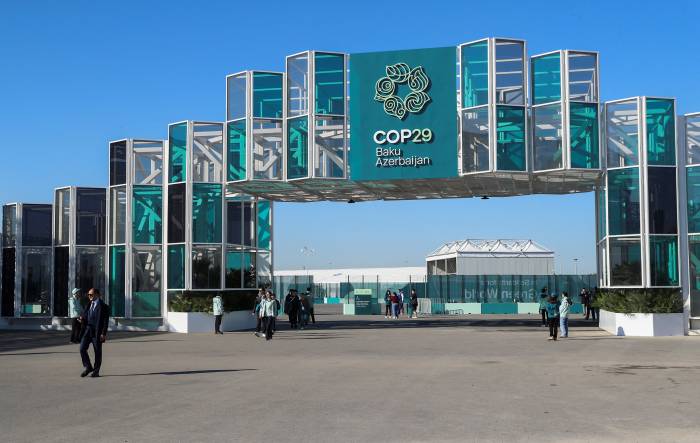
Photo Reuters
– How do you evaluate the adoption of the final document at the UN International Climate Conference (COP29) in Baku?
-The COP29 Climate Conference in Baku stood out for several reasons. Recent climate summits, particularly this one, reflect a significant shift in the climate agenda. Previously, the focus was almost entirely on energy transitions, tightening financial regulations, and decarbonization. Western countries often dictated how developing nations should act, but this paradigm is changing.
At COP29, substantial attention was paid to adapting to global climate change. While reducing greenhouse gas emissions was previously the main emphasis, the recognition has grown that climate change is inevitable, including due to anthropogenic factors. The final document introduced an important idea: preparation and adaptation to new conditions are essential.
Additionally, for the first time, developing countries from the Global South asserted
themselves more strongly. They criticized Western decarbonization models as unfair. European countries, having achieved prosperity by progressing through all stages of energy development—from wood and coal to nuclear and renewable energy—now demand that other nations skip these stages and immediately transition to green energy. This stance was rightly criticized at the summit in Baku.


Similar news