Azerbaijan's development strategy: key factors and priorities



By Sabina Alizade
Under the long-term program "Azerbaijan 2030", the country is rapidly advancing by clearly defining the priorities for its socio-economic development. In this strategy, special attention is given to the development of green energy, the digitalization of the economy, innovation, and human capital development. These priorities have become crucial for the country's sustainable and balanced development in the context of global challenges and transformations.
The " National Priorities – Azerbaijan 2030 " program sets important tasks for the country, such as the digital transformation of society and the economy, the Fourth Industrial Revolution (4IR), the development of the oil sector and human capital, the use of technologies, and increasing the competitiveness of non-governmental organizations. In this context, AZTAF acts as a key element in implementing national priorities and the country's socio-economic development strategy.
Despite some differences in foreign policy issues with certain EU countries, Azerbaijan continues its efforts in business, scientific-technical, and humanitarian cooperation with the European Commission and other EU structures by applying advanced European practices in various fields.
AZTAF is also closely aligned with the United Nations Sustainable Development Goals (SDGs), emphasizing the commitment to strengthening sustainability, inclusiveness, and resilience in Azerbaijan. The European Union, as well as the World Bank and other UN agencies, actively support these initiatives, working in partnership with the Azerbaijani government and experts to achieve the overall development goals for the country.
Cooperation with international organizations, including the European Union and the World Bank, plays a key role in implementing strategic priorities and ensuring Azerbaijan's sustainable development in the long-term.
AZTAF also plays a central role in achieving these goals. The budget for this three-year project is 5.25 million euros, with many initiatives funded through individual programs and projects of the EU and the World Bank. In recent years, the World Bank has allocated over $4 billion for various investment projects in Azerbaijan, while the European Union has invested more than $24.7 billion in the country.
Special attention is given to the development of renewable energy. The European Bank for Reconstruction and Development (EBRD), which has been cooperating with Azerbaijan for over 30 years, has allocated 3.7 billion euros for various projects , including those related to renewable energy sources. Projects such as the construction of green cities and the Absheron-Gobustan wind power plant are clear examples of this cooperation.
Energy efficiency has also become an important part of the strategy. Under AZTAF, efforts are being made to increase energy efficiency in various sectors of the economy. The World Bank is particularly involved in supporting the Energy Efficiency Fund in Azerbaijan and preparing a roadmap for the national renovation program. These measures aim to reduce energy consumption and support diversification towards green energy.
Furthermore, the World Bank plans to discuss with the Azerbaijani government the possibilities of monetizing carbon emission quotas. This will help reduce greenhouse gas emissions and support the development of renewable energy in the country.
The development of energy efficiency and renewable energy is becoming an increasingly important element in Azerbaijan's development strategy. Cooperation with international financial institutions and the European Union plays a key role in achieving these goals and ensuring the country's sustainable economic growth in the future.
Between 2012 and 2023, the European Union has invested significantly in various projects and programs in Azerbaijan, confirming the importance of cooperation between the parties and their contribution to the country's economic development. During this period, the total volume of investments from the EU to Azerbaijan amounted to $24.7 billion.
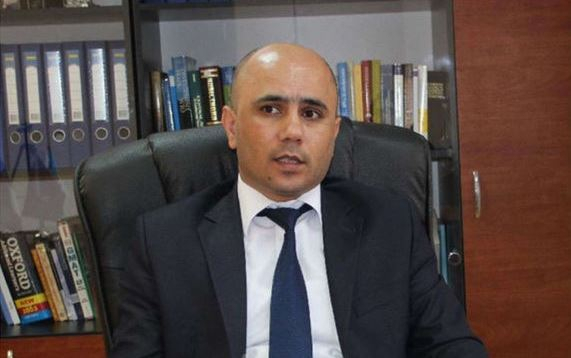
In a comment to News.Az, economic expert Rashad Hasanov noted that overall, the trade turnover between Azerbaijan and the EU countries is mainly based on energy resources. If we look at the indicators for 2023, there was a foreign trade turnover of $25 billion, of which $22 billion, or 88%, was exports from Azerbaijan to the EU.
"Our imports from EU countries amounted to about 3 billion manats, including non-energy products such as technology, technological equipment, medical products, pharmaceuticals, cars, and car parts, among others," the expert said.
Hasanov also noted that a significant portion of the investments from EU countries in Azerbaijan is directed towards the energy sector and the mining industry. "Overall, from 2016 to 2022, about 77% of the total foreign investments in Azerbaijan were directed towards the mining industry, with a significant share belonging to EU countries," he said.
The expert emphasized that the remaining investments were mainly directed towards the construction and transport sectors, accounting for approximately 18% of the total foreign investments over the six-year period.
"In general, 95% of the investments from the EU were directed towards the mining, transport, and construction sectors. Investment agreements significantly increased these amounts. European companies widely cooperate in gas and oil projects in the Azerbaijani market," he added.
Regarding investments from Russia, China, and the US in Azerbaijan, the expert noted that from 2012 to 2022, the US invested approximately 5 billion manats in Azerbaijan, while Russian investments amounted to about 3 billion manats.
"Comparison shows that the US has invested more in Azerbaijan than Russia. US investments were mainly in energy and transport projects. Among these countries, China invested the least, with around 50 million manats over the last six years. However, there has been a positive dynamic in recent years, with Chinese investors showing increased interest in the Azerbaijani market and participating in investment initiatives, especially in special economic zones," the expert pointed out.
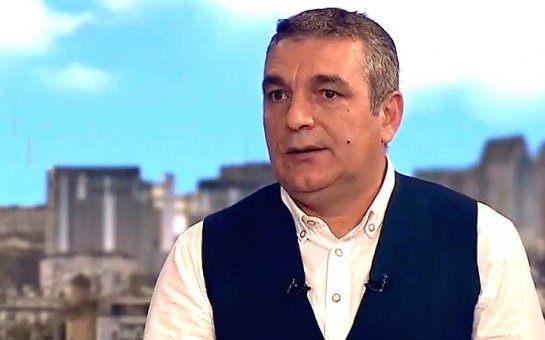
Meanwhile, economic expert Natig Jafarli stated that EU investments in Azerbaijan are mainly directed towards the energy sectors. European countries also have participation shares in new gas projects such as Shah Deniz-2, TANAP, and TAP.
"The US also has significant investment shares in the energy sector in Azerbaijan. However, Russian and Chinese investments are considerably less compared to the US and are not even comparable," he said.
The expert also noted that European countries are the top trading partners for Azerbaijan in terms of exports. Italy has been the leading country in Azerbaijani exports for many years. "However, in terms of imports, the top three countries are China, Russia, and Turkey. We import more products from these countries than from the EU. Therefore, even though there is no direct correlation between investments and import-export operations, there are certain dependencies. EU countries invest more in the energy sector, and as a result, Azerbaijan exports more energy resources to them under long-term contracts," he added.
Cooperation between the European Union and Azerbaijan plays a crucial role in ensuring the country's economic growth and adapting innovative approaches. This cooperation includes various programs and projects implemented jointly with the World Bank. These initiatives cover diverse fields such as transport, social protection, water supply, irrigation, agriculture, environmental protection, and greening initiatives.
P.S. Programs funded by the European Union also focus on the development of green energy and increasing energy efficiency. For example, through cooperation with the European Bank for Reconstruction and Development (EBRD), Azerbaijan has received 3.7 billion euros for various projects, including those related to renewable energy sources. Projects such as green cities and the construction of the Absheron-Gobustan wind power plant are significant steps towards sustainable development.
One of the main aspects of cooperation with the European Union is support for energy efficiency programs. AZTAF aims to increase energy efficiency in various sectors of the economy, including addressing serious problems in the public sector related to heating systems.
Thus, cooperation between the European Union and Azerbaijan is a crucial factor in achieving economic development goals and adapting to changing conditions. Investments from the EU in various programs and projects play a key role in ensuring the country's sustainable development and maintaining a high level of integration into the global economy.


Similar news