Back to the USSR: Is Russia eyeing its former empire?


Editor's note: Russian military-political analyst, expert in the field of strategic security, specialist in the Middle East and Africa Vladimir Bekish. The article expresses the personal opinion of the author and may not coincide with the view of News.Az.
It turns out that it's not the end of the day just yet. In life, everything can still return to the point where it once already was.
Anton Kobyakov, an advisor to the Russian president, recently made a striking claim: the Soviet Union still exists.
He said this not as a private individual, but as a high-ranking official. In today’s Russia — and not only in Russia, but also in several other now-independent republics of the former USSR — many people still long for Soviet times and struggle to accept that the Soviet Union no longer exists.
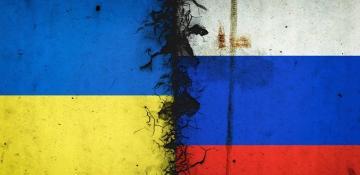
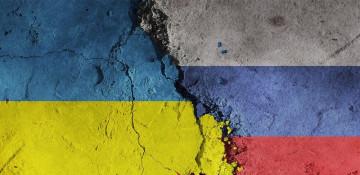
These sentiments are understandable, and one might sympathize with those who hold them. But what makes Kobyakov’s remark especially significant is his position — and more importantly, what exactly he said: “…If the USSR has not been dissolved, then logically, from a legal point of view, the Ukrainian crisis is an internal process.”
And this claim is not without consequences. Here’s why.
If the ongoing conflict is indeed an “internal process,” then all external assistance to Ukraine — military, financial, diplomatic — becomes interference in the internal affairs of a state that still legally exists. Moreover, such interference could be framed as supporting separatism and illegal armed groups — meaning, under this logic, that the Ukrainian armed forces themselves could be considered illegitimate.
Following this rationale, the only way to halt such interference would be to retaliate against those countries providing it. And not just retaliate — but strike back with everything Russia has at its disposal.
What’s also telling is how quickly other senior figures echoed Kobyakov’s statement — and not ordinary commentators, but people at the highest levels of power in Russia.
Nina Ostanina, head of the State Duma Committee on Family, Maternity, Paternity, and Childhood, declared that the dissolution of the USSR was carried out in violation of the law.
Sergey Stepashin, Chairman of the Russian Bar Association and former Prime Minister of Russia, stated that Ukraine was among the first republics to begin separating from the USSR after signing the Belovezh Accords, which formalized its dissolution.
What are the implications of such statements by seasoned, cautious officials who know exactly what can — and cannot — be said in public?
The consequences could be extremely serious. And they are likely to concern Ukraine most of all — its future, its sovereignty, and its internal structure.
It increasingly appears that the goal is to ensure that, after the war, even if Ukraine remains formally independent, it will possess minimal sovereignty and statehood. At best, it may resemble an autonomous region under Russian influence — without an army, without an independent foreign policy.
Looking even further ahead, these statements about the illegitimacy of the USSR’s dissolution and the continued legal existence of the Union suggest a broader strategy. That is: all former Soviet republics — now seemingly independent states — should return to some form of Union. Not necessarily the Soviet Union, but a Union nonetheless, led by a “great Russia.”
One possible scenario would involve orchestrated referendums in these now-independent states to join a new unified state. We may see the creation of joint political institutions, common national assemblies, and sessions of “people’s representatives.” As a result, while a few states may remain aligned with the West and Europe, the majority of the former Soviet republics could once again be united — under Moscow's leadership. All decisions would be made collectively in congresses and unified state bodies.
There would be one army. Shared borders across a vast territory. A powerful economy, developed and led by today’s resurgent Russia — just like in the days of the USSR.
And perhaps even further down the road, once this great state is restored under Russian leadership, they might recall that Finland, too, was once part of this grand order — where Russian was the universal language. And that Poland once lived under similar conditions...
And if someone in the world protests too strongly — they will only need to look at the example of modern-day Ukraine. And listen to Russia’s negotiating position, as expressed in meetings with Ukrainian officials: “If today you don’t recognize these four regions as ours — tomorrow five of your regions will be ours.”
(If you possess specialized knowledge and wish to contribute, please reach out to us at opinions@news.az).


Similar news