Baku seeks to boost ties with Minsk despite anti-Belarus sanctions


By Kerim Sultanov
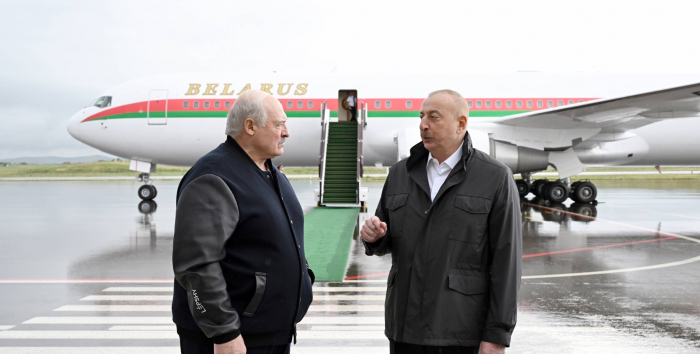
The Azerbaijani-Belarusian talks held during Belarusian President Alexander Lukashenko's state visit to Azerbaijan confirm once again that the two countries maintain strong friendly relations, demonstrating the dynamic development of their interaction.
Azerbaijani President Ilham Aliyev invited Lukashenko to the COP29 UN climate summit in Baku, highlighting the importance of establishing industrial cooperation and joint ventures in various sectors such as engineering and agriculture.
Azerbaijan proposed that Belarusian companies participate in the reconstruction of Karabakh and Eastern Zangazur. The parties discussed urban planning, the return of former refugees, and measures to provide them with jobs.
The two leaders also exchanged views on regional security and global politics, discussing the post-conflict situation in the South Caucasus. The long-term trust-based relationship between the two countries serves as an example to other states, strengthening friendly ties and cooperation.
President Lukashenko noted that Azerbaijan and Belarus have achieved a t rade turnover of about $400 million and have agreed to update the roadmap at the next meeting of the Intergovernmental Commission in Minsk. The parties discussed many issues, including the production of mineral fertilizers, agricultural machinery, and railway equipment. The Belarusian side is ready to supply elite livestock breeds and build agro-towns in liberated lands.
Lukashenko said that Belarus is ready to start supplies and joint production of medicines in the pharmaceutical sector and to cooperate in sports, education, and professional training.
Currently, Azerbaijan and Belarus aim to increase the trade turnover to $1 billion, which will be a significant step forward.
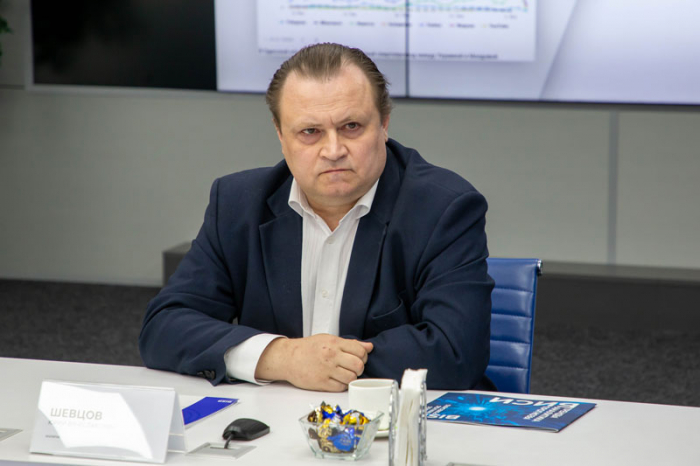
Belarusian political analyst Yuri Shevtsov said in an interview with News.Az that trade between Belarus and Azerbaijan was developing very well even before this visit.
"The main indicator here is that about 70% of tractors in Azerbaijan's agriculture are Belarusian. And they are mostly assembled in Azerbaijan, which fosters the development of Azerbaijan's engineering industry. Now the question of enhancing economic cooperation between the two countries has arisen. One of the main reasons for this is the North-South Transport Corridor . Most likely, it will follow the same pattern as the New Silk Road: a large portion of the cargo traffic will go through Belarus to internal EU markets. They could have limited cooperation to transit, but the two countries decided to immediately try to secure deep economic interaction on several new topics," the political analyst said.
Another reason that may have influenced the decision to try to attain a new level of cooperation is the expected imminent rise in global prices for bread and agricultural products in general, according to Shevtsov.
"During Lukashenko's current visit, Azerbaijan signed agreements that allow it to enhance the competitiveness of its agriculture. Among them, I would particularly note the agreement on joint production of complex fertilizers with Belarus," he said.
"A completely new topic in economic cooperation between the two countries is the possibility of Belarus's participation in the economic development of the liberated Azerbaijani territories. There is a lot to build there: from housing to industrial facilities. In some cases, Belarusian conditions are more favourable than the offers of other countries and companies," the expert added.
"From a political standpoint, it is very important that Azerbaijan, at the highest level, opted to cooperate with Minsk despite Western economic sanctions on Belarus and the threat of the Ukraine war expanding to all of Eastern Europe. This means that Azerbaijan is confident that Belarus will not be drawn into this war. Russia, China, and significant forces in the West also do not want Belarus to be drawn into the war. Thus, Azerbaijan is becoming one of those who preclude this war from expanding, becoming another factor in deterring military threats in one of the most dangerous regions of the planet.
In turn, Belarus is demonstrating confidence that political instability in Armenia and Georgia will not spread to Azerbaijan. Thus, Belarus is becoming a new small factor in stabilizing the South Caucasus," the political analyst said.


Similar news