Baltic Sea: Europe’s brewing security crisis


anselm.fi
Editor's note: Alexander Rahr, German political scientist, chairman of the Eurasian Society (Berlin). The article expresses the personal opinion of the author and may not coincide with the view of News.Az.
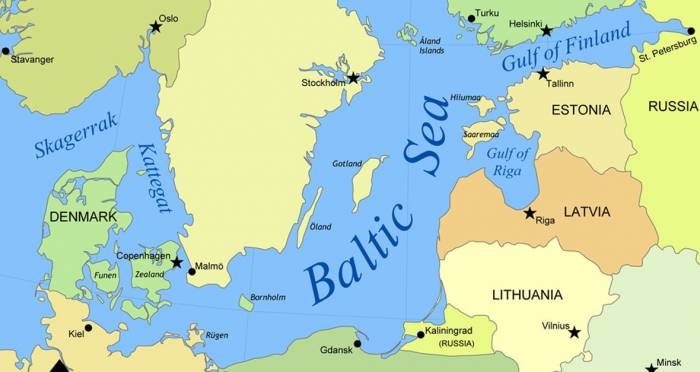
Recent announcements by German Chancellor Olaf Scholz and Polish Prime Minister Donald Tusk regarding NATO’s increased focus on the Baltic Sea underline the growing tensions in this strategically vital region. Germany’s commitment to monitoring efforts and Poland’s call for enhanced security measures highlight a renewed urgency among European nations to address perceived threats. However, behind these declarations lies a broader question: How real is the threat posed by Russia in the Baltic Sea, and what does it mean for Europe’s future security landscape?The Baltic Sea region has become a geopolitical hotspot, with increasing military activity and political maneuvering. Events such as the explosions on the Nord Stream pipelines have drawn global attention, intensifying concerns about the security of critical infrastructure. While investigations are ongoing, these incidents have become emblematic of the broader contest between NATO and Russia.
The expansion of NATO, particularly with Finland and Sweden’s recent accession, has significantly shifted the balance of power in the region. This move has reinforced NATO’s strategic position but has also provoked strong reactions from Russia. Moscow views NATO’s growing footprint in the Baltic as a direct challenge to its sphere of influence, further escalating the potential for confrontation.
 navy.mil
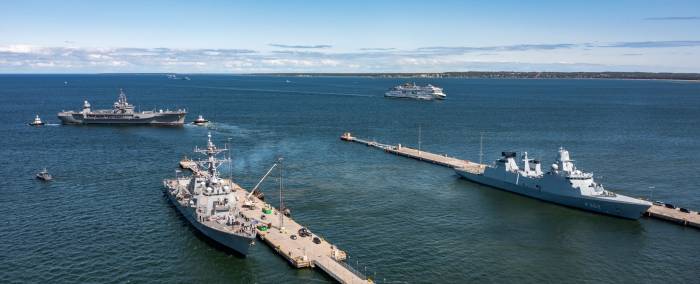
In response, Europe’s largest economies are stepping up their defense initiatives. Germany, in particular, has taken a leadership role by committing substantial resources to military investments. With plans to allocate billions of euros toward modernizing its armed forces and military-industrial complex, Germany is signaling its readiness to confront emerging challenges. This shift marks a significant departure from Germany’s traditionally cautious approach to military engagement.
Poland, too, has been vocal in its concerns. Its emphasis on strengthening ties with NATO allies such as the UK and Norway demonstrates a collective effort to bolster regional security. Poland’s geographic proximity to Russia and historical experiences with aggression make its stance particularly resolute. The country’s proposals to utilize both NATO forces and national units for monitoring the Baltic Sea underline its commitment to safeguarding the region.
Yet, these efforts must be viewed in the context of the broader geopolitical dynamics at play. The Baltic Sea has become a theater for demonstrating military might and strategic influence. For Russia, the presence of NATO forces so close to its borders is perceived as a provocation, prompting countermeasures that include increased naval activities and military exercises. These actions create a feedback loop, where each side’s moves justify further escalation by the other.
One cannot overlook the economic dimension of this confrontation. The Baltic Sea is a critical artery for energy transportation and trade, making its security paramount for Europe’s economic stability. Incidents like the Nord Stream explosions serve as stark reminders of the vulnerabilities inherent in this region. Beyond the immediate impact on energy supplies, such events have broader implications for trust and cooperation among European nations. They also raise questions about the role of external actors in exacerbating tensions.
The interplay of these factors suggests that the Baltic Sea is not merely a regional issue but a focal point for global strategic competition. The involvement of major powers like the United States further complicates the situation. As a leading NATO member, the U.S. has a vested interest in ensuring the security of its European allies. However, its actions, such as increasing military deployments or engaging in joint exercises, can also be seen as contributing to the cycle of escalation.
For Europe, the challenge lies in balancing deterrence with diplomacy. While strengthening defense capabilities is necessary, it must be accompanied by efforts to de-escalate tensions and engage in dialogue. The Baltic Sea’s importance as a shared resource underscores the need for cooperative security measures that include all stakeholders, including Russia. Achieving this balance will require nuanced policymaking and a commitment to preserving peace without compromising on national security interests.
Germany’s assumption of a leading role in Baltic Sea security reflects its broader ambitions to emerge as a central player in European defense. This development is significant, given Germany’s historical reluctance to take on such responsibilities. By stepping up, Germany is not only addressing immediate security concerns but also reshaping its position within NATO and the EU. However, this shift also comes with risks, as it places Germany at the forefront of potential conflicts in the region.
The Baltic Sea’s security challenges are emblematic of the shifting geopolitical landscape in Europe. As nations recalibrate their strategies to address emerging threats, the potential for miscalculation grows. The region’s importance as a strategic and economic hub makes it a critical point of focus for both NATO and Russia. Ensuring stability will require a concerted effort to address the root causes of tension while preparing for the possibility of conflict.
In conclusion, the Baltic Sea is increasingly becoming a symbol of Europe’s broader security challenges. The growing militarization of the region, coupled with the complexities of international politics, underscores the need for a comprehensive approach to security. As Germany, Poland, and other NATO members strengthen their positions, the risk of escalation looms large. Yet, within this precarious situation lies an opportunity—to redefine security in the Baltic through a mix of strength, cooperation, and diplomacy. Whether Europe can rise to this challenge will determine not only the future of the Baltic Sea but also the trajectory of its relations with Russia.
(If you possess specialized knowledge and wish to contribute, please reach out to us at opinions@news.az).


Similar news