Behind closed doors: What Lavrov and Fidan discussed in Ankara


Editor's note: Igor Yushkov is a leading analyst of the National Energy Security Fund, expert of the Financial University under the Government of the Russian Federation.s. The article expresses the personal opinion of the author and may not coincide with the view of News.Az.
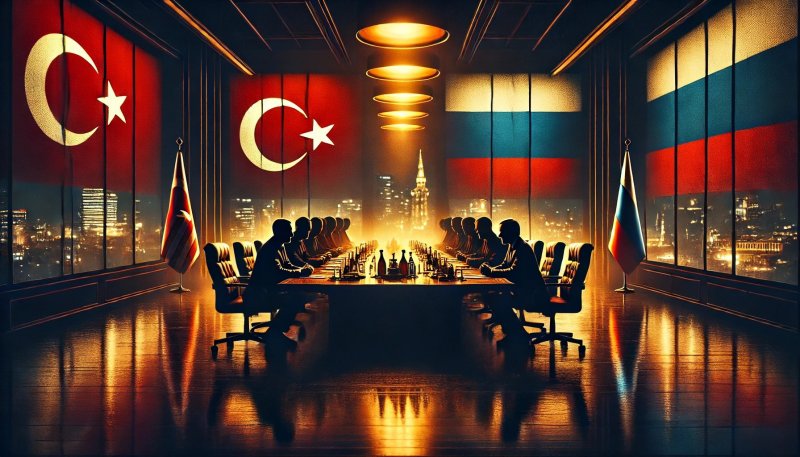
Russian Foreign Minister Sergey Lavrov held talks with his Turkish counterpart, Hakan Fidan, during his visit to Ankara. It appears that the discussions primarily focused on political rather than economic issues, despite Russia's efforts to present Lavrov's visit to Türkiye as a step toward strengthening bilateral relations. However, it is difficult to overlook the obvious: naturally, Russia also discussed the Ukrainian conflict resolution.
Moscow seems to be attempting to neutralize the negative perception that emerged following the phone conversation between U.S. President Donald Trump and Russian President Vladimir Putin, as well as the recent meeting in Riyadh. What is the issue here? Speculation has been spreading that Russia and the U.S. are allegedly trying to negotiate behind the backs of other players without involving them in the process. This complicates the achievement of final agreements.
The fact remains that negotiations between Russia and the United States have already begun, and these two countries are indeed key actors in the conflict. After all, the Ukraine crisis would not have arisen without years of deteriorating U.S.-Russia relations. The roots of the conflict lie not so much in Russian-Ukrainian disagreements but in the tensions between Moscow and Washington. Therefore, it is logical that Russia and the U.S. are engaging in negotiations to address the underlying causes of the conflict before tackling the specific issues related to Russian-Ukrainian relations.
Source: iStock
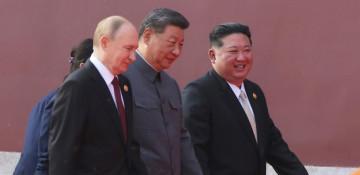
At the same time, it is impossible to completely exclude other parties from the process. If this were solely a bilateral negotiation between Russia and the U.S., its practical implementation would be difficult. This is precisely why Moscow is demonstratively engaging in dialogue with other key players. Lavrov's visit to Türkiye, Putin’s phone conversation with Xi Jinping, and Trump's meeting with Macron all confirm that Russia is not opposed to other countries participating in the resolution of the Ukrainian conflict but, on the contrary, seeks a broad dialogue.
Regarding Russian-Turkish relations, this topic was undoubtedly also discussed during the talks. The Russian side likely informed Türkiye about the outcomes of the meetings in Riyadh. While the political aspect of the dialogue took priority, economic issues also played an important role.
Since 2022, Russian-Turkish trade turnover has grown significantly. However, for Türkiye, this is not just a benefit but also a certain risk. For example, if the conflict ends and the main sanctions on Russia are lifted, Ankara may lose its key role as a trade intermediary. Currently, many goods from Russia enter global markets through Türkiye, and vice versa, imports to Russia are also routed through Türkiye.
Therefore, Türkiye must consider how trade dynamics might change if sanctions against Russia are partially lifted in the context of Russian-American negotiations. This is a strategically important issue for Ankara.
Thus, while economic matters were certainly addressed, it is unlikely that the discussion of specific projects was the main focus of this meeting. Such issues typically require the presence of representatives from companies directly involved in joint projects with Turkish partners.
For instance, if the talks had involved the construction of the Akkuyu nuclear power plant, it would have been logical to expect the participation of a delegation from Rosatom. However, the project is proceeding as planned, with no significant issues at this stage. The first power unit is scheduled to be commissioned in 2025, with the remaining units expected to be operational by the end of 2028. Construction is progressing without major delays.
Source: Anadolu
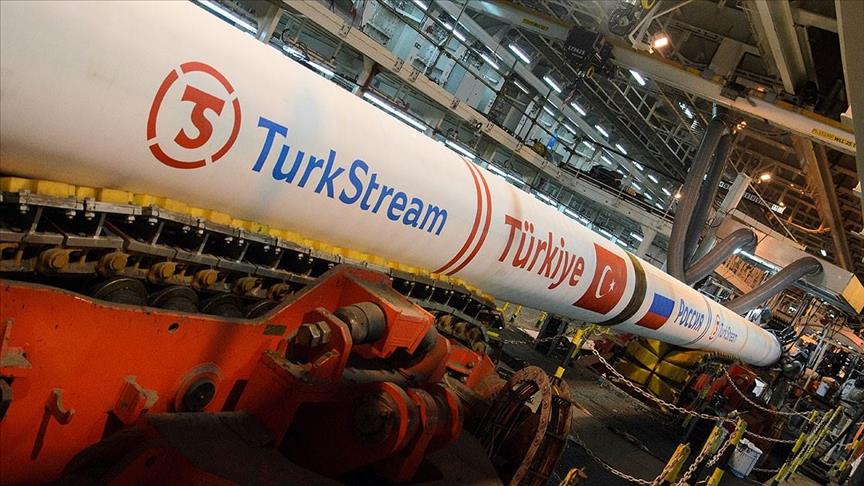
Regarding gas cooperation, if a revision of bilateral contracts had been discussed, representatives from Gazprom would have been present at the meeting. Such matters fall beyond the jurisdiction of the Foreign Ministry and require the involvement of specialized entities. Possible agreements regarding the TurkStream pipeline could have concerned either gas pricing terms or the redistribution of supplies. For instance, part of the gas initially intended for Türkiye’s domestic market could have been redirected to the Blue Stream pipeline, allowing for an increase in exports to Europe.
However, much of this process has already taken place. Previously, Gazprom sold gas to Turkish traders, who then resold it to other countries, including Bulgaria. Sofia refused to continue purchasing gas from Gazprom under the old contract, as it did not want to switch to ruble payments. Nevertheless, Russian gas still reaches Bulgaria through intermediaries. While the total volume of Bulgarian imports from Russia has decreased by approximately 1 billion cubic meters, Bulgaria has increased imports from Azerbaijan. In 2023, Baku supplied Bulgaria with around 1 billion cubic meters of gas under a long-term contract, and in 2024, an additional 1 billion cubic meters were supplied through short-term agreements, bringing the total to 2 billion cubic meters.
For Gazprom, a key task in 2025 will be freeing up gas volumes for Slovakia, as Ukraine has halted transit through its territory. Currently, Russian gas reaches Slovakia via Hungary and TurkStream. As a result, Gazprom has reduced its sales to Turkish traders to reallocate supplies.
However, all these matters pertain to commercial agreements and are traditionally discussed with Gazprom’s involvement. Its absence from the talks in Türkiye suggests that economic issues were likely not a priority. It is possible that the parties touched on transit and the potential increase in gas supplies, but it is unlikely that they discussed concrete changes to gas agreements.
Thus, the main focus of the meeting was likely on political rather than economic issues.
(If you possess specialized knowledge and wish to contribute, please reach out to us at opinions@news.az).


Similar news